The Výrov Branch
Translated from the Czech by Claude, an AI model by Anthropic, in 2026.
The Founder, Vojtěch Prusík, 1777 – 1841
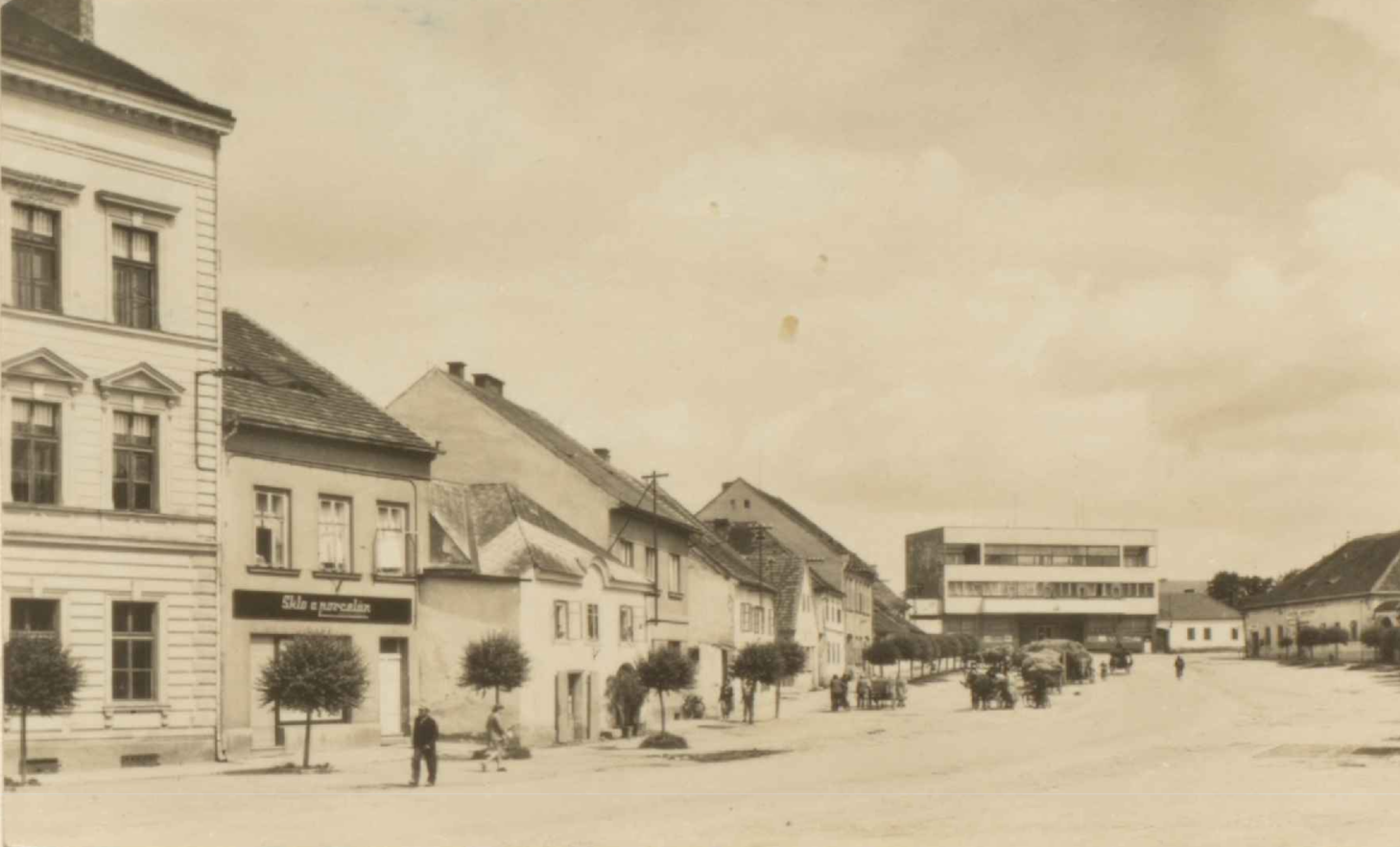
The village of Výrov lies west of the town of Kralovice and, at the time we are writing this history of the family, has about 500 inhabitants. Sedlec, from which our whole family originally sprang, may have only about 130 inhabitants today, but it is much older. It came into being in the 12th century, whereas the village of Výrov was founded in 1300, by the monastery at Plasy, out of part of the Sechutice manor. This manor, however, has a much older history, for it is mentioned as early as 1144, when Duke Vladislaus II founded the monastery at Plasy. There were two Sechutices, Horní and Dolní, that is, Upper and Lower. It was thus on the lands of Dolní Sechutice, where the manor stood, that the village of Výrov was later founded.
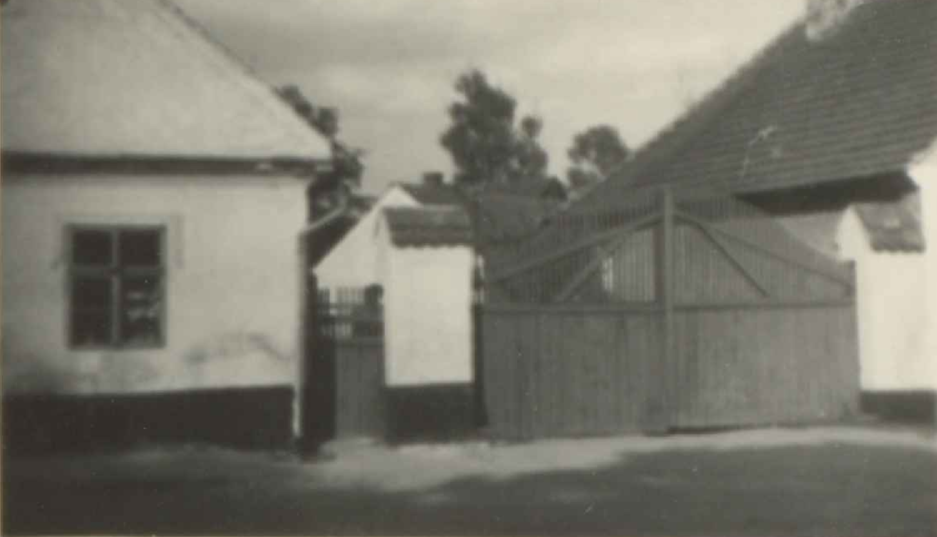
In the middle of the village stands farm No. 18, which since time immemorial has been called “U Boudů”. In the year of Our Lord 1610, on the Monday after St Bartholomew's Day, as the record of the Veyrov reeve's office has it, “a whole and perfect contract and a voluntary sale was concluded between the well-born lord Václav Kohout of Lichtenfeld, official of the Kaceřov estate, on the one part, and Pavel Bouda, reeve in the village of Veyrov, subject of His Grace the lord, on the other part, and to this effect: His Grace the lord was pleased to bestow upon the same lord Václav Kohout a holding called k ř í ž o v s k ý in the same village. This holding the same lord Václav Kohout has sold to him, Pavel Bouda, for fifteen kopy of Meissen groschen”.
Anna Fenclová, who was born on this holding on 30 January 1785, was a descendant by blood of this first owner, Pavel Bouda. It was she whom Vojtěch Prusík, the founder of the “Výrov” branch, took as his wife on 8 October 1803. That his brother, too, married Anna's sister Rosálie on the same day, at the young age of 17, and settled in Sedlec as an independent farmer is explained by the grave times. The Napoleonic Wars were in full swing, and independent farmers were usually spared military service.
The “U Boudů” farm in Výrov, by virtue of its position and the acreage of its fields and meadows, was one of the more important farms in the village, and it was from it that the reeves used to be appointed and, later, the mayors of the village elected. In front of the entrance stood mighty, spreading poplars, whose tops, although the trees stood in a valley, could be seen from as far away as St John's or from the footpath from Kralovice. The farm probably came into being as soon as the village was founded. It had about 35 hectares. When Vojtěch Prusík married into Výrov, he became reeve, as was the custom. He held the office for some 35 years. Beer from the estate brewery at Plasy was tapped at the reeve's house, and by this arrangement the lords secured a market for it. The reeve Vojtěch Prusík was well liked in the village, and although he came to Výrov in the days of corvée, there was no discord between him and the villagers. The holding also owed compulsory corvée with a two-horse team for 156 days and manual corvée for 26 days. There were, of course, further compulsory payments: the lord's levies, the tithe to the parish priest of Kralovice, to whose parish the village belonged, and other obligations. Out beyond the barns, towards Kopidlo, there still stands today an iron cross, which Vojtěch Prusík erected in 1831.
As reeve, Vojtěch used to ride on horseback to Plasy almost every Saturday to receive instructions from the estate director. There he met the other reeves from the surrounding villages, and in this way he made many acquaintances and, by all accounts, was well liked everywhere. He was a big, strong man, and very devout. He, like all our ancestors from 1650 onwards, and all who came after him in turn, was a Catholic. Only until the Counter-Reformation were our ancestors of another faith. In the Kralovice area the only Catholic parish was at Žebnice, and all the others were held by Lutheran pastors. In Kralovice, Potvorov and Všesulov, too, communion was given “in both kinds”. Since Sedlec belonged to the parish of Potvorov, our ancestors at that time were not Catholics either, beginning with our first known ancestor, Vojtěch Prusík.
When Vojtěch married into Výrov, his father-in-law, Matěj Fencl, was still alive, and so was Matěj's wife Kateřina. Matěj was born in 1746 and died in retirement on the holding on 3 February 1820. Kateřina was née Hubková, from Kočín, where she was born in 1753. She lived to the venerable age of 98 and was a very sprightly old woman to the very last. She especially loved her grandson Václav Prusík, who took over the holding from his father, and it was in his arms, too, that she fell into her eternal sleep, on 3 March 1851. That very morning she had still been baking bread.
Vojtěch and Anna had eight children together. The eldest of them all was Anna. She was born on 4 January 1805. At the reeves' meetings in Plasy her father made the acquaintance of a young widower, the reeve Jakub Štěpánek of Horní Bříza, where his homestead was known as “U Kubíků”. When Anna was 17, she married Štěpánek, on 10 September 1822. She lived there to the age of 78 and died on 11 March 1883. She is the founder of the sub-branch that we shall call “Horní Bříza I”.
The second child was Rosalie. She was born on 3 September 1807. Probably through the influence of her sister, already settled in Horní Bříza, she too married there. On 6 June 1826 she married the farmer Vojtěch Karez of No. 3. She died there at the young age of 44, on the day of the parish fair, 9 May 1851. She is the founder of the sub-branch known as “Horní Bříza II”.
The next daughter was Marie. Her fate was a sad one. She was born on 20 May 1815 and, at the age of 18, on 26 November 1833, married a farmer from Výrov No. 6, Josef Štefl. Her descendants still live on this homestead today. Marie Šteflová died shortly after the birth of her third child, on 27 December 1844. She was only 29. She founded the sub-branch known as “Výrov I”.
The fourth and last daughter of Vojtěch and Anna was Veronika. She was their youngest child. She was born on 20 January 1826 and married into Kostelec nad Mží, a small village lying beyond the river Mže. On 20 January 1846 she married the farmer Jan Hořejš, and after early widowhood in 1854 she married Jan Folk. She died young, on 7 November 1865. She is the founder of the sub-branch known as “Kostelec nad Mží”.
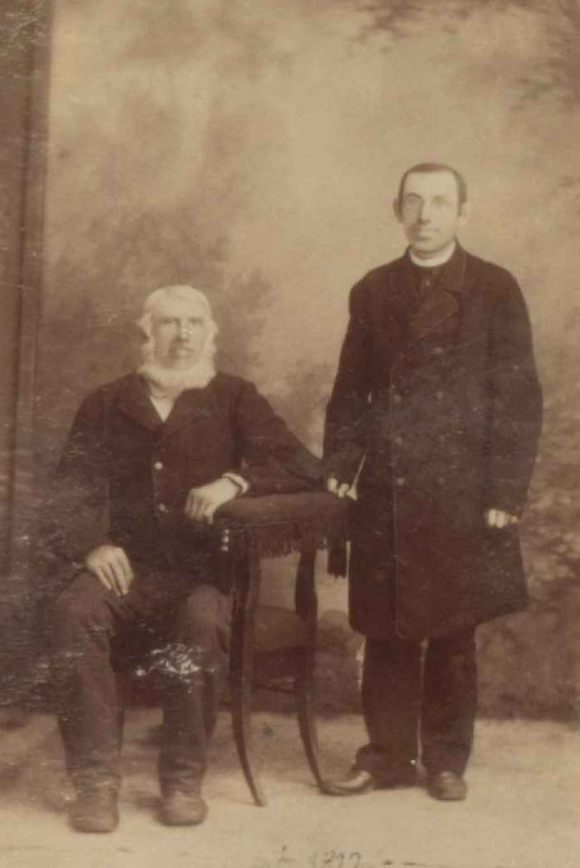
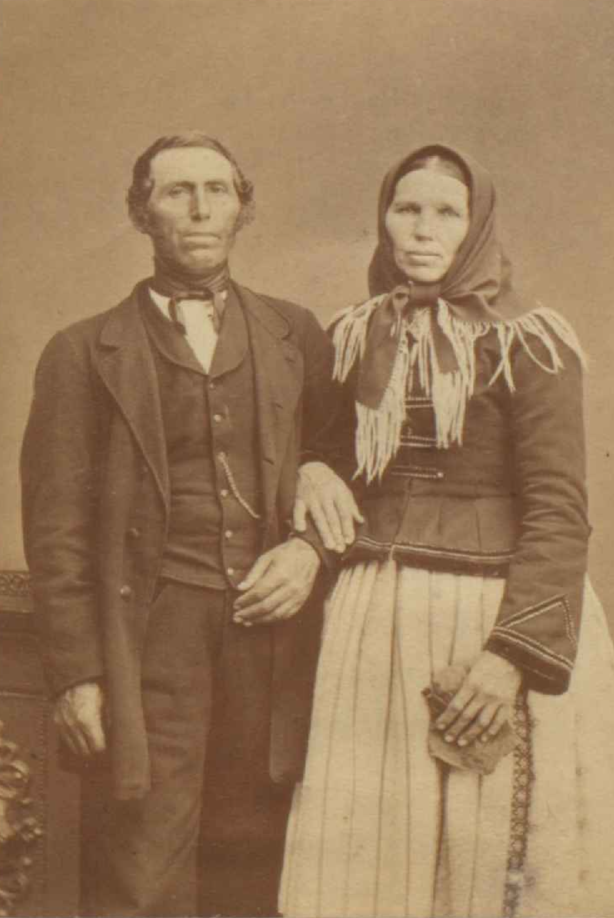
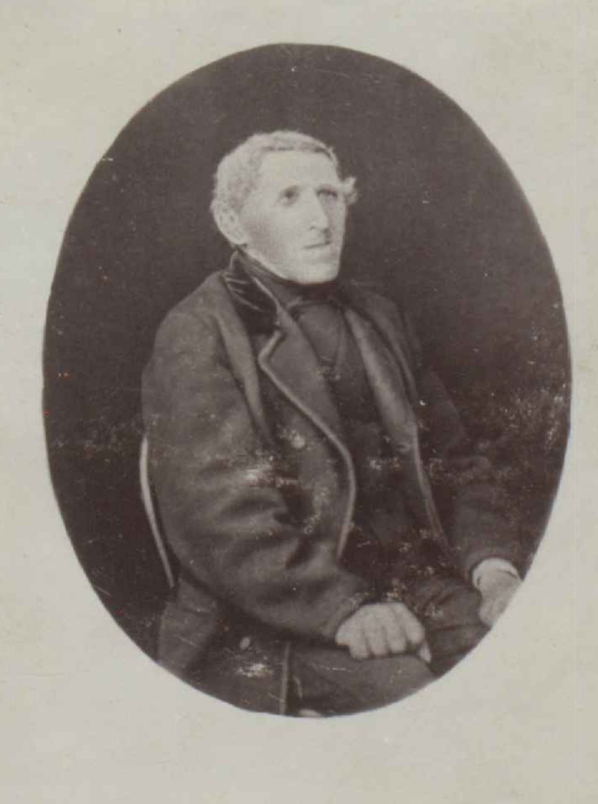
The eldest son was Blažej Prusík. He was born on 1 February 1810 and at his baptism in Kralovice was given the name of his grandfather Blažej, who was by then living in retirement on the farm in Sedlec. Blažej Prusík occupies a special chapter in the history of our family. He became a priest and a true benefactor of the family. We shall tell of his life in detail later. He died in Prague on 22 August 1888.
The next son was Tomáš. He was born on 19 November 1812 and on 24 February 1835 married into Horní Bříza, where his two sisters were already living. His wife was Kateřina Beránková from holding No. 26, known as the Fakanovský holding. Tomáš Prusík died there on 19 April 1897 and is the founder of the sub-branch known as “Horní Bříza III”.
The third son was Matěj, born on 22 February 1818. He took Anna Fakanová as his wife and settled on holding No. 17 in Hodyně, known as the Lajbovský holding. He died there on 17 October 1900 and is the founder of the sub-branch known as “Hodyně”.
The fourth son, and the youngest, was Václav. He was born on 7 September 1822 and later became the heir to the “U Boudů” holding. His wife was Josefa Kotasová from Kozojedy. Their wedding was on 30 January 1843. Václav Prusík died in Výrov on 11 February 1892. He is the founder of the sub-branch known as “Výrov II”.
The reeve Vojtěch Prusík did not live to a great age. He died of consumption (tuberculosis) on 14 March 1841. He was 64. His wife Anna outlived him by 18 years, and his mother-in-law by 10. Anna died on 6 January 1859. She lived contentedly in retirement on the farm with her youngest son Václav until her death.
The village of Výrov, together with Sedlec, Plasy and Stražiště, thus became a further point of departure for a numerous branch of the family, and that is why it matters so much to us. We shall now acquaint you with all the descendants and members of this branch, and with their fortunes, down to the present day.
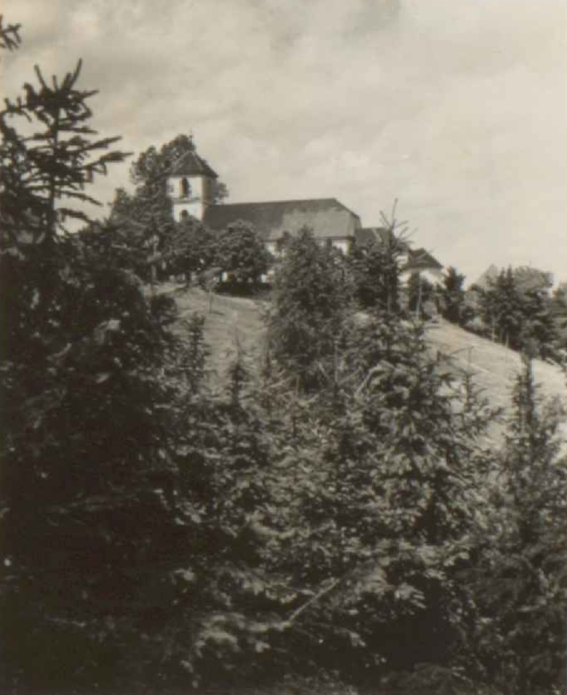
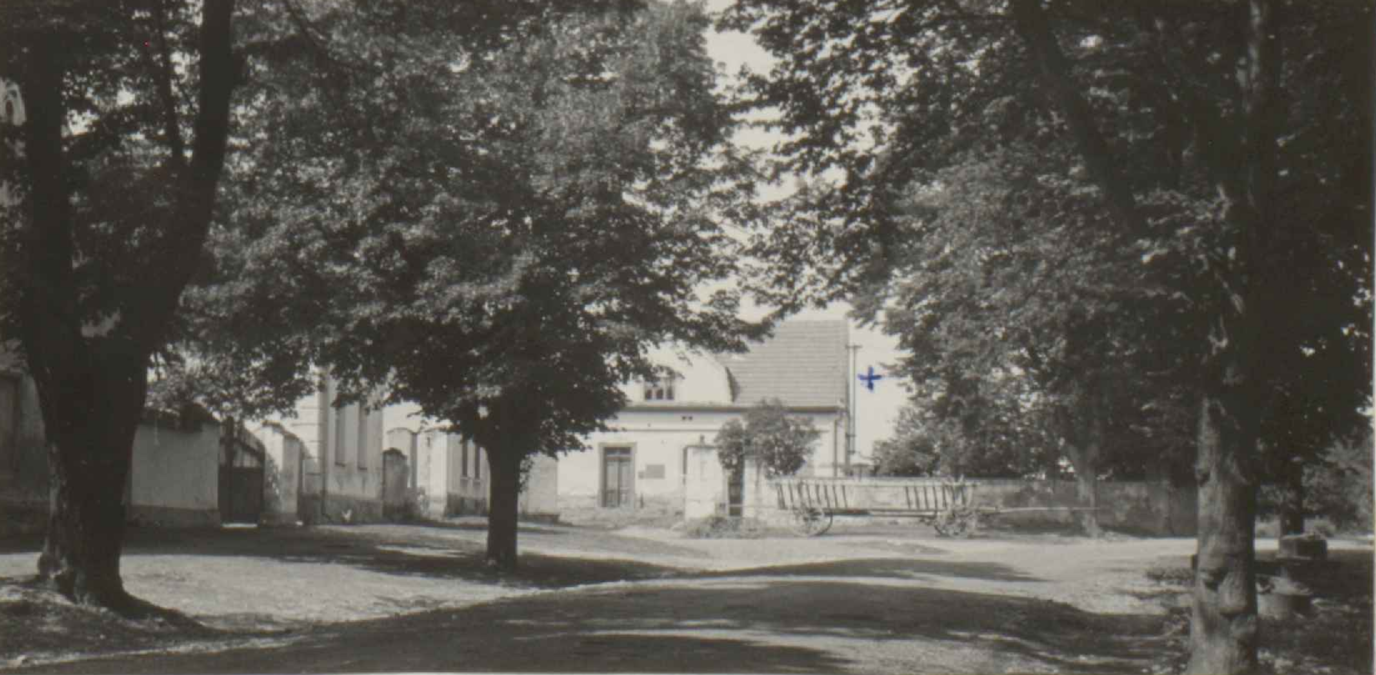
The Horní Bříza I Sub-branch of the Výrov Branch
The descendants of Anna Prusíková from Výrov, married name Štěpánková.
1805 – 1883
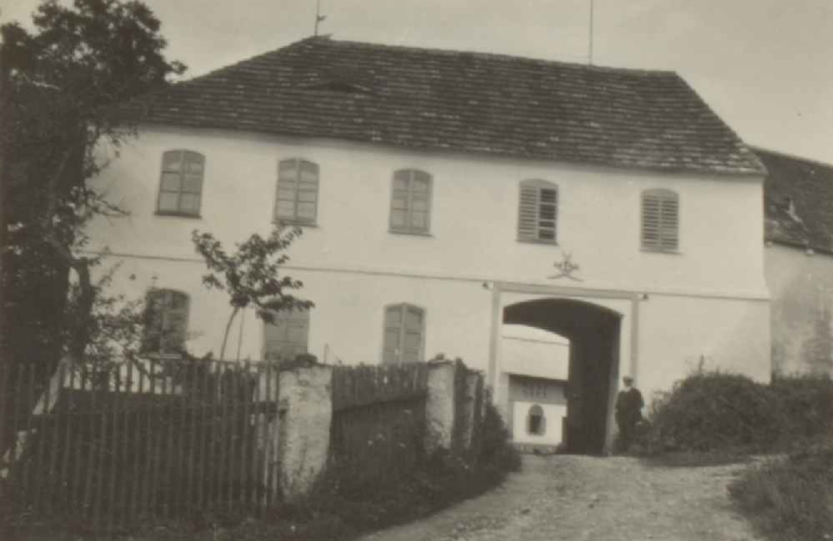
The first child of Vojtěch Prusík and Anna, née Fenclová, of Výrov was Anna. As we have already mentioned, she was born at the height of Napoleon's glory, on 4 January 1805, in Výrov. Her father found her a bridegroom in the reeve Jakub Štěpánek of Horní Bříza No. 8, a house that had been called “U Kubíků” since time immemorial. After the Battle of White Mountain, the property of the lord of Manětín, Kryštof Karel of Roupov, who had died in the very midst of the Estates' upheavals, was confiscated. It was bought by Estera Mitrovská, née Lažanská, a fervent Catholic. Her husband, Jiří Mitrovský of Nemyšl, a strict Catholic lord, marched into Manětín at once with an armed force to carry out the Counter-Reformation. The Utraquist priest was removed from Manětín, and the Jesuit Jan Nerovius was summoned in his place. The Utraquists of Manětín put up a stubborn resistance in their devastated town. They gathered at the town hall and bound themselves by oath not to forsake the faith of the Chalice, but under a stern threat from Mitrovský eight members of the council pledged in writing to become Catholics. The others, however, persuaded by the councillor Štěpánek, who was the miller at the Růžkovský mill, refused to convert.
This Štěpánek is an ancestor of the Jakub Štěpánek whom Anna Prusíková from Výrov took as her husband in the 19th century. His forebear, as the chief rebel, was summoned to the chateau, where he was to be put in irons. From there he leapt out of an open window, meaning to escape. But he was injured and caught, and sent to Plzeň in chains. When the townspeople of Manětín learned of this, they took up arms and besieged the chateau. Troops hastily summoned from Plzeň, however, soon put down the revolt. It was in the homestead of this rebel's descendant, then, that Anna came to live. She married into it on 10 September 1822. Her husband Jakub was born in 1797, held the holding until 1849 and died in Horní Bříza on 10 July 1869. The reeve's office used to be on their holding. Anna died on 11 March 1883.
Anna and Jakub had six children who reached adulthood. The first was Marie, who was born on 24 June 1824. In 1843 she married the farmer Václav Dobrý and went to live at No. 2 in Lhotka near Všeruby, in the Plzeň area. She died there on 20 October 1903. The next was Antonín Štěpánek, born on 17 November 1831, who died on 23 March 1841. The third child, Josef, became heir to the holding in 1849. He was one of twins; his brother Vojtěch died early. He was born on 11 March 1828 and died on 9 January 1902. Their little daughter Anna was born on 16 September 1834 and died young, on 21 February 1845. The fifth child to reach adulthood was Barbora. She was born on 3 February 1838, married Vojtěch Kabát in nearby Žilov and died there on 18 January 1910. The last, Antonín, the second boy of that name, was born on 28 November 1844. He remained a bachelor all his life and died in his native village on 20 January 1916.
Marie Dobrá, née Štěpánková, who settled in Lhotka, was, according to those who remembered her, an uncommonly brave woman. She was not only a good farmer's wife but was not afraid to seize a gun at night and drive off robbers with her shots. She had three children who reached adulthood. There was Matěj, born on 18 December 1855. He died unmarried, not yet twenty, on 10 April 1875. He had been destined to be heir to the holding. The next, Marie, was born on 24 August 1848 and, again in Lhotka, married Jan Dobrý; she died there on 21 April 1893. The second son, Václav, was born on 1 October 1860 and was sent to study in Plzeň. But when his elder brother Matěj died so young, he returned home and took over the holding; he died at his daughter's in Příšov on 19 August 1944.
Marie Dobrá, married to Jan Dobrý at No. 3 in Lhotka, had five children. She was a good mother and housewife, but her life ended early. She died after a miscarriage, at the age of 45. Her eldest son was Matěj, born on 31 October 1873, who died in Plzeň on 13 August 1949. Matěj studied medicine and, when interest in medical care for children was beginning to grow in our country in his day, he settled in Plzeň with this specialisation, and he is regarded as the first specialist children's doctor in West Bohemia. He had a large practice drawn from every walk of life, including the former nobility. The doctor Matěj Dobrý had four daughters. The eldest, Sylva, born on 7 February 1903, first had the married name Fryčková. Her second husband was Dr Jiří Havelka, a minister in Hácha's government under the Protectorate, in the hardest times of our republic. Her husband was a great patriot and was arrested by the Germans, together with the Prime Minister, General Eliáš, during the Heydrich terror. He did live to see the liberation, and Sylva with him, but they had to endure great injustices. They had to move out of Prague to Hostomice pod Brdy. Of their marriage a son, Jan, was born on 23 March 1943.
Matěj's second daughter is Zdeňka, married name Šperlová, of Plzeň, Škrétova 23. She was born on 7 February 1908. She has two daughters: Zdeňka, a doctor, married name Klapálková, born on 15 September 1931, and Helena, born on 10 February 1944.
The third daughter is Milada, a commercial engineer, married to the doctor Dr Semotán, of Prague-Bohnice No. 138. She was born on 10 June 1914. She has no children.
The fourth is Květa, still unmarried, a clerk, living at Prague-Strašnice, Na Hroudě 8. She was born on 19 August 1919.
Marie Dobrá's next child was Anna. She was born on 11 November 1882 and likewise married a farmer named Dobrý, in Nevřeň. She died at the age of 81, on 11 March 1963, at her daughter's in Radčice near Plzeň. Her son Václav Dobrý, born on 17 May 1903, later took over the farm at Nevřeň No. 11. He has a daughter, Jiřina, married name Jindráková, born on 5 November 1928. She has three little daughters: Jiřina, born on 25 May 1952, Milada, born on 9 January 1954, and Soňa, born on 2 August 1963. The second daughter is Zdeňka, married name Sedláčková, born on 28 June 1930, who lives on the state farm at Kunějovice near Všeruby. She has two boys, Vladimír, born on 8 June 1954, and Miroslav, born on 31 December 1956.
The brother of Václav of Nevřeň is Ladislav Dobrý, born on 19 July 1911. He lives in Stod near Plzeň, Na Jízdárně 429. He has a son, Václav, born on 15 December 1937, and a daughter, Anna, married name Černá, of Mariánské Lázně-Úšovice, Polní 484-5b. She was born on 14 October 1944 and has a little daughter, Kamila, born on 19 January 1967. The sister of Václav and Ladislav, Anna, is married to the teacher Randa. She was born on 1 March 1909 and lived in Radčice. She now lives in Plzeň-Doubravka, Družby 7. She has a daughter, Jaroslava, married name Bezděková, born on 31 August 1933, in Plzeň-Čechurov, Ke dráze 10. She has Pavel, born on 14 October 1956, and Jana, born on 27 September 1961. The son Ladislav Randa, born on 20 October 1935, in his turn already has a son, Ladislav, born on 18 May 1964. The sons Václav, born on 16 December 1943, and Bořek, born on 25 June 1946, are still unmarried.
After his mother Marie's untimely death in Lhotka, the holding was taken over by her son Václav. He was born on 18 October 1877 and died there on 4 February 1928. He had four children. His son Václav, born on 3 October 1905, took over the farm from him; today, like most farmers, he is a member of the collective farm (JZD). He lives at Lhotka No. 3. His daughter Jarmila, married name Pivoňková, born on 13 September 1933, has two children, Anna, born on 27 July 1957, and Luboš, born on 5 February 1959. Václav's other daughter is Anna, married name Kalousová, living in Plzeň-Slovany, Mládežnická 29. She has a little daughter, Jana, born on 14 May 1961. She herself was born in Lhotka on 18 March 1937. Václav's brother, Karel Dobrý, became a lawyer, but like many in the era of the personality cult and its various abuses he often had to change his place of work, taking posts out of keeping with his education. He was born on 19 February 1907. He lives in České Budějovice, Komenského 65. His son Karel is a doctor in Plzeň, Koperníkova 25, born on 25 October 1938. His daughter Jitka was born on 22 October 1945. Karel is at present working in Karlovy Vary. Marie Dobrá's son Josef was born on 17 January 1904. He was a clerk at the Agricultural Cooperative in Plzeň and died in Třemošná on 27 April 1957. He had a son, Josef, born on 29 August 1928, who lives in Plzeň, náměstí J. Krautvurma 33. He has two children: Eva, born on 16 October 1951, and Josef, born on 10 June 1958. The last was a daughter, Anna, born on 28 April 1908. Her husband was Calta, a gamekeeper in Horní Bříza. Her son Milan became a forester and lives at Špindlerův Mlýn No. 247, in the Krkonoše mountains. He was born on 9 July 1927. He has a little son, Mirek, born on 12 September 1953. Her daughter Zdeňka, married name Ondráčková, born on 25 August 1929, is married to an airman. She lives in Prague-Smíchov, K vodojemu 210-11. She has twins, Pavel and Luboš, born on 20 August 1955.
Marie Dobrá of Lhotka had another son, Emanuel. He was born on 14 January 1885 and worked in the railway workshops in Plzeň. He died relatively early, on 29 May 1940. He had three daughters, all of them teachers. Jiřina, married name Kacerovská, was born on 10 April 1914 and lives in Prague IV, Pankrác I, Milevská 1088. Zdeňka, unmarried, born on 28 December 1915, lives in Mariánské Lázně, Jiráskova 490, and Bohumila, also unmarried, born on 6 July 1917, lives in Plzeň, Božkovská 55. Emanuel Dobrý has left no grandchildren.
Marie Dobrá also had a daughter who was given her name. She was born on 15 July 1888 in Lhotka and even in her youth longed to become a nun. And indeed she entered the order of the Grey Sisters and was a most devoted nursing sister in hospital. When the Spanish flu was raging, she caught it and died on 21 September 1916. You will find her grave, under the name Marie Libora, at Vyšehrad, in the special section for the nuns of this order.
Václav Dobrý, born on 1 October 1860 at Lhotka No. 2, became the next holder of the holding. Because he had already tasted the pleasures of the town while studying in Plzeň, and had then had to return home after the early death of his brother Matěj, he never had much love for farming. As those who remember him tell, what he liked best was hunting and company. His eldest child was Marie, born on 13 March 1884. She is married to the baker Henžlík in Kaznějov. He was a widower when she married him. She had two daughters with him. The elder, Helena, married name Reinvartová, of Kaznějov No. 90, was born on 8 April 1915. She has three children: Alena, who kept her own surname after her marriage. She was born on 19 June 1940. She has a little son, Miroslav, born on 10 November 1963. Petr Reinvart was born on 25 September 1949 and Pavel on 1 December 1950. Marie Henžlíková's second daughter is Zdeňka, married name Hanzová, of Kaznějov No. 304. She was born on 14 June 1920. She has four children. Jaroslav, born on 9 December 1940, already has a son, Radek, born on 12 September 1963. Zdeněk Hanza, born on 27 February 1943, has a son, Dušan, born on 10 February 1966. Jana, married name Linhartová, born on 9 November 1944, has a little son, Jiří, born on 10 December 1966; Irena Hanzová, born on 22 April 1949, is still unmarried. Alena Reinvartová also has a little daughter, Monika, born on 13 January 1968.
Marie's brother, Emanuel Dobrý, was born in Lhotka on 3 June 1886. At seventeen he fell ill with severe articular rheumatism and suffered for many years before his weakened body gave way. He died in his native village on 23 February 1927.
Václav Dobrý, born in Lhotka on 3 February 1889, became a teacher. He taught in the Roudnice area, in Bolevec near Plzeň and in Ledce. He now lives as a widower at Brníkov No. 108, post office Ředhošť near Libochovice. The teacher Václav Dobrý is perhaps the only one who knows the history of the Dobrý family well, and so the lives and fortunes of all the descendants of Marie Dobrá, née Štěpánková, from Horní Bříza. She was his grandmother. Of his two sons, Miloslav, born on 16 August 1922, ended his life unhappily on 8 November 1936: he poisoned himself. The second, Václav, was born on 16 August 1922. His daughter Jitka, born on 9 May 1952, lives with her grandfather in Brníkov. Now, under her married name Větrová, she lives in Plzeň, Máchova 15.
Jan Dobrý, born on 24 June 1891, was a teacher in Brozany in the Roudnice area, but soon died of typhoid fever, unmarried. He ended his life in his native village on 8 August 1913.
Another son of Václav Dobrý was Bohumil, born on 14 January 1894. He was one of twins, but his little sister Bohumila died early. He took over the family holding at Lhotka No. 2, but his marriage was childless. He died on 2 July 1962.
Oldřich Dobrý was born on 17 March 1897 at Lhotka No. 2. He was apprenticed in brewing at Nekmíř and then worked until his retirement as a malthouse worker at the Burghers' Brewery in Plzeň. He lives at Záluží No. 118 near Plzeň. He has two daughters. Zdeňka, born on 8 December 1926, married name Folková, lives in Senec near Zruč, in the Plzeň area. Her husband is a member of the Prusík family by blood. They have two children, Miloslav, born on 18 November 1949, and Jiří, born on 28 May 1951. Oldřich's other daughter, Helena, married name Kubíková, lives with her parents in Záluží. She was born on 1 December 1929. She has a daughter, Zdeňka, born on 23 September 1959.
The youngest child of Václav Dobrý of Lhotka was Helena. She was born on 8 April 1903. She married the farmer and miller Alois Neužil in Příšov. Her daughter Marie, married name Vodičková, lives in Nýřany. She was born on 1 May 1930. She has a little daughter, Hana, born on 26 March 1962. Her son Václav Neužil, born on 6 January 1934, lives in Ledce and is so far the father of one son, Václav, born on 5 March 1968. The old farmer Václav Dobrý of Lhotka later lived in retirement with the Neužils, together with his wife, and there he died.
The teacher Václav Dobrý of Brníkov remembers his grandmother Marie Dobrá, née Štěpánková, well. As a schoolgirl she went to the school in Ledce, to which Horní Bříza belonged for schooling in earlier times. If she used to sing the song “When I'm grown up, I'll be a farmer's wife”, she lived to see it come true, but hers was no bed of roses, for there was more work than she could manage, and she still knew the days of corvée. Lhotka belonged to the Nekmíř estate. Flax was grown and was worked at home on the spinning wheel. Marie went on working into old age, in retirement on the farm, and, as her grandson the teacher Václav Dobrý remembers, at harvest time she would wake his father and mother as early as four o'clock with the words: “Up you get, folks, it's time, or you'll never get the work done!” And so they toiled from sunrise to sunset.
This, then, is a brief account of one of the children of Anna Prusíková, married name Štěpánková, namely of Marie Dobrá, who married onto holding No. 2 in Lhotka. Her descendants still live there.
The son of Anna Prusíková, married name Štěpánková, in Horní Bříza was Josef. He was born on 11 March 1828, and when he was 21 he took over his native holding, No. 8, from his father Jakub. That was in 1849, a year after the abolition of corvée. Soon afterwards he married Marie Plevková from Kostelec nad Mží. He was a good farmer, and their farm was among the largest in the village. He had a number of children, whose fortunes we shall now relate. Josef Štěpánek died on 9 January 1902.
He had seven children who reached adulthood. They were: Kateřina, married name Manclová, in Horní Bříza. She was born on 25 November 1852 and died on 7 March 1938. The next daughter was Marie, married name Urbanová, likewise in Horní Bříza. She was born in 1854 and died on 19 May 1894. The third, Anna, also married name Manclová, but in Česká Bříza, was born on 30 August 1855 and died on 23 March 1892. The son Josef was born on 6 January 1858 and died on 3 May 1936 in Horní Bříza. Antonín was born on 7 July 1865 and died on 20 October 1927 in Roudnice nad Labem. Jan, who later took over the holding from his father, was born on 11 May 1868 and died on 27 July 1916. The last child was Josefa, who suffered from a nervous illness and remained unmarried. She was born on 28 January 1871 and, after an unhappy life, died in her native village on 23 May 1918.
Kateřina Štěpánková, born on 25 November 1852, married the farmer Mancl in Horní Bříza and had five children with him. She died at the great age of 86, on 7 March 1938. Her eldest daughter was Anna. She was born on 20 June 1873. She died as early as 19 November 1913. Her daughter Josefa Sládková, Sládková being her mother's married name, married J. Ševčík from Plasy. She was born in 1893 and died a year before her mother, in 1912. That year a little daughter, Miloslava, was born to her; she died unmarried in 1932 of consumption (tuberculosis), like her mother. Vojtěch Sládek was born on 4 March 1897 and lives at Horní Bříza No. 19. He has four daughters. Jarmila, married name Tylová, of Ledce No. 45, was born on 19 January 1920. She has a little daughter, Jaroslava, born on 24 December 1946. The next, Marie, married name Hyčková, born on 29 March 1922, lives in Plzeň, Karlova 29. She has a son, Jiří, born on 7 August 1949, and Magdalena, born on 13 July 1953. Květuše, married name Frundlová, lives at Trnová No. 22. She was born on 8 September 1923. Her two children are Pavel, born on 9 February 1946, and Květa, born on 24 July 1948. The fourth is Vojtěška, married name Patáková, of Nýřany No. 292. She was born on 28 May 1929, and her twins, Václav and Ludmila, were born on 7 October 1952.
Anna Sládková's next daughter was Anežka. She was born on 18 March 1895, married the innkeeper Kabát, on the village green in Horní Bříza, No. 47, and died on 5 August 1953. She had an only son, Jaroslav, who was born on 4 March 1920. He took as his wife Miloslava Kabátová, who is also a member of our family by blood, as a descendant of Marie, the daughter of the farmer Tomáš Prusík of Horní Bříza. Jaroslav Kabát lives at No. 90 and has three boys: Václav, born on 7 July 1950, Jaroslav, born on 31 August 1953, and Miloš, born on 2 February 1958. The second son is Václav Sládek, born on 30 March 1899. He lives at Horní Bříza No. 324 and has an only son, Zdeněk, born on 19 October 1927, who in his turn already has a daughter, Zdeňka, born on 3 July 1952. Václav Sládek died on 4 June 1966.
Anna Sládková's fifth child was Marie. She was born on 5 June 1901; her married name was Brandtlíková, and she lived at Trnová No. 161. Her son Ladislav, born on 24 May 1923, died as early as 7 February 1944. Her daughter Božena, born on 22 December 1921, has two children born out of wedlock. Her little son Ladislav, born on 4 December 1948, died when he was only 14, on 5 June 1962. Only her little daughter Helena, born on 3 March 1954, brings her joy in life. Božena Brandtlíková's mother also died relatively young, on 14 October 1949. Truly, some families have tragic fates. Božena Brandtlíková died on 14 February 1969. The daughter Josefa was born on 8 April 1876. She married Václav Krofta in Horní Bříza, where she died on 9 March 1954. Her son Václav was born on 31 July 1895. He took as his wife Anna, née Karezová, who is also a member of the Prusík family. Václav Krofta died on 23 June 1939. Four children were born of this marriage. The eldest, Dr Vladimír Krofta, was born on 20 January 1920 and lives in Prague-Dejvice, Vilémovská 19. He works at the Ministry of Health. He has three children, Vladimír, born on 10 October 1946, Martina, born on 16 December 1948, and Tomáš, born on 13 January 1953. The daughter Jaroslava, married name Kokošková, lives at Horní Bříza No. 125. She was born on 31 October 1921 and has three children: Vladimír, born on 12 August 1948, Jaroslava, born on 15 January 1950, and Zdeňka, born on 11 August 1954. Zdeněk Krofta, born on 29 July 1925, is childless and lives at Kupka near Teplice, No. 358. Libuše, married name Šimicová, of Horní Bříza No. 18, has three little daughters: Václavka, born on 28 September 1950, Miloslava, born on 1 July 1952, and Libuše, born on 15 September 1953. Josefa Kroftová also had a daughter, Barbora, born on 12 November 1902. She married Šesták, a clerk at the Ceramic Works, and has a daughter, Jiřina, married name Šafaříková, born on 20 June 1923. She lives in Prague-Žižkov, Křížkovského 5.
The daughter Barbora was born on 18 October 1882 (she died on 18 May 1969) and married the innkeeper Meister at Horní Bříza No. 105. She has two sons. Josef Meister was born on 17 February 1913 and is a technical officer. He lives in Prague-Vršovice, Tolstého 4. His two children are Zdeněk, born on 11 May 1944, and Věra, born on 29 November 1948. Barbora's second son, Adolf Meister, was born on 17 June 1921. He is a clerk at the Burghers' Brewery in Plzeň. He lives with his mother in Horní Bříza. His daughter Zdeňka was born on 17 May 1947 and his little son Adolf on 23 May 1951, but on 20 August 1964 the boy accidentally shot himself with his father's gun. Kateřina's only son, Václav Mancl, was born in 1885. He was unmarried. He fell in the World War, on the Russian front, in 1917. Kateřina's last child was Marie. She was born on 4 July 1887 and married the teacher Smolák in Horní Bříza, where she still lives today, at No. 4. She has two sons. Miroslav, born on 28 September 1920, is a teacher in Kadaň. He lives there at No. 1219, Chomutovská Street. He has four children: Miroslava, born on 19 February 1950, Pavel, born on 16 January 1952, Petr, born on 9 August 1953, and Marcela, born on 24 July 1957. Vlastimil Smolák was born on 12 February 1922 and became a priest. Today he serves in the parish of Železná near Beroun, No. 7. It is interesting that the priest Smolák studied and lived in the seminary together with another priest, Josef Koukl, who today serves in Kladruby near Stříbro, but at the time neither of them knew for certain that they shared Prusík blood.
The second daughter of Josef Štěpánek, holder of holding No. 8 in Horní Bříza, was Marie, married name Urbanová, also in Horní Bříza, at No. 22. As we have already said, she died young, at the age of 40, on 19 May 1894. She had three daughters. Two of them did not live long either. Anna was born on 6 May 1883 and was killed while trees were being felled in the forest. It happened on 16 December 1898. A small votive picture at the spot still recalls the accident today. Her second daughter, Marie, had the married name Kryčová, in Horní Bříza. She was born on 11 January 1886 and died on 23 April 1956 in the homestead where she had been born and had lived. She had two daughters: Marie, married name Frundlová, born on 11 April 1905, who died on 24 July 1925. She had an only son, Josef, born on 11 November 1923, who has settled in Tlucná. He has a little daughter, Jaroslava, born in December 1948. Marie Kryčová's second daughter is Anna, born on 17 February 1907. She lives at Horní Bříza No. 81. She has three children. Hana, married name Marková, was born on 21 December 1927. She too lives in Horní Bříza, at No. 361. She has three children, Hana, born on 23 May 1953, Václav, born on 29 December 1948, and Miroslav, born on 5 August 1954. The son Josef Sopr, born on 24 January 1933, lives with his mother. He has two children, Jiří, born on 5 October 1958, and Jana, born on 25 July 1961. The daughter Anna, married name Dobrá, lives at Horní Bříza No. 236. She was born on 12 January 1936 and has twins, Eva and Helena, who were born on 22 December 1956. The third daughter of Marie Urbanová was Božena. She was born in 1889 and later had the married name Dlouhá, in Kaznějov, but she died there childless as early as 1910.
The third child of Josef Štěpánek was Anna. She was born on 3 August 1856 and married into Česká Bříza, taking the name Manclová. This family has been settled on its holding for several centuries. She died there on 23 March 1892, when she was only 36. She had three children, two of whom are still living. Her son Václav Mancl was born on 1 March 1880 and lives in retirement on his ancestors' holding, at Česká Bříza No. 1. He has three children. His son Jaroslav was born on 9 February 1913 and was an official of the Land Survey Office in Prague. He died early, on 14 February 1958. His three children live in Plzeň, Zbrojnická 2. Marie, born on 11 April 1940, married name Pavelcová, has a little son, Jaroslav, born on 9 September 1961. Her brother is Jaroslav, born on 9 October 1945, and her sister Hana Manclová, born on 17 March 1951. Václav Mancl's second son is Rudolf. He was born on 17 April 1914 and lives on his native holding, where for a long time he resisted the lure of collective farming. He has two children, Václav, born on 14 October 1947, and Jitka, born on 7 February 1950, who, however, died in August 1964. The sister of Jaroslav and Rudolf was Marie, who was born on 13 April 1917 but died unmarried as early as 14 August 1935.
Anna Manclová's second child was Anna. She was born on 11 January 1882 and later married into the Klimeš family in Horní Bříza. She died there on 21 November 1953. She had two daughters. Anna, married name Rajšlová, born on 13 January 1913, lives at Horní Bříza No. 354. She has a daughter, Alena, married name Dienstbierová, born on 23 July 1937, who already has a boy, Alois, born on 16 March 1961. Anna Klimešová's second daughter is Marie. She was born on 1 January 1917 and married into the Dolejš family at Horní Bříza No. 27. She has two children: Václav, born on 20 June 1943, and Helena, born on 2 November 1946.
Anna Manclová's third child was Marie. She was born on 4 September 1886; her married name is Suchá, and she lives at Zruč No. 15 near Plzeň. The holding has been the property of the Suchý family since 1756. She has an only son, Jaroslav, born on 26 August 1912. He went to the grammar school in Plzeň, but after his studies he returned home, where he is still a private farmer. He has four children. Anna, married name Honomichlová, was born on 26 March 1945 and already has a little daughter, Hana, born on 29 November 1966. Jaroslav Suchý's other daughters are Helena, born on 5 September 1948, Marie, born on 3 November 1951, and Jitka, born on 24 July 1955.
The fourth child of Josef Štěpánek was Josef. He was born on 6 January 1858. He was sent to study in Plzeň, since it had been decided that the holding would go to his younger brother Jan. He later became a tax official, but sitting about in an office was not to his liking. He returned to his native village fairly soon, settled there at No. 2 and farmed. He had four children. His daughter Barbora, born on 10 November 1885, married name Honomichlová, lives in Plzeň, Slovanská třída 67. She had no children. His second child was Anežka. She was born on 31 October 1893. She later married the widower Václav Šír, a clerk at the Kaolinka kaolin works, who has a son from his first marriage, a secondary-school teacher in Choceň. Anežka herself had no children of her own. She lives at Horní Bříza No. 219. Josef Štěpánek also had two sons. Václav was born on 8 January 1896 and later farmed at No. 2, as his father had. He died on 16 February 1962. His children are Václav, born on 21 February 1922, who is still unmarried. For a long time he was chairman of the local collective farm. His sister Marie, married name Zíková, was born on 19 June 1924 and lives in Dolany near Třemošná. She has two children, Václav, born on 18 May 1950, and Eva, born on 2 August 1957. The second son is Josef Štěpánek, born on 25 March 1898. He is a worker at the Ceramic Works and lives in the little house No. 219, as does his sister Eliška. He has three children. Zdeněk, born on 22 March 1941, lives at Třemošná No. 322. He has twin daughters, Jana and Zdenka, born on 23 January 1964. Marta, married name Sýkorová, lives in Senec near Plzeň. She was born on 28 August 1943 and has a little son, Miloslav, born on 1 December 1963. Finally there is Pavel Štěpánek, born on 9 June 1947.
The fifth child of Josef Štěpánek was Antonín. He was born on 7 July 1865. He too went away to study. In 1885 he graduated from the Agricultural Academy in Tábor, and then also from the Distilling School in Prague. He became an estate manager and worked on many large estates, and also for a long time at the brewery in Prague-Braník. He spent the longest time at Mlázovy near Kolinec, but he was also on Count Harrach's large estate at Sadová in the Hradec Králové area, at Žinkovy near Plzeň and elsewhere. He married late in life and settled in the Roudnice area, where he died on 20 October 1927. He had an only son, Jiří, who was born on 1 January 1916. He is an electrical technician and lives at Straškov No. 127, in the Podřipsko area. He has two daughters. Anna, married name Nováková, was born on 22 June 1946; her permanent address is Prague-Žižkov, Bořivojova 90. She has a son, Jiří, born on 30 November 1967. Her sister Jitka, born on 23 November 1947, married name Králová, lives in Černuc near Velvary.
The sixth child of Josef Štěpánek was Jan, born on 11 May 1868. He took over perhaps the finest holding in Horní Bříza, but his farming was not especially fortunate. He had eight children. The eldest was Anna, married to the clerk Kabát in Otrokovice near Zlín. She was born on 13 November 1897. She died in Moravia on 25 February 1958. She had two daughters. The elder is Anna, born on 28 June 1920. She is married to the doctor Dr Jasek, and in the turbulent times of recent years fate carried her as far as Australia. They have lived there in various places, in the state of Victoria, in the capital, Canberra, and now in Melbourne. Their little daughter Marie was born in January 1964 and their son Michal on 21 November 1964. The second daughter is Vlasta, married name Sokolová, who lives in Otrokovice, Ivana Olbrachta 1193. She was born on 11 November 1921. She has two children, Alena, born on 21 March 1942, married name Kedrová, living at Otrokovice No. 599. She has two little sons, Petr, born on 29 June 1963, and Jiří, born on 9 May 1965. Milan Sokola, born on 28 April 1944, has a son, Bronislav, born on 19 June 1966. After Jan, Václav Štěpánek became holder of the holding. He was born on 3 December 1898. When he took over the farm, it was already heavily in debt. He wanted to keep the whole holding, which had about 30 hectares, and borrowed money at high interest. Then came bad harvests and illness, and everything went downhill. The farm was sold at auction on 20 May 1933. Václav and his family were moved out to the village green, by the little chapel, and he began working in the forest. Václav died on 21 March 1958 in Žilov, where the stricken family finally settled. Václav Štěpánek was thus the last farmer at No. 8 in Horní Bříza, into which Anna Prusíková from Výrov had married more than 110 years before. Václav Štěpánek's children are: Václav, born on 7 February 1927, who instead of farming is today employed by the Construction Works in Plzeň, and perhaps he is better off there. He lives in Plzeň, Dukelská 12. He has two children, Hana, born on 9 March 1958, and Václav, born on 26 June 1960.
The daughter Marie, married name Weberová, lives in Žilov, at No. 9. She was born on 8 December 1930 and, after a difficult youth, is doing well again. She has two little daughters, Alena, born on 1 June 1956, and Irena, born on 21 August 1961.
Jan Štěpánek's next child was Marie. She was born on 7 December 1900. She lives, under her married name Marková, at Záluží No. 29 near Plzeň. Her daughter Jaroslava, born on 13 January 1924, married name Bláhová, lives in Plzeň, U tržiště 1. The second, Olga, was born on 2 October 1927; her married name is Polcarová, and she lives with her mother in Třemošná. Her son František Marek was born on 15 July 1930, and when he was 25 he ended his life tragically. He hanged himself on 13 February 1955. He left a little son, Jaroslav, born on 27 April 1949. The daughter Růžena, born on 22 February 1903, married the clerk Vyskočil, and they have a small villa in Plzeň-Slovany, Květná 37. She remained childless. Her sister Božena was born on 13 October 1904 and married the teacher Honomichl. She lives at Třemošná No. 98. She has an only daughter, Božena, married name Knákalová. She was born on 14 May 1925 and is a secondary-school teacher. She lives in Plzeň, Víta Nejedlého 18. She has a son, Petr, born on 1 August 1955. The son Jaroslav, born on 12 June 1906, remained unmarried. He works at the Ceramic Works in Třemošná and lives there with his sister Božena. His brother Josef, born on 2 February 1909, is headmaster in Litice nad Orlicí and is childless. His brother Jan, born on 28 February 1912, is a specialist teacher in Osek near Duchcov, Tyršova 421. He has a little son, Kamil, born on 8 April 1948.
Barbora was the second daughter of Anna Prusíková, married name Štěpánková, to reach adulthood. She was born at Horní Bříza No. 8 on 3 February 1838, still in the days of corvée. She married into the farm called “U Kardátů”, in Žilov. Her husband was a farmer, V. Kabát. Homestead No. 2 stands on the village green and is among the finest-built in the village. Her grandchildren long remembered Barbora Kabátová, née Štěpánková, as a kind-hearted and generous grandmother. She had four children who reached adulthood. The eldest was Matěj Kabát, born on 21 February 1862, who later carried on farming on the family farm. He died on 6 November 1914. The second child was Jan, born on 25 June 1868. He was an inspector of the Czechoslovak railways and died in Plzeň on 28 April 1944. The daughter Marie was born on 23 January 1871 and married into the Švígler family in Lhotka. She died there on 14 September 1938. The youngest was Anna, born on 22 December 1877. She married Josef Ebrle, on the “U Kolečků” farm in Třemošná. She died there on 28 November 1957. Barbora Kabátová died at the age of 72, on 18 January 1910, in Žilov.
Barbora Kabátová's eldest son, Matěj, born on 21 February 1862, took over the holding at Žilov No. 2 from his parents, and six children were born of his marriage. The eldest, Vojtěch, born on 5 October 1886, worked at home on the farm and remained unmarried, but his life ended unhappily. He hanged himself at home in Žilov on 28 March 1958. The second child is Marie, married name Čechová, living at Žilov No. 21. She was born on 25 March 1888 and has two sons. The elder, Ladislav Čech, stayed on the farm. He was born on 21 March 1915 and has children: Marie, born on 26 January 1947, Ladislav, born on 2 June 1948, Milada, born on 25 August 1951, Anna, born on 19 April 1954, and Helena, born on 18 March 1961. His brother Karel, born on 7 February 1917, was an officer but now works in another field. He lives in Prague-Žižkov, Sudoměřská 5. He has a daughter, Olga, born on 17 December 1946. The third is a daughter, Helena, born on 17 April 1897, who married the farmer J. Dolejš from Hubenov near Plasy. It was this daughter who received the family holding. She has two sons.
Josef, born on 18 April 1933, lives at Žilov No. 23. He has one child, Josef, born on 16 July 1958. His brother Václav Dolejš was born on 19 April 1931 and lives with his parents. He has two children, Václav, born on 8 January 1956, and Drahuše, born on 11 December 1958. The daughter Božena, born on 29 January 1896, married the turner Hořejš and went to live in Křimice near Plzeň. She has two children. Her daughter Svatava was born on 1 December 1936 and, under her married name Kučerová, lives in Plzeň-Škvrňany, U dráhy 7. She has a little daughter, Svatava, born on 20 March 1959. Her brother Vratislav Hořejš, born on 25 August 1941, is unmarried. Barbora, who was named after her grandmother, née Štěpánková, was born on 31 March 1894. She married the innkeeper at Nekmíř No. 9. Her son Jaroslav Hyrát was born on 8 April 1926 and also lives in Nekmíř. He works at the Škoda Works in Plzeň. He has two boys, Jaroslav, born on 18 April 1957, and Jan, born on 13 March 1958. Jaroslav's brother is Miloslav, who was born in Nekmíř on 18 September 1928. He is an agricultural engineer.
Matěj Kabát's next daughter was Anna. She was born on 21 June 1899; her first married name was Týmrová, and her second Mošnová. She lives in Plzeň-Koterov, Na Hradčanech 100. Her daughter Jindřiška Mošnová, born on 1 April 1940, is still unmarried.
Thirteen years before the death of his father, Matěj Kabát, one more child was born: Václav, on 11 September 1901. He has remained unmarried, works in agriculture and lives with his sister Helena Dolejšová, at Žilov No. 2.
Barbora Kabátová's second son was Jan, born in Žilov on 25 June 1868. He originally wanted to study medicine but soon gave it up and entered the service of the Czechoslovak railways. For a long time he worked at Zliv near České Budějovice; later he was at the railway directorate in Plzeň, where he died on 28 April 1944. He was his mother's darling. Three sons and one daughter were born of his marriage. František, born on 28 November 1896, was an electrical mechanic and settled in Brno. On 16 October 1942 a son, Jan, was born to him, who is still unmarried. František Kabát was killed in an air raid on Brno during the Second World War, on 12 April 1945. The second son, Jan, was born on 2 February 1902. He was a clerk in Plzeň, but the well-known conditions after the Second World War, when politics often counted for more than ability at work, forced him to change his job. Jan Kabát died of a stroke in Plzeň on 14 December 1967. His son Jan was born on 15 August 1937 and lives in Plzeň, U Radbuzy 18. He has a son, Jan, born on 9 October 1961, and a daughter, Zdenka, born on 31 October 1964. His daughter Ludmila, married name Cibulková, lives in Plzeň. She was born on 13 April 1942 and lives in Plzeň-Bolevec, Čechova 71a. She has a little daughter, Markéta, born on 20 March 1965. The daughter Ludmila was born on 9 November 1903 in Zliv, like the other children, and became a Master of Pharmacy. Her married name was Klímová, but she was soon widowed. She is childless. She lives in Prague 7, Veletržní 15. Jan Kabát's fourth child is Ladislav, born on 7 December 1904. He lives in Plzeň, Lochotínská 57. He has three children. His daughter Jiřina, married name Veselá, was born on 22 July 1929. She lives in Litvínov, Žižkova 658/2, and has a little son, Václav, born on 7 March 1948. His son Stanislav Kabát, born on 23 October 1936, lives with his father in Plzeň, is married and has two little sons, Stanislav, born on 2 July 1955, and Jiří, born on 7 December 1956. His daughter Anna was born on 21 July 1931. Her married name was Červencová, but she died tragically on 31 July 1961. Truly, the family of Jan Kabát from Žilov was often dogged by misfortune, as sometimes happens in life.
The eldest daughter of Barbora Kabátová of Žilov was Marie. She was born there on 23 January 1871. In 1899 she married Václav Švígler, a farmer at Lhotka No. 1. She already had relatives on her mother's side there, namely the descendants of her aunt Marie Dobrá. The aunt was still alive when Marie married there, and was surely a good adviser to her niece. Marie Švíglerová died in Lhotka shortly before the Protectorate was established, when the border with the Reich ran almost out beyond the barns of the village. She died on 14 September 1938. She had six children. The eldest was Anežka. She was born on 8 June 1894 in Lhotka and married the farmer Vojtěch Beránek, going to live at Vladměřice No. 5 near Manětín. She died there on 29 December 1956. She left uncommonly numerous descendants. She had eight children. The eldest, Vojtěch Beránek, was born on 29 January 1920 and lives today in his native village. He has
two children, Václav, born on 22 June 1946, and Jaruška, born on 31 December 1954. Marie, born on 3 July 1922, married name Wollrábová, lives at Plasy No. 53. She has a large family, three daughters and two sons. Her daughter Marie, married name Soutnerová, also lives in Plasy, at No. 74. She was born on 17 February 1941. Her son Josef was born on 24 October 1960 and František on 7 September 1962. František Wollráb was born on 29 April 1942, Růžena on 30 May 1947, Hanna on 14 December 1951 and Vojtěch Wollráb on 2 December 1955. Anežka's next child is Helena. She was born on 13 August 1924 and lives today, under her married name Bláhová, at Manětín No. 63. She has two sons and a daughter. Jaroslav was born on 22 August 1949, Zdeněk on 8 October 1951 and Helena Bláhová on 29 September 1958.
Václav Beránek was born on 10 January 1928 and lives in Vladměřice. He is still unmarried. His brother František is one of twins. He was born on 29 August 1930 and lives today at Manětín No. 1. He has a little son, Jiří, born on 6 April 1958, and a daughter, Ludmila, born on 16 August 1959. His twin, his sister Anna, married name Pokorná, lives in Kolešov near Žlutice. She has a daughter, Alena, born on 18 June 1955, and a daughter, Jaroslava, born on 7 January 1954. Another daughter is Anežka, born on 16 November 1932. Her married name is Šedivá, and today she lives at Krásné Údolí No. 68 near Toužim. She has two little daughters, Miluše, born on 16 December 1955, and Hana, born on 2 September 1958. Anežka Beránková's last child is Zdeňka. She was born on 8 January 1938. She lives in her native village, where she takes delight in her little daughter Bohuslava, born out of wedlock on 11 June 1957.
Marie Švíglerová's second child is Václav, born on 17 May 1900. He took over the farm at Lhotka No. 1 from his parents; today it is part of the collective farm. He has two children. Milada, born on 12 January 1938, married name Čečilová, lives at Nevřeň No. 46. She has a little son, Milan, born on 16 October 1962. Her brother Václav Švígler, born on 6 February 1939, stayed in Lhotka. He has two children, Lenka, born on 1 March 1964, and Václav, born on 23 June 1965.
The third was a daughter, Marie. She was born in Lhotka on 24 June 1903 and married the farmer Nový at Horní Bělá No. 18. She has two daughters. Miloslava, born on 19 January 1929, married name Dobrá, has two children: Miloslava, born on 18 August 1953, and Oldřich, born on 27 February 1957. Her sister Marie, born on 21 March 1932, married name Janouškovcová, has two daughters, Helena, born on 7 January 1956, and Marie, born on 27 December 1957.
The next daughter was Barbora. She was born on 13 May 1908. Her first married name was Frundlová, and she has two daughters from that marriage. Libuše was born on 26 May 1933 and, under her married name Loukotová, lives in Ledce. She has a little daughter, Anna, born on 4 June 1959. The second daughter, Anna, is still unmarried. She was born on 27 October 1935. She died on 10 October 1951. Barbora later married again, taking the name Janouškovcová, and lives in Trnová. From this second marriage she has a son, Václav, born on 10 February 1949.
The son Josef Švígler, born on 27 February 1913, has remained unmarried and works in Plzeň. He lives there at Husovo náměstí 4. The last child of Marie Švíglerová of Lhotka is Anna. She was born on 28 October 1915. She married into Plzeň, to a clerk at the Škoda Works. She lives in Plzeň, Dobrovského 7. She has two sons: Jiří Klíma, born on 5 November 1940, and Jan, born on 2 February 1947.
The youngest child of Barbora Kabátová, née Štěpánková, was her daughter Anna. She was born on 22 December 1877. In 1902 she married the farmer Josef Ebrle in Třemošná. She died there on 28 November 1957. She had six children. The eldest was Josef Ebrle. He was born on 29 June 1904 and lives on his farm at Třemošná No. 84 as a member of the collective farm. He has three children. The eldest, Jindra, was born on 26 July 1929 and, under her married name Honomichlová, lives in Třemošná. She has two sons, Stanislav, born on 1 July 1951, and Jindřich, born on 19 May 1959. The second daughter is Miroslava, married name Pašková, likewise in Třemošná. She was born on 25 January 1932 and has two children: Otto, born on 9 March 1957, and a daughter, Miroslava, born on 27 June 1962. Anna Ebrlová's second child is Anna, born on 8 July 1906, married to the merchant Pospíšil in Plzeň. She lives there at Tylova 47. She has a son, Jiří, born on 18 April 1941, who already has a little daughter, Ivetta, born on 26 January 1965.
The third was a son, Rudolf, born on 4 April 1909. He is childless and works as stationmaster of the Czechoslovak State Railways (ČSD) at Beroun. Another son is Václav Ebrle, born in Třemošná on 2 July 1912. He settled at Záluží No. 141. He is the regional dispatcher of the West Bohemian Power Stations. He has two sons, Václav, born on 26 December 1943, and Vladimír, born on 3 October 1950.
Marie was born on 3 June 1914. She married the farmer Pešek, who is now a member of the collective farm in Záluží. She lives at No. 22. She has a daughter, Jana, born on 21 October 1945, and a son, Jan, born on 21 September 1952. The youngest child of Anna Ebrlová of Třemošná was Miloslava. She was born on 14 April 1918. She married Colonel Bayerle, a native of Žilov, who however changed his name to Borský. She lives in Prague 6, Na větrníku 1487. Miloslava Borská has three children. The eldest, Pavel, born on 8 May 1942, is an engineer. The daughter Jana, married name Zábranská, was born on 19 January 1945. She has a daughter, Tamara, born on 19 April 1964, and Ivana, born on 4 April 1966. The third, her daughter Miloslava Borská, was born on 6 April 1946 and is a teacher.
Here we end our brief account of the living and the dead descendants of the daughter of the reeve Vojtěch Prusík of Výrov, Anna, married name Štěpánková, in Horní Bříza, more than 165 years ago. It may perhaps be of interest to give the number of her descendants down to the present day. It is the respectable figure of 370 people, 58 of them dead. Of course, this picture changes very quickly, as changeable as our life is, but as of the day on which we end this account, the number of descendants is perhaps remarkable.
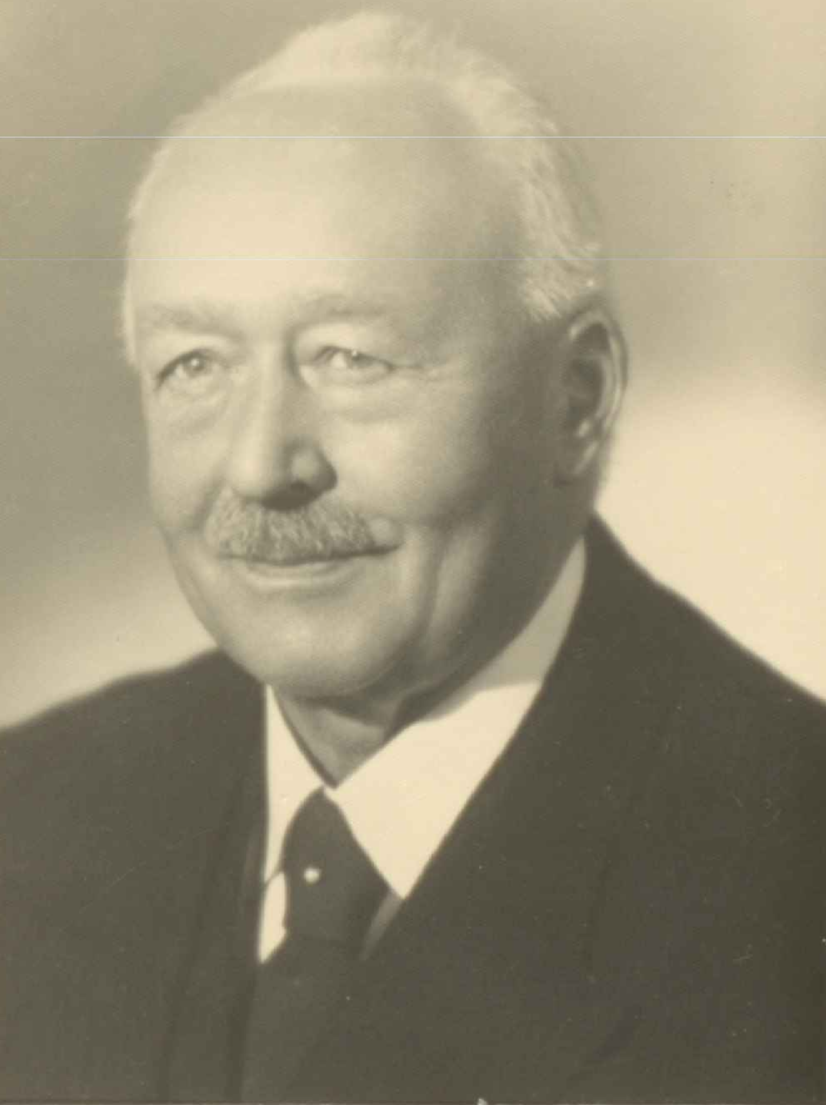
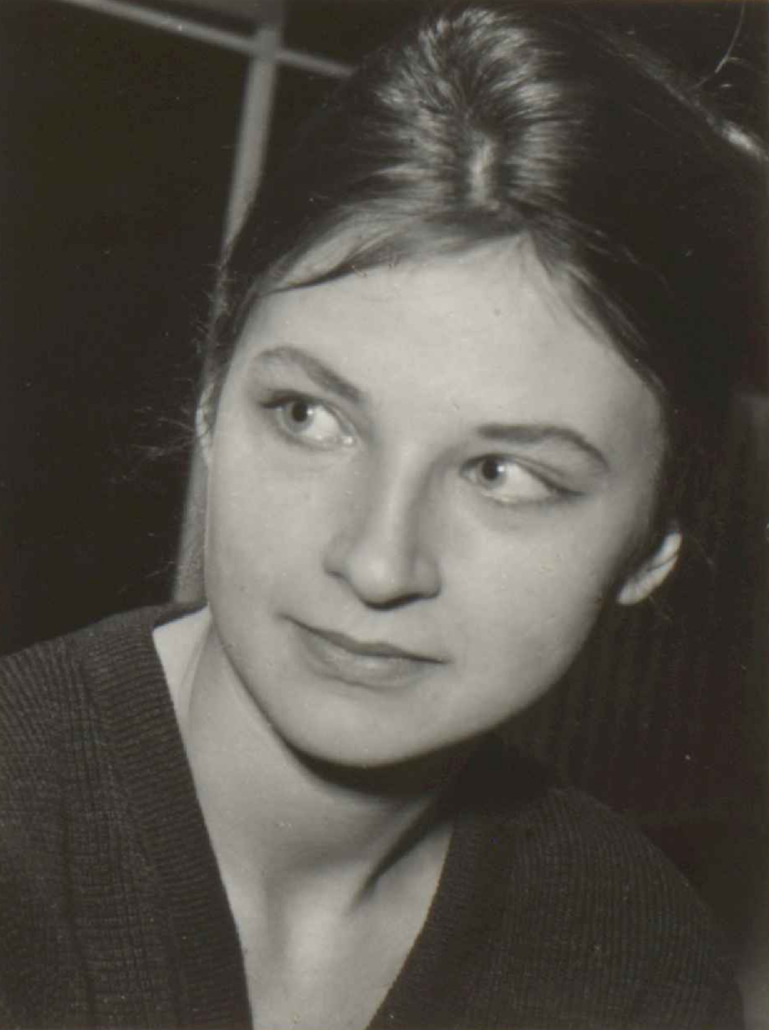
The Horní Bříza II Sub-branch of the Výrov Branch
The descendants of Rosalie Prusíková from Výrov, married name Karezová.
1807 – 1851
The second child of Vojtěch Prusík and Anna, née Fenclová, of Výrov was Rosalie. She was only two years younger than her sister Anna. She was born on 3 September 1807. Anna had been married in Horní Bříza, as Štěpánková, since 1822, and soon afterwards a marriage was arranged for Rosalie into the same village. On 6 June 1826 the nineteen-year-old Rosalie was married from Výrov to the farmer Vojtěch Karez. The Karez family had been settled in Horní Bříza long before that. On Vojtěch Karez's baptismal certificate his surname is written with an “s”, and many of his descendants still spell it so today. Vojtěch Karez had holding No. 3 on the old village green. He was born on 22 April 1805. He died on 28 September 1864. By then his wife Rosalie had been dead for thirteen years. She died suddenly of a stroke. It was when nature was in full blossom, on 9 May 1851. Their holding No. 3 was then divided, on 14 December 1850, between their sons Josef and Antonín. Josef farmed at No. 3, and his brother Antonín Karez in the new homestead, which was given the number 71. The family of Vojtěch and Rosalie Karez always remained on the friendliest of terms with Výrov. When Rosalie's brother Václav Prusík lost his father in 1841, his brother-in-law Vojtěch Karez became his guardian for almost two years. Relatives still live in both homesteads today, it is true, but no longer under the name Karez.
Rosalie and Vojtěch had four children who reached adulthood. The eldest was their son Antonín, who was born on 29 January 1830 and died in Horní Bříza, at No. 71, on 31 July 1908. The second was Josef, born on 22 January 1833; he farmed at No. 3 from 1852 and died there on 29 December 1904. The third son, Jan, was born on 6 August 1838. For him there was nothing left at home, and so he married into Nynice near Plzeň. He later died at his daughter's in Plzeň, on 17 May 1918. The fourth child was Marie; she was born on 12 February 1843, married Vojtěch Mašek, a farmer in Třemošná, and died there on 16 June 1924.
Antonín Karez, the first-born son, was born on 29 January 1830. He farmed at Horní Bříza No. 71. He had three sons. The first was Josef, born on 11 October 1852. He lived in Ledce, in Horní Bříza and for a long time in Plzeň, where he died on 17 July 1938. The second was Václav Karez, born on 8 August 1859; he farmed at No. 71 and died there on 21 January 1935. The last son, Antonín Karez, was born on 20 February 1862. He farmed at No. 3 and died on 15 September 1927. Their father, Antonín, lived in retirement on the farm at No. 71 and died at the age of 78, on 31 July 1908.
Antonín's son Josef Karez was born in Horní Bříza on 11 October 1852. He was not, like his two brothers, destined for farming. Even as a boy he did very well at school and longed to study in Prague. This dream, however, was never fulfilled. When he married, he and his wife, who came from Nepomuk, bought a cottage in Ledce, near Horní Bříza, where they had
a small shop. But there was strong Jewish competition there, and so the shop did badly. They moved to Horní Bříza, and in 1892 on to Plzeň, to Na Zavadilce. In Plzeň Josef Karez was then a worker at the Burghers' Brewery, and in later life he was employed by the town of Plzeň. He died there in the almshouse (today an old people's home) on 17 July 1938. Josef Karez had seven children. The eldest was Antonie, born on 8 April 1882; she married Lokajíček, a foreman of the Czechoslovak State Railways (ČSD) in Plzeň, and died on 21 December 1925. She had a daughter, Jiřina, born on 4 August 1903, married name Suchá, of Chomutov, Čelakovského 24, and five other children. Jiřina Suchá has two sons: Josef, born on 15 June 1927, who also lives in Chomutov, Karoliny Světlé 36. He has two little sons, Josef, born on 3 January 1953, and Jan, born on 17 November 1960. Her other son, Jiří Suchý, born on 27 March 1933, lives in Litvínov VI, No. 1617. He has a little son, Jiří, born on 6 August 1957, and a daughter, Martina, born on 26 September 1964. Antonie Lokajíčková's second child is František. He was born on 18 May 1905 and lives today at Planá near Mariánské Lázně, No. 186. He has three sons: František, born on 3 May 1933, and Zdeněk, born on 16 October 1937, who is an officer, lives in Výškov near Tachov and has a daughter, Jarmila, born on 23 September 1961. The third son is Bohuslav Lokajíček, born on 7 April 1943. Antonie's third child is her daughter Antonie. She was born on 17 October 1906, married Zahradník, an officer of the Czechoslovak army, and lives in Prague 6, Národní obrany 35. She has three children. Her son Zbyněk Zahradník, born on 1 June 1929, was a chemist in Teplice, and in this occupation he brought on his own early death, on 9 May 1960. He left a son, Zbyněk, born on 18 May 1952, who lives with his mother in Teplice, Prokopa Holého 3. Her daughter Blanka, married name Vávrová, was born on 16 December 1930 and lives with her mother in Prague 6. She has a daughter, Blanka, born on 3 June 1952. The third is Antonie, married name Lábová, born on 15 July 1942, who lives in Prague-Braník, Ke Krči 43. She has a daughter, Jana, born on 6 May 1963. Antonie Lokajíčková's third daughter is Marie, married name Volfová, of Plzeň, Lobezská 3. She was born on 9 April 1913. (She died on 19 May 1968.) She has a son, Vladimír, born on 12 June 1940, and he has a little daughter, Daniela, born in November 1967. Antonie's second son is Bohuslav Lokajíček, born on 29 September 1916, who lives in Plzeň, Guldenerova 41. His daughter Milada, married name Němečková, is a doctor. She was born on 14 January 1943 and lives in Plzeň, Koterovská 20. She has a daughter, Martina, born on 11 March 1965. Bohuslav Lokajíček's second daughter is Jindřiška, born on 13 January 1947. Antonie's youngest son is Stanislav Lokajíček. He was born on 26 November 1923 and lives in Plzeň, Lukavická 26. His daughter Eva was born on 5 August 1950.
Josef Karez's second daughter was Josefa. She was born in Ledce on 21 June 1883, married the mason Rubáš and died in Plzeň on 2 September 1957. She had three children, all sons. Karel Rubáš, born on 19 October 1907, lives in Karlovy Vary, nábřeží A. Zápotockého 26. For four years he was a member of the local national committee (MNV), and he was a professional fire-brigade commander. His daughter Jana was killed as a small child in an air raid on Plzeň. His daughter Zdeňka, born on 13 October 1934, married to the architect Kučera, acted for quite a long time at the Paravan theatre. She lives in Prague 1, Pařížská 19. She has a little daughter, Kristina, born on 20 August 1961. Jindřiška Rubášová was born on 3 October 1948. Karel's brother, Josef Rubáš, was born on 25 October 1905 and died unmarried in Broumov on 6 June 1949. The third son is František Rubáš,
born on 10 April 1910. He lives today in Povrly near Ústí nad Labem, Labská 10. In 1929 he started as a dancer at the Plzeň theatre under the director Veverka, and then worked as an actor under the director Drašar at the theatre in Bratislava and Košice, and then in Prague, at the Tyl Theatre, until 1948. (Today the theatre Na Fidlovačce in Nusle.) He has a daughter, Daniela, born on 18 January 1933. She lives in Plzeň, sady 5. května 26. Her married name is Franková. Her little son Zdeněk Rubáš, born out of wedlock on 18 July 1952, lives in Bečov nad Teplou. Her little daughter Daniela Franková was born on 27 September 1964.
Josef Karez's third daughter was Barbora, born on 21 February 1885. (She died on 11 June 1949.) She married the brickmaker Majer. She had six children. Her eldest daughter, Josefa, was born in Bolevec on 17 March 1902. She had a “colourful” life, and for that reason the family did not want to acknowledge her. She died in Prague on 4 August 1962. Her daughter Jiřina, married name Jermanová, born on 21 December 1924, lives in Plzeň, třída 1. máje 16. She is Josefa's child born out of wedlock; in later life Josefa's married name was Adamová. Jiřina Jermanová has four boys: Jiří, born on 23 April 1947, Ladislav, born on 7 August 1948, Zdeněk, born on 23 August 1950, and Petr, born on 2 September 1954. Josefa Majerová's second daughter born out of wedlock was Věra, married name Plevniová, born on 25 August 1927. She lived in Karvinná near Ostrava and died there young, on 20 September 1967. Barbora Majerová's eldest son, Josef, was born on 19 March 1906; he is childless and lives in Plzeň-Roudná, Lipová 10. His brother Karel, born on 24 April 1911, is also childless and lives in Plzeň, U trati 11. Barbora's daughter Julie, married name Voříšková, born on 17 May 1914, lives in Plzeň, Denisovo nábřeží 8. She has two children. Her son Václav, born on 15 December 1932, works for the forest administration in the Beskydy mountains. He lives in the village of Bartošky, No. 572, near Frenštát pod Radhoštěm. He has a little son, Václav, born on 6 May 1958, and a daughter, Zdeňka, born on 4 February 1962. Her daughter Olga, married name Draská, born on 11 July 1940, lives in Plzeň, Pařížská 3. She has a son, Bohumil, born on 6 January 1957, and a daughter, Dana, born on 6 August 1960. Barbora Majerová's third son is Bohuslav. He was born on 17 January 1916 and lives in Plzeň, Prešovská 8. He has three children. Bohuslav Majer, born on 4 April 1942, lives in Mariánské Lázně-Úšovice, Dobrovského 164. He has two little sons, Pavel, born on 9 February 1964, and Zdeněk, born on 23 February 1965. Ladislav Majer was born on 21 January 1945 and Jindřiška on 4 February 1959. Barbora Majerová's last son is Ladislav. He was born on 13 January 1918. He is a restaurant manager in Strakonice I-28. He has two sons, Pavel, born on 11 June 1946, and Milan, born on 5 September 1955.
Josef Karez's next daughter was Marie, married name Kellerová. She was born in Horní Bříza on 29 January 1888. Her husband is a worker at the Škoda Works. Marie married him when he was a widower with children. Of her marriage a daughter, Marie, was then born, on 16 April 1921. Her married name is Jiráčková. Marie Kellerová lives at Kněžmost No. 175 near Mnichovo Hradiště. Her daughter lives in the same village, at No. 154. Marie Jiráčková has a daughter, Ivana, married name Prokorátová, born on 10 July 1941. She is a teacher and lives nearby, in the village of Branžež. She has a little son, Jiří, born on 3 March 1964. Marie Jiráčková's next daughter is Marta, married name Liebischová, born on 7 December 1944. She has two sons, Václav, born on 14 February 1964, and Jan, born on 8 December 1966. Marie Jiráčková also has a daughter, Jana Lejsková, born on 22 February 1949, and a little son, Jiří Jiráček, born on 13 March 1956.
Josef Karez's youngest daughter is Kateřina, married name Nerudová. She was born in Horní Bříza on 28 August 1890. Her husband is an official of the ČSD. She lives in Písek, Na spravedlnosti 1481. She has only one son, Oldřich, born on 15 December 1915. He is a lieutenant colonel and lives in Hradec Králové, Orlická Kotlina 1068. He has a daughter, Anna, born on 28 August 1953.
Josef Karez's eldest son was Josef, born in Plzeň on 16 September 1895. He served in the First World War, came back as a legionary of the Czechoslovak Legion in Russia and then remained a professional soldier. He was childless, and as an officer he took his own life in Lysá nad Labem in 1934.
Josef Karez's last child was Rudolf, born on 17 April 1897. He was apprenticed as a joiner and at eighteen volunteered for the army. He had various jobs. Among other things he also went through a special school for masseurs and was for a time the personal masseur of President T. G. Masaryk. After the Second World War he came to Karlovy Vary, where he entered the service of the state spa. For several years he was chairman of the local national committee. He had two children. Irena, married name Hájková, born on 1 August 1923, lives in Prague-Nusle, V Horkách 13. She has a daughter, Jana, born on 5 May 1944, and Pavel, born on 5 January 1950. His son Dušan Karez was born on 1 April 1930. He died after a heart attack, at the age of 32, on 11 November 1962. He had three children, who live in Plzeň, třída 1. máje 87. They are Milada, born on 21 March 1962, Dušana, born on 11 August 1955, and Kateřina, born on 28 April 1954. Despite his political successes, Rudolf Karez's private life was not a happy one. On Christmas Eve, 24 December 1949, he shot his wife, wrote a farewell letter and cut his throat with a razor. His life was thus a very turbulent one.
Antonín Karez's second son was Václav Karez. He was born in Horní Bříza on 8 August 1859. He then farmed all his life on homestead No. 71, and died there too, on 21 January 1935. He had seven children, five daughters and two sons.
The eldest daughter was Marie, born on 7 June 1881, who married the brickmaker Majer, whose brother was the husband of her cousin Barbora. Marie Majerová lived in Bolevec. She died there on 17 February 1942. She had five children. The eldest, Josef Majer, born on 26 January 1906, remained unmarried and lives in Plzeň-Bolevec, Náves 34-5. His sister Albína, born on 29 November 1909, was married to the butcher Salcman. She is childless and lives in Bolevec, like her brother Josef. The second son is Václav Majer, born on 2 January 1920. He lives in Nejdek, Osvětimská 727. He has three children from two marriages. His daughter Pavla, married name Peroutová, born on 28 February 1946, has a little daughter, Marcela, born on 21 March 1964, who bears her father's surname, Kozlíková. Václav Majer was born on 23 July 1947, and Jaroslav, who lives with his father in Nejdek, on 15 September 1948. Marie Majerová's third son, Bedřich, was born on 19 October 1922 and lives today at Malá Šitboř No. 27 near Mariánské Lázně. He has four children: Alena, born on 13 May 1950, Karel, born on 26 October 1952, Bedřich, born on 18 May 1957, and Anna, born on 14 July 1963. Marie Majerová's last child is Jaroslav, born on 29 July 1924; he is childless and also lives in Bolevec with his brother and sister.
Václav Karez's second daughter is Anna. She was born on 26 August 1885; her married name is Kotková, and she lives at Horní Bříza No. 161. Her daughter Milada, married name Winkelhöferová, was born on 22 May 1909. Her daughter Věra, first married name Poppová and now Žižková, was born on 2 August 1940. Anna Kotková died on 20 May 1968.
Václav Karez's eldest son was Josef. He was born on 19 May 1887 and farmed at Horní Bříza No. 43. He died on 3 June 1948. He had two children: Josef Karez, born on 5 May 1924, is unmarried, and his daughter Stanislava, born on 20 May 1929, married name Kahounová, lives in her native village. Her son Přemysl Kahoun was born on 25 May 1956.
The daughter Kristina Karezová, born on 24 July 1889, died unmarried at her father Václav's on 30 September 1906.
The second son, Václav Karez, was born on 31 October 1892 and fell in the First World War, in Serbia, on 11 January 1915.
Václav Karez's fourth daughter is Josefa. She was born on 9 August 1894, married V. Brťek and received holding No. 71 from her father. Josefa Brťková is one of those who best remember the history of the Karez family in Horní Bříza. She knows family details not only from the present day but also from times long past, and she will tell you from memory a countless number of exact dates, of the births and deaths of the members of the large Karez family. She is a veritable encyclopaedia. In the difficult search for all the descendants of Rosalie Karezová, she gave this historical work uncommon help with her memory. Josefa Brťková has two sons. Václav, born on 9 February 1924, has two children, Jarmila, born on 28 October 1949, and Václav, born on 20 June 1951. Her second son, Josef, was born on 29 July 1926 and lives at Horní Bříza No. 364. He has a little son, Josef, born on 11 July 1952.
Václav Karez's last child is Albína, married name Burešová. She was born on 3 February 1899 and lives in Plzeň, Chotíkovská 40. She has an only son, the teacher Oldřich Bureš, born on 16 April 1927. He has two little sons, Petr, born on 8 December 1953, and Oldřich, born on 11 January 1956.
Antonín Karez's last son was Antonín Karez. He was born in Horní Bříza on 20 February 1862 and farmed at No. 3. He died there on 15 September 1927 and had an only son.
Antonín Karez's only child was Jaroslav Karez. He was born on 24 April 1899 and farmed the farm No. 3 after his father. He died on 27 June 1966. He had a daughter, Jaroslava, married name Caltová, of Ledce No. 53. She was born on 14 April 1922. She has two children, Jaroslava, born on 18 September 1943, and Josef, born on 31 December 1948. Jaroslava, whose first married name was Kovandová, has a little son, Jaroslav, born on 25 May 1965, and, under her second married name, Neužilová, a little son, Václav, born on 5 March 1968. Josef Calta has a daughter, Věra, born on 30 October 1967.
The second son of Vojtěch Karez and Rosalie, née Prusíková, was Josef Karez. He was born on 22 January 1833. From 1852 he farmed independently on holding No. 3, from which half had been divided off two years earlier for his brother Antonín. Josef Karez had seven children, two daughters and five sons. Josef Karez died at the age of 71, on 29 December 1904, in his home in Horní Bříza, in the same house in which his mother Rosalie, née Prusíková, had died 53 years before.
The eldest child of Josef Karez of Horní Bříza No. 3 was Josefa, married name Švábová. She was born on 29 February 1852 and died in Horní Bříza on 19 October 1917. The second was a son, Josef Karez, born on 14 March 1861, who settled at No. 32 and died there on 6 June 1923. The third was Barbora. She was born on 18 December 1962 [sic, probably 1862] and remained unmarried. She was a cook. She died on 29 January 1910. The next was Antonín, who was born on 10 February 1865. He became a teacher and died in Vraňany near Mělník on 26 May 1930. The son Jakub was born on 13 March 1867; he was an official of the ČSD and died tragically young in 1905. His brother Václav, born on 14 November 1870, had an inn at Horní Bříza No. 17 and died there on 27 September 1934. The last child was František Karez, born on 29 August 1876. Like his brother, he too was an official on the railway. He died in Jindřichův Hradec on 29 January 1946.
Josef Karez's first child was Josefa. She was born on 29 February 1852 and married the worker Šváb. She lived in Horní Bříza and was a very hard-working and tenacious woman. Since transport connections were poor in those days, she herself carried the goods from her bakery in a basket on her back all the way to Plzeň. On one such journey she was attacked in the Bolevec woods; she fought her attacker off, but afterwards succumbed to the shock she had suffered in the attack and died on 19 October 1917. She had six children. Her sons, except for Josef, were bakers. The eldest was her daughter Anna. She was born in Horní Bříza on 25 May 1874 and married Čejka, the gamekeeper of the Hubenov forest district near Kralovice. She had two children, and at her third confinement her child was stillborn and she too ended her young life. That was on 13 February 1905. Her husband fell in the World War. Her first son is Alois Čejka, born on 9 March 1900. He is a smallholder living at Vysoká Libyně No. 19, where he is a road-mender. He has an only son, Karel, born on 23 November 1927, who lives at Čistá No. 184 near Rakovník. He has three children: Karel, born on 19 May 1956, Milan, born on 11 July 1957, and Květa, born on 17 August 1958. Her second son is Václav Čejka, born on 13 September 1903. He lives in Modřany near Prague, Cholupická 320. There he had a fine butcher's shop. He has three sons. The eldest, Jaroslav Čejka, was born on 7 January 1928; he is a trained asphalt worker and has two sons, Miroslav, born on 25 November 1953, and Jaroslav, born on 14 July 1949. The second son, Václav Čejka, is a chemist; he was born on 17 February 1931. He has two little daughters, Marie, born on 3 September 1959, and Markéta, born on 22 August 1965. The third, Jiří Čejka, was born on 19 April 1936. He is a driver and still unmarried. All three live with their parents in Modřany. Josefa Švábová's second child, a son, was Josef. He was born on 18 July 1876 and lived in Horní Bříza, where he worked as a postman. He died there on 13 June 1926. He had two children. Josef Šváb was born on 23 February 1921, trained as a photographer and then had various occupations. At the beginning of the occupation he fled from the Protectorate through Switzerland to France, where he later joined the American army of occupation, with which he then came home at the liberation. He now works for the Military Construction enterprise. He lives in Prague 1, Loretánská 3. From his first marriage, which ended in divorce, he has a daughter, Vanda, born on 4 June 1952, who lives with her mother in Příbram, No. 194. Josef Šváb's second child is his daughter Marie. She was born in Horní Bříza on 28 March 1924 and is married to the gardener Šašek. She lives in Nová Role near Karlovy Vary, Sídliště 194. She has three daughters. Jana, married name Pastorová, was born on 6 December 1945. She has a son, Luboš, born on 10 February 1968.
The second daughter of Marie Šašková, née Švábová, is Dagmar, married name Herzlová, born on 23 November 1947, and the third is Marie, born on 7 September 1955. Josefa Švábová's third child was Jakub. He was born in Horní Bříza on 19 November 1879. He had an inn and a bakery in Plzeň-Bolevec, Na Zavadilce. After the early death of his son František he sold the inn. Jakub Šváb had three children. The eldest is Anna, born on 29 June 1908, married name Jandová, who lives in Plzeň, Krymská 15. She has an only son, Miroslav, born on 21 January 1932. His children are Miroslav, born on 15 June 1954, and a daughter, Pavla, born on 15 September 1955. The next is Růžena, married name Vápeníková. She was born on 14 April 1916 and is childless. She lives in Plzeň, Pallova 18. The son František Šváb was born on 1 October 1910 and died of consumption at the age of 22, on 1 October 1932. Jakub died on 20 November 1936.
Josefa Švábová's fourth child was František. He was born in Horní Bříza on 21 August 1881 and died in Plzeň on 8 March 1936. Like his brother Jakub, he too had an inn. He had three children, two daughters and a son. The eldest, Helena, married name Pintová, was born on 4 July 1910 and died at the age of 39 in Plzeň-Bolevec, on 1 May 1949. She had two children. František Pinta, born on 5 June 1935, lives in Bolevec, Plasská 21. His sister Eva, married name Krištofová, born on 10 July 1937, also lives there. She has a daughter, Helena, born on 14 August 1959, and a son, Miloš, born on 30 December 1964. František Šváb's second daughter is Růžena, married name Kutzendörferová. She was born on 5 June 1912 and also lives in Bolevec, Plasská 21. She has two sons. Stanislav, born on 29 March 1937, has two little daughters, Marie, born on 15 April 1956, and Stanislava, born on 12 February 1962. The second son, Zdeněk, born on 23 October 1941, has a little daughter, Alena, born on 7 July 1960. František Šváb's third child is his son František. He was born on 14 January 1920. He is a chemist and also lives in Bolevec, in Plasská Street. He has four children: František, born on 22 January 1942, Jaroslav, born on 27 December 1947, Olga, born on 11 January 1951, and Josef, born on 29 May 1953.
Josefa Švábová's last son, Václav, stayed at home. He was born on 15 April 1892, was a baker at Horní Bříza No. 69 and died there on 3 March 1965. He had two sons. Jiří Šváb, born on 7 February 1924, married into Obora No. 181 near Kaznějov. He is a clerk in Plzeň. He has a daughter, Drahoslava, born on 8 March 1953. The second son, Václav, born on 23 August 1932, has a little son, Václav, born on 14 April 1960, and Luděk, born on 10 May 1963. Josefa Švábová's youngest daughter was Barbora. She was born on 7 May 1889. She married the workshop foreman Pašek. She lived for a long time in Plzeň, Na Roudné 13. She died there on 2 August 1965. Two of her children live there. Helena, married name Kašparová, born on 29 May 1919, has a daughter, Jana, born on 22 April 1958. Then there is her son, the engineer Miloslav Pašek, born on 13 January 1922. He has two children, Jaroslava, born on 19 June 1951, and Vladimír, born on 15 December 1953. Václav Šváb now lives in Plzeň-Doubravka, Hrádecká 12.
Josef Karez's second child was his son Josef. He was born at Horní Bříza No. 3 on 14 March 1861. He later married into No. 32 in Horní Bříza, where he had a butcher's shop and an inn. He was very well liked and for twenty years was mayor of the village. He died in his home on 6 June 1923. He had three children. His first child was his son František Karez. He was born on 20 August 1895 and went through the higher modern secondary school in Plzeň and a commercial school. He was then a clerk at the Kaolinka kaolin works in Horní Bříza, and for a time also at the head office in Prague. Because his second wife was a Jewish woman, he was interned in Postoloprty in 1944. He escaped from there and lived to see the liberation.
In his last years František Karez lived at Mýto near Rokycany, No. 5, and died there on 12 April 1964. From his first marriage he had a daughter, Ludmila, born on 9 June 1919. She is married to the doctor Duchek, in Kozolupy-Touškov near Plzeň. She has two children, Karel Duchek, born on 18 November 1946, and Ludmila, born on 14 December 1954. His daughter from his second marriage is Asta, married name Langerová, of Prague 6, Na Hubalce 8. She was born on 30 January 1925. From her own first marriage she has a daughter, Jiřina Mezerová, born on 5 August 1950.
Josef Karez's second child was Anna. She was born on 16 September 1897. She was a needlework teacher and married the revenue official Pospíšil. For a long time she lived with him in Slovakia. There her son Ladislav Pospíšil was born, on 5 March 1925. He is a technical officer at Tesla and lives in Prague-Hloubětín, Poděbradská 142. He has two sons, Ladislav, born on 22 November 1952, and Zdeněk, born on 18 June 1957. Anna Pospíšilová died shortly after her seventieth birthday, on 3 October 1967, in Prague, where she lived with her son.
The last child of Josef Karez, the former mayor of Horní Bříza, was Václav. He was born on 31 May 1900 and lived with his father at Horní Bříza No. 32. He died on 15 September 1963. He left an only son, Pavel Karez, born on 29 January 1946.
Josef Karez's third child was Antonín. He was born at Horní Bříza No. 3 on 10 February 1865. Because he did very well at the elementary school, his parents sent him to study in Plzeň. There he studied at the grammar school up to the fifth form and then went on to further studies at the newly founded grammar school in Roudnice nad Labem. Its headmaster was his close relative František Xaver Prusík, who, like his grandmother Rosalie, had been born at Výrov No. 18. After his school-leaving examination Antonín Karez was, at his parents' wish, to go to the seminary in Prague to become a priest. But he had no inclination for it whatsoever. In his further fortunes he was helped by his grandmother's brother, the vicar Blažej Prusík, then serving at St Vitus's in Hradčany. Being an enlightened priest, he talked the parents out of their intention. Antonín Karez then became a teacher, and his first post was the school in Zálezlice, in the Mělník area. Later he also taught in Vrbno and in Vraňany near Mělník, and it was there, too, that he died, on 26 May 1930. The teacher Antonín Karez had two daughters. Anna, born on 14 June 1902, married Julius Kettner, a librarian at the Presidium of the Government. She lives in Prague 6, Nad Šárkou 12. She has two daughters. Anna, married name Němcová, born on 14 December 1923, lives in Zahrádka near Náměšť nad Oslavou, in Moravia. She has two children, Petr, born on 16 October 1945, and Anna, born on 4 December 1952. Anna Kettnerová's second daughter is the engineer Jiřina Tomanová, born on 16 September 1925. She lives with her parents in Prague and is childless. Antonín Karez's second child is Marie, born on 12 June 1907. She married J. Němec, an official of the Agricultural Cooperative in Mělník, and lives there, at Sídliště 438. She has a daughter, Jarmila, married name Rezková, who was born on 24 February 1931, works as a teacher and also lives in Vraňany. Petr Němec from Náměšť nad Oslavou married into Velká Bíteš.
Josef Karez's next child was Jakub Karez. He was born on 13 March 1867. He too studied in Plzeň and later became a station dispatcher on the railway at Klobuky near Slaný. He was a great musician.
Once, when the orchestra of which he was bandmaster was giving a concert in Prague, he fell from the stage, suffered severe internal injuries and died soon after an operation. That was in 1905. Not only he but his whole family met a tragic fate. His son Miloš Karez, born in Klobuky on 10 May 1900, died as a student in Prague on 19 May 1916. His second son, František, born on 5 April 1903, also died while still a student, in Prague on 31 March 1917. Their sister, Julie Karezová, born on 20 April 1901, died as a young clerk in Prague on 15 November 1920. The youngest was Václav, who was born on 12 September 1904. He was a worker and lived as a recluse in Prague. Towards the end of his short life he went deaf. He died in Prague on 31 March 1939, just at the beginning of the Protectorate.
Josef Karez's next son was Václav. He was born at Horní Bříza No. 3 on 14 November 1870 and later farmed at No. 17, where he also had an inn. He died on 27 September 1934. He had two daughters. Anna, married name Kroftová, was born on 15 November 1896 and died on 5 August 1966. She had four children, and we have already told of them briefly as descendants of their father, Václav Krofta, who was in his turn a descendant of Anna Prusíková, married name Štěpánková, in Horní Bříza.
The second daughter was Albína, married name Kuglerová. She was born on 22 February 1907 but died as early as 8 September 1948, in Prague. She had two sons. Milan Kugler was born on 7 October 1928; he is a doctor and lives in Plzeň, Slovanská alej 8. He has a son, Milan, born on 17 September 1957. The second son is Jaroslav Kugler, born on 3 December 1931; he is a clerk at Centrotex in Prague and lives in Prague-Hloubětín, Zelenečská 52. He has a daughter, Irena, born on 5 May 1960, and a little son, Jaroslav, born on 5 May 1963.
Josef Karez's youngest child was his son František, born on 29 August 1876. He too was sent to study. He went to South Bohemia, where he worked for the railway as an official in Veselí nad Lužnicí and in Ševětín, and finally was stationmaster at Jarošov nad Nežárkou near Jindřichův Hradec. He died in Jindřichův Hradec on 29 January 1946 and is buried in Třeboň. František Karez had five children. The eldest was František. He was born in Veselí nad Lužnicí on 6 December 1900. He too was employed by the railway. For a long time he worked in Pelhřimov. He died there on 28 June 1967. František Karez is also one of those who, with their excellent memory of old times, helped this work to succeed. He was married twice. Of his first marriage a son, Roman, was born on 13 February 1931. He is a mechanical engineer and today lectures at the Technical University in Prague. He lives in Prague 6, Farní 11. He is childless. His brother Otomar, born of František Karez's second marriage, was born on 16 October 1933 and is a technician at the Škoda Works in Plzeň. He lives in Plzeň-Slovany, Mládežníků 22. He has two children, Roman, born on 7 May 1962, and a daughter, Radka, born on 9 August 1966. František Karez's second son is Miloslav. He was born on 15 December 1901, also worked for the railways all his life and lives by the station in Třeboň. He has two sons. Zbyněk Karez, born on 12 June 1925, works at the ČSD directorate in Prague. He lives in Prague-
Spořilov, Jihovýchodní 894. He has a son, Michal, born on 24 January 1958. The second son is Miroslav Karez, born on 15 August 1929. He is a forestry official in Třeboň and lives there too. He has two children: his daughter Miroslava, born on 8 March 1958, and his second daughter, Jarmila, born on 11 March 1960.
František Karez's third son was Bohuslav. He was born in Veselí nad Lužnicí on 12 December 1903. He was an official of the Accident Insurance Company and was married three times, but he did not have a happy life. He died in Prague on 4 February 1958. He had two sons. Bohuslav, born on 13 August 1932, fled abroad as a student, and his last known place of residence was a small place called Glencoe, in the state of New South Wales in Australia. According to enquiries, however, he no longer lives there today, and it is not known where fate has carried him since. Bohuslav's second son is Milan Karez, born on 7 December 1949, who lives with his mother in Prague-Strašnice, Na Hroudě 23.
František Karez's fourth son was Jindřich. He was born in Ševětín on 3 July 1905. He was a teacher and lives in retirement in Děčín, Máchovo náměstí 2. He has two children. Jaroslav is a specialist teacher and lives in Děčín, Sídliště, Kamenická. He was born on 17 April 1938 and has one little son, Tomáš, born on 4 August 1963. Jindřich's second child is his daughter Jindřiška. She was born on 4 June 1939 and studied at the conservatory in Prague; her married name is Soukupová, but as an opera singer she has kept her maiden name, Karezová. She is now engaged at the opera in České Budějovice. The specialist periodical Divadelní noviny, in one of its latest reviews of the performances in České Budějovice, writes of her: “Among the soloists, J. Karezová catches the eye with her natural acting, and she also has no small vocal gifts in her pleasantly coloured, agreeable-sounding voice.” Iša Karezová, as she calls herself, has a little son, Jan, born on 1 July 1966. František Karez's last child was his daughter Květoslava. She was born on 30 April 1910. She married the chemical engineer Vladimír Emmer, and for a long time they lived together in Slovakia. She lives in Prague 6, U zeměpisného ústavu 2. She has two children. Her son Vladimír was born on 1 July 1929 and is an eye doctor in Kladno. He lives, however, in Prague 6, Na Babě, Na ostrohu 3. He has three children: Jarmila, born on 1 June 1954, Jan, born on 26 June 1960, and Halka Emmerová, born on 19 December 1962. Květoslava's second child is Naděžda, born on 16 February 1931, who is married to the engineer Michal, who works at the Ore Research Institute. She lives with her parents in Prague 6. She has a little daughter, Naděžda, born on 21 December 1953.
The third son of Vojtěch Karez and Rosalie, née Prusíková, of Výrov was Jan. He was born in Horní Bříza on 6 August 1838. Since his brothers Antonín and Josef had received the home holding, divided in half, he left home and married into Nynice, in the Plzeň area, where he farmed. Later he lived with his son in Starý Plzenec and then with his daughter in Plzeň, Na Roudné, where he died on 17 May 1918. By all accounts he was a cheerful man. He had five children. Vojtěch Kares, as his great-grandfather had once spelt the name, was born at Nynice No. 12 on 15 November 1881; he later married into Starý Plzenec No. 15, where he farmed, and died on 17 May 1961. The second son was Josef Kares, born in Nynice on 14 November 1869. He was a post-office official in various places and
died in Prague on 30 December 1927. The third was František Kares, born on 14 May 1872. He went off to the World War unmarried and fell there in 1915. The fourth son was Václav Kares. He was born on 14 January 1879, also in Nynice, and was an official of the Academy of Fine Arts and of the School of Applied Arts in Prague. He died in retirement in Krupka near Teplice on 16 April 1957. Jan Kares's last child was his daughter Marie. She was born on 13 September 1876, later married Beringer, a burgher of Plzeň, and died in Plzeň on 13 March 1952.
Jan Kares's eldest son, Vojtěch, born in Nynice on 15 November 1881, settled as a farmer in Starý Plzenec. He died there on 17 May 1961. He had three children. The eldest, Josef Kares, was born on 10 February 1909; he took over the farm from his father and is today a member of the collective farm (JZD). He lives at Starý Plzenec No. 15. He has three children: his son Josef Kares, born on 29 May 1945, Eva, born on 9 December 1946, and Ladislav, born on 10 June 1954. The second son, Jaroslav Kares, born on 5 April 1914, is a worker at the Škoda Works. He too lives in Starý Plzenec, Bezručova 547. He has two children, a son, Jaroslav, born on 11 January 1943, and a daughter, Jana, born on 27 February 1945. Vojtěch Kares's last child is Anna, married name Herejková. She was born on 11 June 1920. Like both her brothers, she too lives in Starý Plzenec, in Smetanova Street, No. 114. She has a son, Oldřich, born on 26 April 1947.
Jan Kares's second child was Josef. He was born in Nynice on 14 November 1869, went through the grammar school and then became an official at the post office. He worked in various places, in particular for a long time in Liberec and in Prague. He died there on 30 December 1927. He was married twice. He left an only son, Jaroslav, who was born in Liberec on 25 August 1901. He was an engineer and was employed at the Ministry of Transport; to this day he still teaches aeronautics at the University of Transport in Žilina. That has always been his great love. He lives in Prague 7, Kamenická 7, and is childless. Jan Kares's next son, Václav, was born in Nynice on 14 January 1879. He went through the classical grammar school in Plzeň but did not complete his law studies at Charles University in Prague. For many years he was employed at the Academy of Fine Arts in Prague, at Letná, as secretary under the rectors, Professors Švabinský and Myslbek. Later he moved to the School of Applied Arts in Prague, where he stayed until he retired on a pension in 1939. Towards the end of his life he settled in Krupka near Teplice, where he died on 16 April 1957. He had an only daughter, Helena, born on 16 December 1914. Her married name is Slováková; she is childless and lives in Krupka near Teplice, Libušín No. 237. Jan Kares's last child was his daughter Marie. She was born in Nynice on 13 September 1876 and later married Beringer, an enterprising burgher of Plzeň. Marie died on 13 March 1952 in Plzeň, Na Roudné. Her father, too, had died at her home, in 1918. She had an only son, Bohuslav Beringer. He was born in Plzeň on 30 March 1896 and died there on 30 March 1954. He has two sons. Miroslav Beringer was born on 22 May 1919 and lives in Plzeň, Pod záhorskem 9. He has two sons, Jiří, born on 7 December 1945, and Jaromír, born on 15 July 1953. Marie Beringerová's second son is Jaroslav, born on 26 September 1928. He lives in the same house as his brother. He too has two sons, Miloš Beringer, born on 19 May 1956, and Jiří, born on 14 July 1958.
The last child of Vojtěch Karez and Rosalie, née Prusíková, of Výrov was their daughter Marie. She was born still in the days of corvée, on 12 February 1843. She was the only daughter to reach adulthood. Her sister Barbora died while still small. In 1865 she married the farmer Vojtěch Mašek and went to live at No. 17 in nearby Třemošná. She had very numerous descendants; nine of her children reached adulthood. The eldest was her son Josef, born on 11 February 1866, who later took over his native farm but remained childless. So that the homestead should not pass into strangers' hands, as the saying went, he handed the holding over during his lifetime to the daughter of his sister Marie Kimmelová, who had died young: Anna, whose married name was later Andrlíková. Josef Mašek died in Třemošná on 8 May 1933. The second child was František; he was born on 20 December 1869, was a baker in Plzeň-Bolevec and died on 2 August 1946. The third was Václav Mašek, who was born on 6 May 1873, stayed in Třemošná and died on 14 January 1933. The fourth son was Antonín Mašek, born on 26 March 1875; he lived in Plzeň and died on 30 March 1941. The fifth child was a daughter, Marie, born in Třemošná on 18 September 1879; she married the farmer Kimmel in Ondřejov near Plasy. She died there young, on 13 April 1916. Next was Jakub Mašek, born in Třemošná on 26 June 1881, later settled as a baker in Plzeň-Škvrňany, where he died on 22 March 1958. Then there was a daughter, Anna. She was born in Třemošná on 19 September 1883 and had the married name Ehegartnerová, in Plzeň, Na Roudné. She lived to the greatest age of all her brothers and sisters; she died in the hospital in Rokycany on 27 March 1963. The third daughter was Josefa Mašková. She was born on 31 March 1889; her married name was Harmáčková, in Plzeň, where she died on 23 July 1952. The last was Martin Mašek, born in Třemošná on 3 February 1891. He later lived in Horní Bříza, where his marriage was childless. He died there on 27 September 1957. Although Marie Mašková was the mother of so many children, she died at the age of 84, on 16 June 1924.
We have already mentioned the first son of Vojtěch and Marie Mašek of Třemošná, Josef. He had no descendants.
His brother František Mašek was born on 20 December 1869. He had a bakery business in Plzeň-Bolevec and was the type of the old Czech countryman, honest, jovial and shrewd. His particular hobby was playing the bagpipes. He learnt it from his uncle in Třemošná, who as a young boy had lost his sight playing “tip-cat”. František Mašek became so accomplished at playing the bagpipes that he attracted the attention of music experts, for whom he sang and played on the bagpipes many old and little-known songs. They have been preserved on gramophone records. František Mašek had five children. He died in Plzeň on 2 August 1946. The eldest was his daughter Eliška. She was born on 20 December 1903; her married name was Vavříková, in Plzeň, where she died in July 1954. Her son, the engineer František Vavřík, born on 20 July 1922, lives in Plzeň, Mánesova 32. He has two sons, Roman, born on 27 August 1952, and Jiří, born on 23 March 1954. Her sister Františka was born on 28 June 1902 and lives in Plzeň-Bolevec, Frunzeho 3. She has a daughter, Emilie, married name Seberová, born on 3 May 1924. She has a son, Karel, born on 24 September 1949. The son Vojtěch Mašek, born on 21 March 1904, died unmarried as early as 28 March 1925. The daughter Emilie, born on 4 January 1906, had the married name Bernášková and died on 28 March 1964. She had an only son, Václav Bernášek, born on 5 August 1934. He lives in Plzeň-Bolevec, Frunzeho 3. He has a daughter, Jindřiška, born on 22 December 1958.
František Mašek's last child is Cecilie. She was born on 15 October 1911 and is married to the merchant Kunzman. Their fine shop is no longer their property. She lives in Plzeň-Bolevec, Lidická 42. Her daughter Jindřiška, born on 20 May 1934, is married to the doctor Machovský. She has a little son, Josef, born on 2 February 1955.
The next child of Vojtěch and Marie Mašek in Třemošná was Václav. He was born on 6 May 1873. When he married, his parents gave him part of the fields and built a new dwelling house in the same farmyard. Václav Mašek had four children. He died in Třemošná on 14 January 1933. His first child, his daughter Marie, was born on 29 January 1902. Her married name is Roubalová, and she lives at Česká Bříza No. 69. She has one daughter, Vlasta, born on 21 July 1925, married name Pešková, of Plzeň-Letná, Revoluční 57. She has two sons, Jiří, born on 20 September 1949, and Zdeněk Pešek, born on 6 May 1954. The second daughter is Františka, married name Denková, who lives at Třemošná No. 62. She was born on 9 December 1906. She has two children. Her daughter Zdeňka, married name Jílková, was born on 29 August 1935 and lives in Plzeň-Zátiší, Línská 5. She has two sons: Karel, born on 21 August 1957, and Zdeněk, born on 21 June 1964. Václav Denk, born on 13 March 1942, lives in Třemošná. The son Václav Mašek, born on 15 September 1910, lives at Třemošná No. 129. He is a mason. When the fortunes of the uncommonly far-branching family of Marie Mašková, née Karezová, who is a member of our Prusík family, were being traced, Václav Mašek was the first to put us on the trail, and so laid the ground for finding all of Marie Mašková's descendants. Václav Mašek has one daughter, Miluše, married name Dobrá, of Třemošná No. 733. She was born on 11 August 1934 and has a little son, Václav, born on 23 September 1955, and Irena, born on 8 February 1959. Václav Mašek's last child is Zdeňka. She was born on 22 July 1913; her married name is Pašková, and she lives at Trnová No. 10. Her daughter Miluše, married name Zelenková, lives in Trnová. She was born on 9 July 1940 and has a daughter, Pavla, born on 3 April 1965. Jiří Pašek, born on 6 December 1942, married into Kaceřov No. 7. He has a little son, Jiří, born on 29 August 1966. Then there are Anna Pašková, born on 13 July 1948, and Zdeňka, born on 20 June 1953.
Antonín Mašek, the next child of Vojtěch and Marie Mašek of Třemošná, was born there on 26 March 1875. He lived in Plzeň and died there on 30 March 1941. His only son, Antonín, was born on 21 October 1901, was a clerk in Plzeň and died without descendants in the old people's home at Liblín, on 30 July 1961.
The first daughter of Marie Mašková, née Karezová, was Marie. She was born in Třemošná on 18 September 1879. She married early, to the farmer Kimmel, and went to live in Ondřejov near Plasy. This family, however, had an unhappy fate. Her husband fell at the beginning of the First World War, in Serbia, and she too died very young, as early as 13 April 1916. She had six children, and so all of them were orphaned early. Their grandmother and grandfather in Třemošná then looked after them. The eldest was Anežka. She was born on 28 February 1904 and, under her married name Hauznerová, stayed in her home at Ondřejov No. 4. She has a daughter, Božena, born on 27 January 1923. Her married name is Sinkulová, and she lives at nearby Křečov No. 13. Her daughter Pavla, married name Sachrová, was born on 8 January 1946. She has a little daughter, Petruška, born on 13 January 1965. Božena's other daughter is Valentina, born on 20 September 1950.
Bohuslav Hauzner, born on 6 January 1927 and living at Ondřejov No. 4, is childless. The next was Marie. She was born on 18 March 1905 and is married to Kubelík, an employee of the ČSD. She lives in Mladotice, at the railway halt, No. 99. She has a daughter, Věra, born on 14 December 1932. Her married name is Hofraitrová, and she lives in Plzeň-Slovany, U Lomu 13. She has a daughter, Eva, born on 8 September 1953. Ludmila was born in Ondřejov on 8 September 1906 and, under her married name Kriegrová, lives at Borek near Žlutice, No. 6. She has three children. Ladislav Kriegr, born on 6 June 1927, also lives in Borek. He has two sons, Miloslav, born on 2 May 1961, and Jiří, born on 16 August 1962. Václav Kriegr was born on 23 November 1932. He too is settled in Borek. He has three sons: Václav, born on 1 October 1957, Ladislav, born on 26 June 1961, and Petr, born on 23 June 1964. Her daughter Marie, married name Soukupová, was born on 26 October 1928 and lives in Stod near Plzeň, No. 595. She has a daughter, Jana, born on 6 July 1956. The next is Anna. She was born in Ondřejov on 25 March 1908, but while the First World War was still on, her grandfather and grandmother took her, an orphan, to Třemošná. When her uncle Josef Mašek remained childless, he later handed the farm over to her, when she married the farmer Andrlík. Anna Andrlíková has lived on this holding, Třemošná No. 17, to this day. She has one daughter, Anděla, born on 29 July 1929. Her married name is Hájková, and she lives in Třemošná, Ke staré cihelně 285. She has two children, Pavel, born on 5 July 1949, and Alena, born on 7 March 1956. On 24 April 1909 the first son, Jaroslav Kimmel, was born in Ondřejov. He lives in Plzeň-Bolevec, Pod Mihulkou 273. His daughter Jaroslava, married name Bělíková, was born on 17 September 1933 and has a daughter, Olga, born on 17 March 1953. His son Václav Kimmel, born on 8 July 1942, has a little son, Jaroslav, born on 11 June 1965. Marie Kimmelová's second son, Václav, was employed by the ČSD. He was born in Ondřejov on 29 November 1911, was married but remained childless, and died relatively young, on 10 June 1959, in Prague, where he is buried. Jaroslava Bělíková lives in Prague 6, Leninova 676.
The next son of Vojtěch and Marie Mašek of Třemošná was Jakub. He was born on 26 June 1881 and was a baker. He was settled in Plzeň-Škvrňany, Hornická 66, where his son František still lives. Jakub had four children. He died in Plzeň on 22 March 1958. The first was Anna, born on 26 July 1906; her married name is Vildmanová, and she lives in Plzeň, třída 1. máje 133. She has two daughters. Irena was born on 20 April 1933; her married name is Bernatová, and she lives in Plzeň-Slovany, Slovanská 81. She has a little son, Ivo, born on 5 January 1960. The second daughter, Eva, married name Votípková, was born on 11 April 1943. She has a son, Karel, born on 5 November 1965. The son František was born on 6 February 1908. He learnt the baker's trade from his father Jakub and lives in Plzeň-Škvrňany, Hornická 66. He has two daughters. Jiřina, married name Němcová, was born on 21 April 1930 and lives in Plzeň, Koperníkova 32. She has a son, Jiří, born on 18 September 1951, and a daughter, Václava, born on 13 June 1954. František Mašek's second daughter is Zdeňka, born on 16 November 1928. Under her married name Reiserová she lives in České Budějovice, Plzeňská 19. She has two sons, Alois, born on 28 August 1952, and Petr, born on 5 November 1964. Jakub's second son, Josef Mašek, born on 22 February 1912, died childless in Plzeň on 9 June 1958. The fourth is Ladislav Mašek, born on 10 May 1914, who is an official of the ČSD. He lives in Prague-Vinohrady, Bělehradská 22.
Marie Mašková also had a daughter, Anna. She was born in Třemošná on 19 September 1883, and her married name was Ehegartnerová. She lived to the greatest age of all her brothers and sisters. She died, almost eighty years old, in the Rokycany hospital on 27 March 1963. She had two sons, who changed their name to Zahradník. Josef Zahradník, born on 17 February 1906, trained as a joiner. He lived in Plzeň-Bolevec, Lidická 58. He died on 30 December 1965. He had a son, Miloš, born on 17 December 1940, and a daughter, Marie, whose married name is Tvrdíková. She was born on 23 March 1946 and lives in Plzeň, as does her widowed mother. She has a little daughter, Lenka, born on 30 June 1966. The second son, Václav Zahradník, was born on 24 June 1914 and is a firefighter with the ČSD. He lives in Plzeň, Pittnerova 11. He has a son, Václav, born on 24 January 1940, who lives in Plzeň, Nepomucká 2. He has two little daughters, Irena, born on 29 March 1960, and Dana, born on 9 April 1962. The second child, a daughter, is Božena Zahradníková, born on 18 July 1945. She lives with her parents.
Marie Mašková's last daughter was Josefa. She was born in Třemošná on 31 March 1889 and married the house painter Harmáček. She died in Plzeň on 23 July 1952. She had two children. Her daughter Marie was born on 25 December 1905 and lives, under her married name Kovaříková, but childless, in Plzeň, Tylova 17. Her brother Rudolf Harmáček was born on 20 February 1910. He has two children. His son Rudolf was born on 27 November 1942, and his daughter Vlasta, married name Biberlová, on 17 February 1937. She lives in Plzeň-Škvrňany, Emingerova 18. She has a daughter, Marta, born on 3 March 1962, and a son, Vlastimil, born on 10 May 1964. The last son of the Mašek family of Třemošná No. 17 was Martin. He was born on 3 February 1891, married and moved to Horní Bříza. He had no children, however. He died there on 27 September 1957.
With this we have ended our brief account of the lives and fortunes of the descendants of Rosalie Karezová of Horní Bříza, who was born in 1807 in Výrov near Kralovice. Her father, Vojtěch Prusík, was the reeve there. Like her elder sister Anna, married name Štěpánková, also in Horní Bříza, she too had numerous descendants. At the beginning of 1968, when we finished this account, the number of descendants is truly considerable. It comes to 378 people, 70 of whom have already died.
The Benefactor of the Family, the Priest Blažej Prusík
The first son of Vojtěch Prusík and his wife Anna, née Fenclová, was born in Výrov on 1 February 1810, as their third child. At his baptism in Kralovice he was given the name of his grandfather Blažej, who was by then living in retirement on the farm in Sedlec, at the age of sixty-eight. This Blažej Prusík, who later became a priest, holds a special place in the history of our family. His father, the Výrov reeve Vojtěch Prusík, sent his first-born son away to study. It was his parents' wish that he should become a priest. In those days priests, together with teachers, were the vanguard of the intelligentsia in the nation, and thanks to many nationally minded Czech priests not only national consciousness but also economic progress, especially in agriculture, found its way among our people. Blažej Prusík played a similar part in the history of the Výrov branch of the Prusík family. In our family he is called, with every justification, “the benefactor”.
After his studies in Prague, Blažej was ordained a priest on 6 August 1837. This was in the reign of Emperor Ferdinand the Good. On 1 December 1837 Blažej went to Dobříš as curate, and he served there until 15 July 1841. Those were still the days of corvée. From there he came to Prague, and his next place of service was the church of St Nicholas in Malá Strana. This post was very often a stepping stone to further, higher office. And indeed Blažej Prusík, too, left it in 1850 for St Vitus's in Hradčany. Over the years he became vicar there, archiepiscopal notary, master of ceremonies of the liturgy and, later, also confessor to what was then the Theresian Institution of Noble Ladies in Hradčany. Until he became confessor he had 800 gulden a year. Even afterwards, when he had improved his material position by 400 gulden a year, it cannot be said of him that he was a rich priest. He could surely have spent 100 gulden a month easily on himself and his housekeeper alone. Blažej lived right beside St Vitus Cathedral, next to the present-day Vikárka restaurant, which the poet Svatopluk Čech so unforgettably immortalised in his “Mr Brouček's Excursion to the 14th Century” [sic, properly the 15th]. The house where Blažej lived for years and did his good works is No. 8, and any member of our family who passes it on a visit to the Castle may remember this noble man with affection.
Over the years numerous Prusíks lived with the vicar Blažej and studied in Prague. Although their fathers brought the barest necessities in food for their children by cart once a year, they could spend nothing more on their children's education. At home they had large families, and so their brother, the priest Blažej, was a true salvation to them when they wanted their children to get an education.
Every year, then, Tomáš Prusík of Horní Bříza, Matěj of Hodyně and Václav of Výrov would travel to Prague and bring the barest necessities to their children at their brother's. In those days the road led through great forests. They were often unsafe. It was only from
1861 that great progress came, when people began to travel by stagecoach. Then the vicar Blažej's nephews, too, as students, could use this means of transport. The first to study in Prague while living with his uncle was Jan Prusík of Horní Bříza. Later his brother Tomáš, who became a priest, was there. From Hodyně came the vicar's nephews František and Jan, who did not, it is true, study at the university, but whose lower studies nevertheless helped them to a better livelihood later. From the Výrov homestead no fewer than four of his nephews came to Blažej over the years. First there was Blažej, who later became a secondary-school teacher, then his brother František, later a well-known Slavist, Václav, who was a municipal official in Prague, and the youngest, Josef, who likewise, thanks to his uncle's support, went on to attain a decent livelihood.
The vicar Blažej Prusík served in Hradčany for 35 years under Archbishop Friedrich von Schwarzenberg, and then for a further three years under Archbishop Franziskus von Schönborn. He was the only Czech among the vicars.
That the task Blažej Prusík had taken upon himself was not an easy one we can see, too, from a frank admission in a letter that he wrote to his nephew Blažej, a young secondary-school teacher, in Klatovy. It was 28 October 1871. Among other things he writes: “So I have set everything out for you in detail, and from it you can see how great a burden I bear this year. With Jan there are 9 of us; Tomáš in the seminary also needs this and that, and from home they can give him almost nothing, so to whom is he to turn, if not to me, when he needs something? It is surely a wonder that I manage at all. When you wrote about how very cheap things are in Klatovy, we all marvelled at it and said that all those things cost at least as much again here in Prague. Firewood, too, is relatively cheap there where you are; buy yourself birch or hornbeam for the winter, and a good deal of it, for this year we shall have a very hard winter again. Keep well, and commending you to God's protection I remain ever your sincere uncle, Blažej Prusík.”
Blažej's eight nephews, then, owe him thanks for much good. Indirectly, however, so do their further descendants. In a little book of reminiscences about his Výrov family, one of the nephews who studied while living with the vicar Blažej, Josef, quite rightly reminds all later generations of Prusíks of this. He wrote: “All of you who read this have been, and are, partakers of his benefactions, directly and indirectly. And never forget it. Had it not been for him, there would have been no studies for the sons, the daughters would not have married so well; instead, the family farm would have fallen apart into many small plots. The sons would have become cottagers and small craftsmen, and their name and their work would scarcely have become known to the wider world.” That is why Blažej Prusík, the vicar in Hradčany, has the lion's share in the better livelihood of the whole Prusík family that sprang, in one branch, from Výrov.
Yet the vicar Blažej did not support only his nephews, the students. With his learning and his grasp of economic progress in the world, to which he had good access in Prague, he helped, with valuable advice and materially too, in the more modern farming
of his brothers, the farmers. That his brother Václav in Výrov was the first to begin using scythes at harvest, or that new machines came into use there, in Hodyně and in Horní Bříza, is indirectly to his credit. He also had fruit trees sent home to Výrov and elsewhere, and so helped to beautify his native region. He himself lived uncommonly modestly. Only on holy days did a single litre of beer come to the table, and under his cassock he wore, for a great many years, leather breeches that he mended himself. He was very cross when, once, they bought him new leather breeches for his name day. Everything he had he spent on those in his care, and whenever he could, he gave his brothers something too, when they visited Prague.
Towards the end of his life Blažej was preparing to move with his housekeeper to Staré Město, near the flat where his nephew, the secondary-school teacher F. X. Prusík, had settled. But before that could happen, he died. Pneumonia ended his meritorious life on 22 August 1888. He was buried in the cemetery of St Margaret's in Břevnov. Ever since then the fees for his grave have been paid and the grave kept up, in his everlasting memory. It lies near the common grave of the Břevnov monks, and the members of our family ought to stop at his grave and remember what he really did for them, too.
The grateful nephew of the noble priest Blažej, Josef Prusík, wrote this elegy for his collection of poems:
Here, then, you lie: here your coffin moulders,
where the sad willow bends above the grave,
where a quiet breeze drives musings onward,
and a musing: a leaf which, withered, covers your grave?
Only your soul, perhaps, looks down on us,
as we, your nephews, here lament for you
and keep calling you from the darkness of the grave,
but the blue lip knows no word of comfort.
Sleep, our benefactor, in the shadow of the grave;
for your life we wish you eternal bliss,
for by it you gave us an example of love for the fatherland
and awakened new sons for the homeland.
Here you lie, uncle; so it is here you slumber,
where the sad willow rustles in long musing:
O sleep now, sleep; my spirit will understand you
and will fulfil what you last whispered to me.
Written on 13 December 1890.
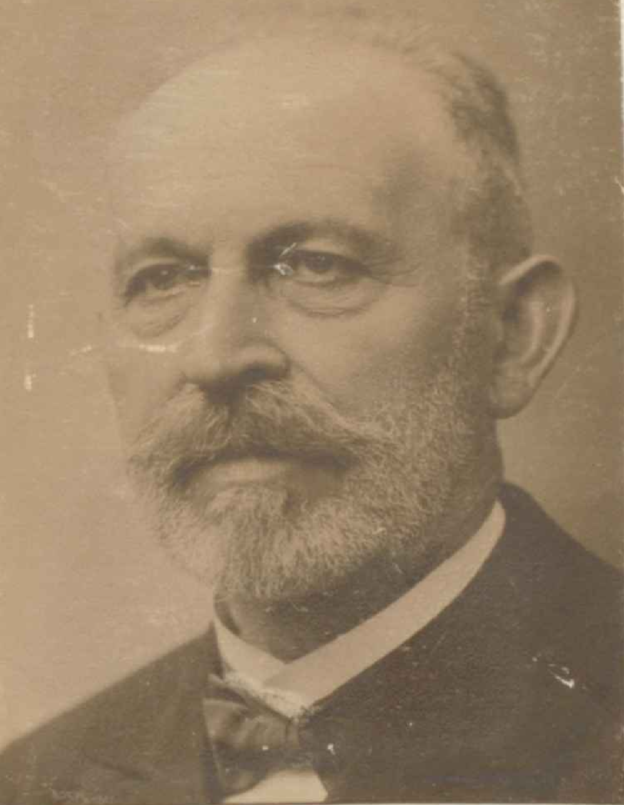
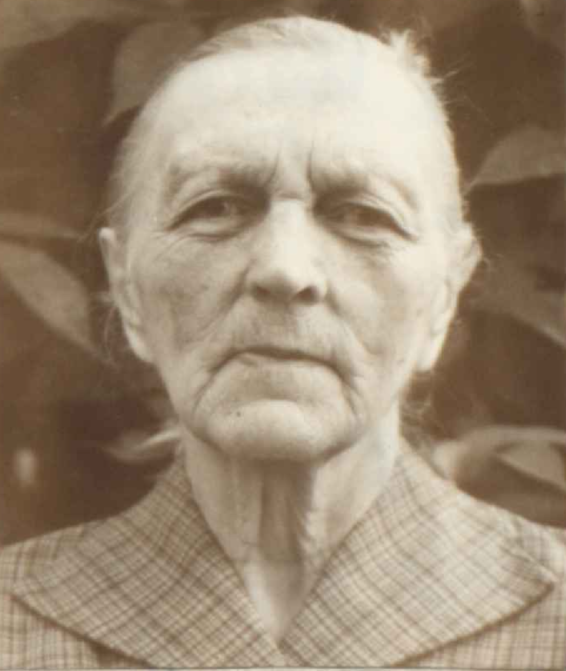
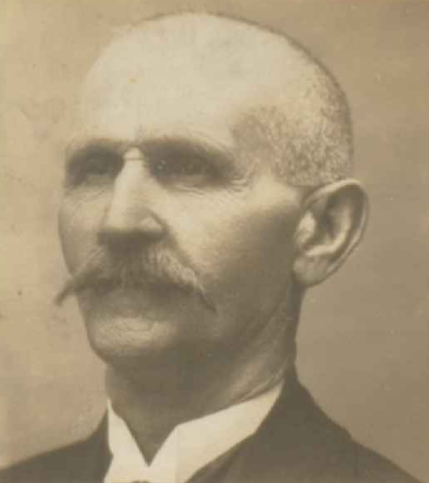
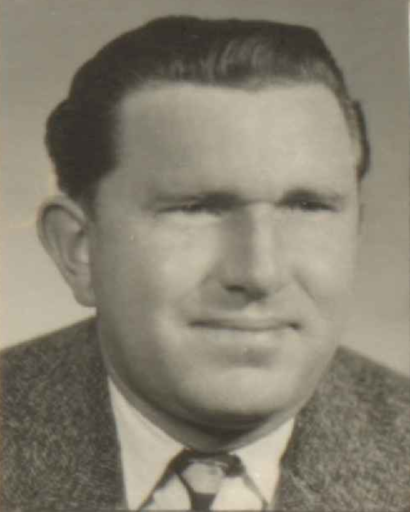
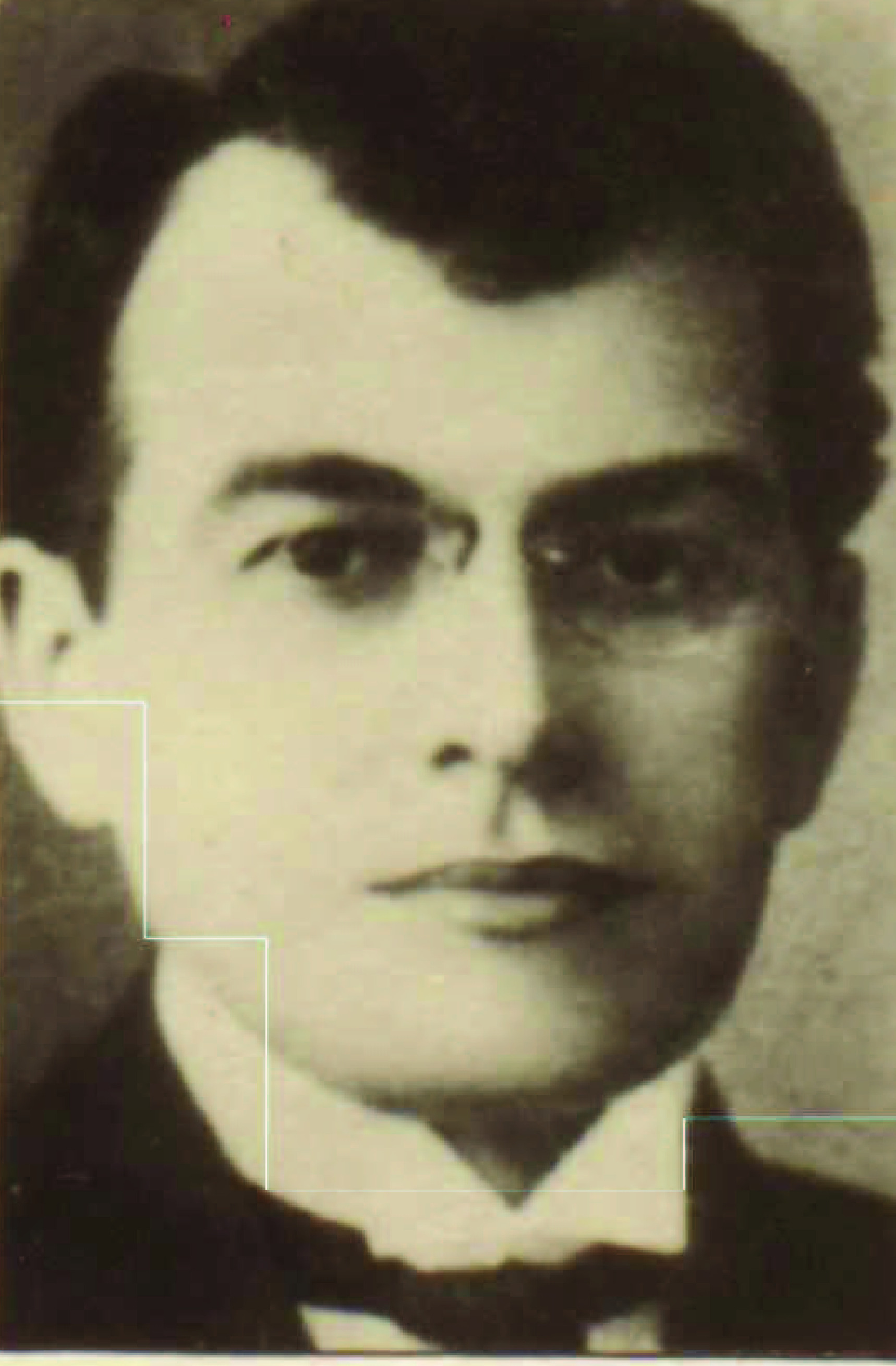
The Horní Bříza III Sub-branch of the Výrov Branch
The descendants of Tomáš Prusík, a native of Výrov.
1812 – 1897
The fourth child of the reeve Vojtěch Prusík and his wife Anna was their son Tomáš, who was born on 19 November 1812. That was in the time after Napoleon's defeat at Leipzig [sic; the battle of Leipzig was in October 1813, so either the birth date or this remark is wrong]. When in later years it was settled that the family holding in Výrov would go to the youngest son, Václav, a bride began to be sought for the growing Tomáš. For a long time Tomáš had no wish to marry, and he was perfectly content at home. But since there were many children, he could not escape leaving home. His two sisters, Anna and Rosalie, were already married in Horní Bříza, and it was there that they found a bride for their brother too. She was Kateřina Beránková from holding No. 26. She was born in 1816 on the farm that was called, by its old name, “Fakanovský”. The first entry about this homestead in the land register dates from 14 March 1662, when its owner was the blacksmith Kabát. By 1790 the owner was Antonín Beránek. It was into this farm that Tomáš Prusík from Výrov married, on 24 February 1835. His life's companion, Kateřina Beránková, preceded him in death by 18 years; she died in Horní Bříza on 20 May 1879. Tomáš Prusík died there, in retirement on the farm, at the age of 87 [sic, probably 84], on 19 April 1897.
Tomáš was a very prudent farmer, of a rather conservative stamp, and not always quick to accept some of the modern trends. For many years he was homesick in Horní Bříza, and often, not only for parish fairs and other important occasions, he would set off and walk to Výrov. He used to attract particular attention by wearing a straw sheaf-band round his waist instead of a belt. Tomáš and Kateřina had nine children who reached adulthood.
The eldest child was their son Jan. He was born in Horní Bříza on 17 May 1840 and was a secondary-school teacher of philology; among other places he worked in Russia, where he drowned in 1875. The second was their daughter Marie, married name Krausová, of No. 48 in the nearby village of Nevřeň. She was born in Horní Bříza on 19 March 1844 and died in Nevřeň on 23 April 1904. The third child was Anna, born on 22 January 1847. She too had the married name Krausová, at Nevřeň No. 7, but she died there at the age of forty, on 14 March 1887. The second son was Tomáš, born in Horní Bříza on 5 August 1849; he became a priest and died in Dolní Břežany near Zbraslav on 16 July 1903. Then came their daughter Kateřina, married name Schneibergová, of Plzeň. She was born in Horní Bříza on 3 August 1856 and died in Plzeň on 30 June 1942. She lived to a greater age than any of her brothers and sisters. Tomáš Prusík's fourth daughter was Josefa. She was born in Horní Bříza on 27 July 1857, never married, and died in her native village in a hard winter, on 24 January 1929. The son Václav, born on 8 March 1858, died unmarried in Horní Bříza on 1 June 1940. His brother Blažej, born on 7 January 1861, was the first holder of the holding after their father. He died at the age of only 42, on 27 March 1903, in Horní Bříza. After him his brother Josef, born on 11 March 1863, became the second holder. He died two days after his brother Václav, on 3 June 1940.
The eldest son of Tomáš Prusík and his wife Kateřina was called Jan, and he was born at Horní Bříza No. 26 on 17 May 1840. He was the first to benefit from the kindness of his uncle, the vicar Blažej Prusík, in Prague, in Hradčany, and he came to Prague to study at the grammar school in Staré Město. He then studied classical philology at the university. Besides Czech and German, he taught Latin, Greek and history. Jan Prusík first became a supply teacher at the grammar school in Plzeň; from 1863 he taught in Suceava, which lay in what was then Bukovina, in Austria-Hungary. From 1865 to 1866 he taught in Česká Lípa. In the autumn of 1868, a hundred years ago now, he became a permanent secondary-school teacher at the newly founded lower grammar school in Třeboň. Jan Prusík, the secondary-school teacher, was something of a rebel: he was not satisfied with his salary, and he made too much of a show of his Slavophilism. This, of course, did not please the Imperial-Royal Ministry of Education, and it placed Jan Prusík in what was known as “příkaznost”. Today one would say that he had been temporarily relieved of his post. That happened on 23 September 1870. Before that, on 29 February 1870 [sic; 1870 had no 29 February], Jan Prusík had married Marie Magdalena Ottová, the daughter of a miller from Třemošná near Plzeň. This marriage, however, was not a very happy one. His wife was born in 1843 in the mill at Třemošná No. 48; she gave her husband one little son, but died of consumption in Třemošná as early as 12 April 1873. By that time Jan Prusík was already in Russia. In those days many Czechs went there, as craftsmen, entrepreneurs, musicians, teachers and others. They were very welcome there.
In Russia, too, Jan Prusík taught philology, in some town on the Volga. Unfortunately, it has not been possible to establish exactly where he worked. He stayed there about four years and never came home again. His wife did not want to go to Russia with him and remained with the child at her parents'. According to old people who remembered him, Jan Prusík drowned in the Volga in 1875. He was seized by cramp while bathing. It happened in Kazan. In the description of his person, which is preserved in the archives of the former Governor's Office, Jan is portrayed in the “cadre report” as zealous and of upright character in his conduct, but a little “left-wing”. Above all, however, his political conduct was not beyond reproach.
The only son of Jan Prusík and his wife, née Ottová, was Josef Prusík. He was born in Třemošná on 19 March 1871. At the age of two he lost his mother, and at four his father too. He was brought up by his mother's parents in the mill at Třemošná. Thus both his beginnings and the rest of his life were unhappily marked. He became a shop assistant, then a clerk in the office of the lawyer Dr Jindra in Plzeň, then worked as a junior official at the district authority, and towards the end of his life he was a worker at the Škoda Works. He also took to drink; often he had nothing even to wear, and then he would turn up in Horní Bříza, in his father's home, where he was always given a helping hand for a while. He was a passionate angler. He took as his wife Vilemína Pelíšková, the daughter of travelling players, who was born in Horšovský Týn on 18 February 1878. She preceded him in death, dying in Plzeň on 10 June 1914. They had no children together. Josef Prusík, the descendant of Jan Prusík, the secondary-school teacher from Horní Bříza, also died while the First World War was still on. He had been in Plzeň for twenty years in all, and there he died, forsaken, on 10 October 1916.
The second child of Tomáš Prusík and his wife Kateřina in Horní Bříza was their daughter Marie. She was born on 19 March 1844 and married Josef Kraus in Nevřeň. Homestead No. 48 was known as “U Seflů”. Her husband, Josef Kraus, was 10 years older than she; he was born in 1834, but he outlived his wife by 13 years. He died on 10 April 1917. Marie Krausová, née Prusíková, was an excellent farmer's wife and the kindest of mothers, as her daughter Marie, married name Kabátová, who then went on living on this farm, told us. Marie Krausová had five children. The first was Václav, born in 1873, but he died in Nevřeň as a boy of fourteen, in 1887. The second son was Jan Kraus. He was born on 11 March 1878, and it was thought that he would be the heir to the holding. He never married, however, and died unmarried in Nevřeň as early as 8 February 1909. Then a daughter, Anna, was born, on 8 January 1881. She was married in the small village of Kokořov, close by, and had three children. Misfortune dogged Anna Majerová, for both her promising sons died early. Everyone remembers Anna Majerová as a great kind soul. She died on 8 October 1949. Her daughter Marie, born on 23 September 1908, has the married name Randová and lives at Stýskaly No. 18. She has a daughter, Marie, married name Němcová, at Tatiná No. 9. She in turn has three children: Věra, born on 20 February 1952, a son, Ladislav, born on 10 February 1956, and a little daughter, Jaroslava, born on 17 April 1957. The son Josef Randa, born on 21 December 1936, lives in Plzeň-Doubravka, Družby 5. He has a daughter, Lenka, born on 2 March 1964. His brother Jaroslav, born on 27 July 1944, stayed in Stýskaly and has a little son, Petr Randa, born on 16 June 1966. Anna Majerová's son Josef, born on 5 March 1911, died unmarried on 5 July 1944, and his brother Jan Majer, born on 14 June 1913, lost his life tragically as early as 26 May 1926.
The third son of Marie Krausová, née Prusíková, was Josef Kraus. He was born on 2 February 1883, and he too never had any wish to marry. He helped on the farm at home, and sometimes with other relatives too, and he died on 21 June 1950 at the home of Eliška Mádrová, née Prusíková, in Bučí. Josef Kraus had once been a master brewer.
Marie Krausová's last child was her daughter Marie. She was born on 22 December 1886, and everyone called her Marienka. She was distinguished by an uncommon memory and by her knowledge of the whole far-branching family. Relatives of every kind used to gather at her home on all sorts of occasions, and every one of them was given a friendly welcome. Marie married the stonemason Kabát, a native of Bolevec, who nevertheless took excellently to the work of farming. Marie Kabátová had five children with him. She died of leukaemia on 8 October 1963. Her eldest child was Eliška. She was born on 18 November 1911 and married the farmer Bayerle in Žilov. She lives there at No. 22. She has three children. Her daughter Eliška, born on 16 November 1931, married name Kohoutová, lives in Bolevec, in Ledecká Street. She has two sons, Pavel, born on 17 February 1953, and Václav, born on 20 October 1950. Vojtěch Bayerle, born on 3 April 1933, stayed with his mother in Žilov. His father, a pioneer of the collective farm (JZD), ended his own life by suicide. The second son, Jan Bayerle, born on 15 May 1937, lives in Teplice-Řetenice, Sídliště 17. He has a little daughter, Hana, born on 17 September 1961. Marie Kabátová's second daughter is Anna. She married Rajšl, a mason and smallholder and a very bright man. He was also mayor of Nevřeň. She lives at No. 29. Anna was born on 20 July 1914 and has three children [sic; only two are named below]. Her son Václav Rajšl, born on 18 January 1940, works at the Škoda Works and lives at Čemíny No. 18. He has a little daughter, Jana, born on 11 July 1964. Her daughter Anna, born on 12 November 1941, has the married name Lerchová. She now lives in Klatovy, Leninova 484/2. She has
two little daughters. They are Vladimíra Lerchová, born on 11 April 1965, and Lenka Lerchová, born on 2 December 1967. Marie Kabátová's next child is Marie, born on 2 February 1919. She married the farmer Beneda, at Tymákov No. 44. She has twins, little daughters, Marie and Anna, born on 5 March 1959. Marie Kabátová's only son is Martin. He was born on 5 January 1923 and stayed on the holding at Nevřeň No. 48. He has a little son, Martin, born on 8 July 1963, and two stepsons, whom his wife brought with her from her first marriage. Marienka Kabátová's last child is Miloslava. She was born on 26 September 1925, and her married name is again Kabátová, at Horní Bříza No. 90. She has three boys, and they have already been written about among the descendants of Anna Štěpánková, née Prusíková, from Výrov. For her husband, Jaroslav Kabát, belongs to that sub-branch of the Prusík family.
Marie Krausová, née Prusíková, from Horní Bříza, settled on the “U Seflů” farm, died there of pneumonia at the age of sixty, on 23 April 1904. Old people in Nevřeň who remember her still think of her gratefully today.
The second daughter of Tomáš Prusík and Kateřina in Horní Bříza was Anna. She was born on 22 January 1847. Like her sister Marie before her, she too married into Nevřeň. Her husband was Václav Kraus, the brother of Josef Kraus, her sister's husband. And so two sisters had two brothers for husbands. Václav Kraus was born in 1842; for a long time he was mayor of Nevřeň, and he outlived his wife by 36 years. He died on 22 February 1923. Anna Krausová, née Prusíková, died suddenly of a stroke in Nevřeň on 14 March 1887. She was only 40. Anna Krausová had four children who reached adulthood. The eldest was Anna, named after her mother. She was born on 25 April 1869 and married the shoemaker Zetek from Hedčany. She then lived in Plzeň, where she died on 19 March 1943. Anna Zetková had four children, all daughters. The eldest was Růžena, born on 19 April 1894, married name Motlová, at Chotíkov No. 45. She died there on 9 December 1937. She had three children. Her daughter Růžena, born on 5 June 1920, is unmarried and is a clerk in Ústí-Krásné Březno, Svádovská 6. The second daughter, Květa, was born on 28 February 1923 and died at the age of ten, on 22 February 1933. The son Jaroslav Motl, born on 7 August 1925, lives at Chotíkov No. 45. He has a little daughter, Věra, born on 1 May 1951. Anna Zetková's second daughter is Anežka; she was born on 29 December 1896 and never married. She was a cook at the Škoda Works' company hotel. She now lives with her niece Miluše in Plzeň-Košutka, Karlovarská 160. Anna Zetková's third child was Kateřina. She was born on 20 April 1902, had as her husband a worker at the Škoda Works, and died on 11 January 1948. She had two children. Miluše, born on 15 July 1920, has the married name Feilová. She lives in Plzeň, Karlovarská 160. She has a daughter, Jana, born on 9 April 1943, married name Brabcová. She already has a little daughter, also Jana, born, again, on 9 April, but in 1965. Miluše Feilová was born on 20 November 1948. The son of Kateřina Urbánková, née Zetková, is Stanislav. He was born on 14 August 1926. He is an aeronautical engineer and lives in Prague 5, Kvapilova 11. He has three children: Ludmila Urbánková, born on 4 August 1954, Olga, born on 15 June 1956, and Stanislav, born on 18 October 1957.
The last daughter of Anna Zetková, née Krausová, was Barbora. She was born on 31 January 1908. She married the farmer Pešíček at Dražeň No. 11. She still lives there. She has five children. Her daughter Alžběta, born on 14 October 1934, is married to the miller Joudal. She lives in Plzeň, Jablonského 43. Her daughter Dana, born on 7 June 1959, died of leukaemia on 13 October 1962. After this misfortune of hers, a little daughter, Jana, was born to her on 3 February 1963, and Jindřiška on 3 March 1965. The son Alois Pešíček, born on 6 January 1936, is unmarried. Then there is the son Ladislav, born on 6 April 1937, who lives at Horní Bělá No. 108. He has two children, Ladislav Pešíček, born on 19 January 1959, and a little daughter, Ludmila, born on 28 September 1963. The fourth is Václav Pešíček, born on 12 June 1940, and then Helena, born on 14 October 1948. Václav is married at Hrádek near Manětín.
The second child of Anna Krausová, née Prusíková, of the “U Martinů” farm at Nevřeň No. 7, was her son Jan. He was born on 27 December 1872. He became the heir to the holding. He married Terezie Malecová, and they had three children. The eldest was Vojtěch Kraus, born on 1 February 1896. He went off to the First World War, caught typhoid fever there and died on 17 March 1917 in Lutsk, in Russia, where he is buried. His father Jan bore the death of his son Vojtěch very heavily to the end of his life. Jan Kraus's next son was František, born on 6 February 1899. With his wife Cecilie, née Benešová, he had two children. His daughter Květoslava, born on 26 September 1931, is a clerk at the Škoda Works and is unmarried; his son František Kraus, born on 10 July 1936, is also still unmarried. Their father, František Kraus, died in Nevřeň on 15 January 1948. And so it is rather sad at “U Martinů” in Nevřeň. Jan Kraus's third child is his daughter Anna. She was born on 5 August 1902, and her married name is Duchková, at Křimice No. 159, near Plzeň. She has two sons, both still unmarried: Vladimír Duchek, born on 29 October 1933, and Jan, born on 18 October 1935.
The third child of Anna Krausová, née Prusíková, was her daughter Eva. She was born on 5 July 1874 and later married the farmer Martínek in Příšov. Two children were born to her there. Her son Václav Martínek, born on 20 January 1908, is headmaster of the nine-year school in Třemošná, where he lives at No. 488. He has two sons. Jiří was born on 26 June 1938 and Zdeněk on 30 September 1943. Václav's sister Marie was born in Příšov on 2 February 1918. She married Bureš, a worker at the Škoda Works, and had two children with him. Vladimír Bureš, born on 3 March 1939, lives in Plzeň, Pod záhorskem 26, and has a little daughter, Helena, born on 10 July 1964. The second son, Jan Bureš, was born on 18 March 1942 and lives in Plzeň, Žižkova 61. Marie Burešová, their mother, met a tragic end. During the Second World War she took an active part in relief work for persecuted and stricken Czech families; she was arrested by the Gestapo and died in Terezín on 14 November 1944.
The last child of Anna Krausová and her husband Václav, of Nevřeň No. 7, was their daughter Marie. She was born on 2 September 1876. On 7 February 1898 she married Antonín Tägl, a native of Krašovice. He was a brewery worker and later worked at the Škoda Works in Plzeň. Marie Täglová died in Plzeň on 31 March 1959. Their last home was in Škvrňany, in Křimická Street. Four children were born of her marriage. Her son Antonín Tägl, born on 14 August 1897, was a metal turner at the Škoda Works. He was a prominent gymnast and trade-union official. He had
three children. Anna Täglová, born on 3 February 1927, has the married name Jílková and is childless. She lives in Plzeň, Prokopova 19. Her sister Libuše, born on 16 August 1928, married name Weinfurterová, lives in the same house. She has a son, Josef, born on 11 November 1947. The son Antonín Tägl, born on 11 June 1931, is a clerk at the Škoda Works and lives in Plzeň, Žižkova 61. He has a daughter, Helena, born on 27 April 1961. The second son of Marie Täglová, née Krausová, is Václav. He was born on 9 April 1900. He died on 16 April 1969. He was a worker at the Škoda Works and later an official of the Ministry of National Defence. He lives in Prague 6, Bělohorská 96. He has an only daughter, Dana, born on 11 May 1931. She is a Doctor of Law and works at the office of state control. She lives in Prague 6, Červený vrch, Sudanská 598. She has a daughter, Irena Melionová, Melionová being her mother's married name, born on 29 October 1956. Marie Täglová's next child is her daughter Marie. She was born on 12 May 1902, has the married name Píšová and lives in Plzeň, Lukavická 14. Her husband, Píša, was a member of the Plzeň town council in the days of the First Republic. They have an only son, Zbyněk, born on 3 February 1924. He became a doctor. For quite a long time he worked at the Research Institute for Cardiovascular Diseases in Prague-Krč, and he already has a number of scientific works to his credit. He is a Candidate of Medical Sciences. For his excellent scientific abilities he was sent to England for a longer period of practical training, and he now works at the European branch of the World Health Organization in Copenhagen, in Denmark. Dr Zbyněk Píša has his flat in Prague-Podolí, Na svahu 17. He is the father of two children: Pavel Píša, born on 20 November 1955, and Irena, born on 15 July 1961.
Marie Täglová's last child was Anna. She was born in Plzeň on 3 November 1904. Her married name was Dvořáková. She died early, on 21 December 1945. Her husband is a designer at the Škoda Works. She had an only daughter, Olga, born on 11 May 1930, who became a secondary-school teacher of philology. Her married name is Příhodová, and she lives in Rosice near Brno, Fučíkova 1088. She has a little daughter, Alena, born on 13 April 1967.
The fourth child of the farmer Tomáš Prusík and Kateřina was a son, baptised Tomáš after his father. He was born in Horní Bříza on 5 August 1849. Thanks to his uncle Blažej Prusík, vicar at St Vitus's in Prague, he studied theology. He was the first Prusík priest since his uncle, the benefactor of our family. He was ordained on 13 July 1873. He first became curate at Lounovice pod Blaníkem. From 1887 to 1892 he was parish priest at Úžice near Uhlířské Janovice. For a shorter time he also served at Vrcholtovice near Votice. His health was not good. He moved, already retired, to Vysoké Mýto, where he stayed for several years. In this East Bohemian town his unmarried sister Josefa lived with him, with her son Václav, born out of wedlock, and there, with the help of his uncle the priest, Václav began to study at the local grammar school. During his stay in Vysoké Mýto the priest Tomáš Prusík compiled prayers for the whole diocese of Hradec Králové, which were then used at services everywhere in that region. From Vysoké Mýto, already ailing, he went to Dolní Břežany near Zbraslav, where he was appointed archiepiscopal chaplain. That was under Cardinal Lev Skrbenský. Tomáš was a very democratic priest, of progressive views. Old people who were still living not long ago
in Dolní Břežany remembered him very well and told how Tomáš Prusík liked to go among the people and took part in amateur theatricals and other events in the village. Here too the priest Tomáš Prusík had with him his sister Josefa and his nephew Václav, who also trained there as a joiner. Besides them, Tomáš Prusík also had in his care for several years two daughters of his brother Blažej of Horní Bříza, who had died before his time. Anna, later married name Šefčíková, and Božena, who remained unmarried, lived with him. Tomáš Prusík liked to collect little-known songs and folk sayings from the Plasy area for his cousin F. X. Prusík, the secondary-school teacher, and these were then reproduced in print. Tomáš Prusík, however, was not granted a long life in Dolní Břežany. He died there on 9 July 1903 [sic; the account of his father's children above gives 16 July 1903, so one of the two dates is wrong] and was buried in the cemetery at Zlatníky near Jílové. His grave existed there until 1958.
Another daughter of Tomáš Prusík was his daughter Kateřina. She was born in Horní Bříza on 3 August 1856. In 1882 she married Matěj Schneiberg of Plzeň, a railway employee. They had four children together. Kateřina Schneibergová reached the great age of 86. She died in Plzeň on 30 June 1942. The eldest was their daughter Anna. She was born on 21 March 1883; her married name was Slavíková, and for a time she lived in Hungary. She remained childless and died in Plzeň on 6 December 1918. The second child was a son, Matěj. He was born on 11 July 1884, studied architecture and became a successful builder and architect. His work includes, for example, part of the design of the Prague villa quarter of Hanspaulka, the Hotel Slovan by the Main Station in Prague and many other buildings. When he was already older, he also took part in the great competition for new buildings by the National Theatre and was awarded a prize. Matěj Schneiberg, or Hora, as he sometimes added to his name to make it more Czech, was married twice but remained childless. He lives in Prague-Žižkov, Bořivojova 114.
The third child of Kateřina Schneibergová, née Prusíková, from Horní Bříza, was Alžběta. She was born in Plzeň on 15 November 1886. She was married twice: her first married name was Weidlichová and her second Fahnerová. From her first marriage she had one daughter. She is Marie, married name Šímová, born on 17 April 1916. She lives in Plzeň, Bendova 32. She has a daughter, Eva, married name Dienstbierová, born on 13 May 1946, and she in turn has a little son, Petr, born on 17 January 1965. Kateřina's second son and last child was Bohumil Schneiberg. He was born in Plzeň on 16 August 1890. For many years he was employed in the railway workshops and lived in Plzeň, Slovanská 25. He died there on 4 January 1961. He had an only son, Bohumil, born on 11 May 1921, who is an employee of the Czechoslovak State Railways (ČSD). He has a son, Zbyněk, born on 21 May 1956.
The daughter Josefa was the next child of Tomáš Prusík in Horní Bříza. An earlier little daughter had been called Josefa, but she died soon. Josefa Prusíková was born in Horní Bříza on 27 July 1857. Her life was not a very happy one. She fell in love with Antonín Hora, a native of Bujesily, and had a child with him born out of wedlock, a little son, Václav. This event caused
a great stir in the family, and her angry father, Tomáš Prusík, assigned her the barn as a dwelling for herself and the child. Only when his son Tomáš, the priest, talked him round could she live decently with the child in her parents' house. The child's father is said to have asked Josefa's parents to sell him some small plot of land on which the young couple could build themselves a little house. So that not a scrap of land should be lost from the holding, Tomáš Prusík refused his daughter Josefa this. What narrow-mindedness there was in those days! Josefa Prusíková's embittered seducer, Hora, soon afterwards went off to America, never came home again and died in Chicago, in the USA. All this left its mark on the rest of the life of Josefa Prusíková and her little son Václav. Josefa lived by turns on the Prusík farm in Výrov, with her brother Tomáš, the priest, with her son in Prague and elsewhere, and finally she kept house for her brother Josef Prusík, by then a widower, in Horní Bříza. It was there, too, that she died, on 24 January 1929.
Josefa Prusíková's only child was her son Václav, born out of wedlock. He was born at Horní Bříza No. 26 on 12 December 1879. He went to elementary school at Úžice near Uhlířské Janovice, where his uncle Tomáš was parish priest. From 1892 he attended the grammar school in Vysoké Mýto, but he did not much enjoy his studies, and after only two years he left the grammar school. When his uncle Tomáš then moved from Vysoké Mýto to Dolní Břežany near Zbraslav, he took Václav with him too, and there Václav learnt the joiner's trade. In some houses there, people still have some of his fine furniture in their homes today. On 18 January 1913 Václav Prusík married Karolina, née Suchanová, from Prague-Smíchov. She was born on 10 November 1892. When the World War broke out, Václav went off to it, leaving a little daughter at home. He did not come home until 1920, as a legionary of the Czechoslovak Legion in Russia. In that time his wife had been unfaithful to him, and so he divorced her. She married again, taking the name Hampejzová, and died in 1948. After his return from the war Václav Prusík worked as a joiner, not only in his own independent business but later also in several factories. He died on 17 March 1941 and was buried in the Malvazinky cemetery in Prague. He did not like to remember his childhood.
His only child was his daughter Emilie. She was born in Prague on 14 March 1914 and came to know her daddy only six years later, when he returned from the war. She later married the teacher Bohuslav Kracík of Kunratice near Prague. She lived there with him until his untimely death in 1966. Emilie Kracíková, née Prusíková, lives at Kunratice No. 474. She has an only daughter, Růžena, born on 24 September 1940. She is a teacher. She now lives in Hradec Králové, Labská 5, and her married name is Havrdová. She has two little sons: Zbyněk, born on 10 October 1962, and Robert, born on 7 September 1966.
The third son of Tomáš Prusík and his wife Kateřina of Horní Bříza was Blažej Prusík. He was born on 7 January 1861. At home it was decided that he would take over the farm from his father. He married Markéta Hnátová, born in Žilov on 11 July 1866. After their wedding Blažej and Markéta began to farm independently on homestead No. 26 in Horní Bříza. That was in 1887. Blažej Prusík and Markéta had five children together, all of them daughters. The eldest was Marie, married name Sinkulová, in Výrov. She was born on
21 October 1888. Her husband, Antonín Sinkule, was a mason. The marriage was childless. Marie Sinkulová died of cancer relatively early, on 15 August 1945.
The second daughter was Anna, born on 6 May 1891. Her married name is Šefčíková. The third is Josefa, born on 21 December 1893, who was married twice: her first married name was Lomičková, her second Benešová. The fourth child was Eliška, born on 16 July 1896. After the early death of her parents she was brought up in the family of her relatives, the Koukl family near Kralovice, in the village of Bílov. When she was older, she was housekeeper to the priest Mikuláš Koukl in Prague, and after his death in 1926 she worked in many other households. She worked in the family of the former general director of the Škoda Works, Dr Löwenstein, and also in the parish house of St Wenceslas in Smíchov, for the prelate Pauly. In the end she married Josef Souček, who is the custodian of the church of St Ursula in Prague. Eliška Součková, née Prusíková, from Horní Bříza, still lives in Prague, Voršilská 5. She has no children.
Blažej Prusík's last daughter is Božena. She was born on 3 October 1899, and after the rather hard life she had as an orphan who had lost both parents, she lives today, unmarried, at Výrov No. 40, in the little house where her sister Marie Sinkulová, now dead, used to live.
Blažej Prusík and his wife Markéta both died before their time. Markéta Prusíková died as early as 4 November 1901, and her husband Blažej, after an attack of pneumonia, succumbed to a heart attack on 26 March 1903 [sic; the account of his father's children above gives 27 March 1903, so one of the two dates is wrong]. The suddenly orphaned farm was then taken over by Blažej's brother Josef, of whom we shall tell. Of the children of Blažej Prusík and Markéta, only their daughters Anna and Josefa had descendants.
Anna, born on 6 May 1891, married Václav Šefčík, a railway guard, after a sad childhood. They lived in Výrov and in Plzeň and had only one son. Their son Rudolf Šefčík was born on 30 August 1912. He was a clerk and finally settled in Liberec. He lived there with his mother and his whole family, and he died on 24 February 1964. Anna Šefčíková, née Prusíková, still lives in Liberec, náměstí sovětské armády 6. Her son Rudolf had four children. The eldest is Jiří Šefčík, born on 30 May 1939, who works for the Electricity Distribution Works. He is married. The second son, Václav, is a civil engineer. He was born on 11 August 1941 and lives in Liberec I, Purkyňova 588. He has two sons, Jan, born on 3 June 1964, and Václav, born on 20 October 1966. The third is Jan Šefčík, who lives in Chrastava near Liberec, Nádražní 47. He was born on 9 March 1944 and has a little son, Jan, born on 30 July 1966. Jan Šefčík, a graduate of an industrial school, is employed in engineering in Chrastava. The last is Milan Šefčík, born on 24 January 1950.
The second daughter of Blažej Prusík of Horní Bříza who left descendants is Josefa. She was born on 21 December 1893, and after being orphaned of both parents early she was brought up by various relatives, among them the Prusíks in Výrov. Her first husband was František Lomička from Kopidlo near Výrov. He, however, fell in the First World War. With him she had a daughter, Eliška, born on 19 November 1913. Eliška's first husband was the forester Jindra, and she lived in Krašovice. She is now married again; her husband is Petřík, a retired teacher. They live together at Horní Bříza No. 104. From her first marriage a son, František Jindra, was born to her, on 5 November
1940. He is a mechanical engineer, married, and has a son, Pavel, born on 6 March 1968. He lives in Slaný, Palackého 205. From her second marriage Josefa Benešová, née Prusíková, had a daughter, Marie. She was born on 13 November 1922, and her married name is Hrnčířová. She lives in Plzeň-Slovany, Rychtaříkova 38. Her husband works in the timber industry, as a clerk. She has two daughters, Olga, born on 3 October 1947, and Hana, born on 7 April 1951. Josefa Benešová, widowed for the second time, lives at Kopidlo No. 46, near Kralovice.
The next son of Tomáš Prusík of Horní Bříza was his son Václav. He was born on 8 March 1858 [sic; his sister Josefa, above, was born on 27 July 1857, only seven and a half months earlier, so one of the two dates is wrong] and remained unmarried. He helped on the farm, both his brother Blažej and, later, Josef. He was a cheerful man, but at the age of twenty a misfortune befell him that embittered his life until his death. After a dance on the day of a parish fair, he was walking home from the inn when he caught thieves at one of the houses. To get rid of an unwelcome witness, they wounded him badly, and Václav Prusík recovered from this injury only with great difficulty. But it left a lasting mark on him for the rest of his life: he went completely deaf. He fell ill almost at the same time as his brother Josef and died two days before him, on 1 June 1940, on the family holding in Horní Bříza. A few days before his death Václav was still chopping wood. As unassumingly as he had lived, so he departed.
The last child of Tomáš Prusík and Kateřina in Horní Bříza was their son Josef. He was born on 11 March 1863. He was not destined to be heir to the holding and received a smaller homestead below what is today the railway halt in Horní Bříza. On 4 March 1889 he married Anna Petříková, born in Hodyně on 27 July 1861. She lived only to fifty and died in Horní Bříza on 7 August 1911. Josef Prusík lived in his first home until 1903; after the death of his brother Blažej he took over the family holding, and it was his home until his death. Josef Prusík and his wife Anna had two children. Their daughter Alžběta, born on 27 November 1889, married Jan Mádr at Bučí No. 4, where she died on 20 January 1963. Their son Ladislav Prusík, born on 2 February 1891, later married Božena, née Valentová, from Výrov, who was herself already a member of our family. Ladislav Prusík then farmed after his father Josef on homestead No. 26 in Horní Bříza, and he died young, on 20 May 1943.
The first child of Josef Prusík and Anna of Horní Bříza was their daughter Alžběta. She was born on 27 November 1889 and lived at home until 1923. By then her brother Ladislav was farming the homestead with his wife Božena. In that year Alžběta married Jan Mádr, an innkeeper and farmer of Bučí No. 4. She had four children. She was one of those with the best memory of our family's history, and from her recollections we were therefore able to draw a good deal of knowledge that was new to us. Of all the people still living until recently, she alone remembered exactly the life and fortunes of her uncle, Jan Prusík, the secondary-school teacher, who drowned in Russia. Alžběta Mádrová, née Prusíková, died in Bučí, a picturesque little village near Horní Bříza, on 20 January 1963. Her eldest daughter is Božena. She was born on 15 January 1924 and married the farmer Kalous. She lives at Bučí No. 18.
She has a very fine homestead. Her children are Josef, born on 9 December 1944, Marie, born on 6 August 1946, and Jan, born on 6 June 1948. Her sister Květa was born on 14 April 1925. Her married name is Kočová; her husband is a clerk in Kaznějov. With her two children she lives at Rybnice No. 61. They have a son, Jan, born on 24 March 1950, and Květoslava, born on 21 January 1957. The third daughter is Eliška, born on 5 May 1927, who farmed in Bučí with her mother until her mother's death. Then she married the farmer Karásek, at Dražeň No. 2. The family homestead in Bučí was left empty. Eliška Karásková has two children, Marie, born on 8 April 1965, and Josef, born on 3 July 1967. She too, like her mother, was always an uncommonly willing helper in this historical work on the Prusík family. The fourth child of Alžběta Mádrová, née Prusíková, is her son Jan. He was born on 1 March 1932, but he did not stay at home. He works for the forest administration and married into Dolní Lukavice near Přeštice, No. 132. He has a daughter, Šárka Mádrová, born on 3 February 1961. Marie Kalousová is now married, under the name Bischofová, at Kaznějov No. 401.
Josef Prusík's son Ladislav was born on 2 February 1891. He was a big, strong man, but in the pace of his farming he was surely a match for his father. His decisions were often truly far-sighted. He took as his wife Božena Valentová from Výrov. She was born there on 19 July 1897, and her mother too had been née Prusíková. Their wedding, held in February 1921, was a very grand one, and it is still remembered in Výrov today. Ladislav Prusík, the last but one holder of holding No. 26 in Horní Bříza, died on 20 May 1943. Few could believe, given his health and his stalwart build, that he could leave this life so prematurely. He left two children. His daughter Eliška, born on 1 January 1922, married Karel Nosek. He later became a mechanical engineer and today teaches at the industrial secondary school in Plzeň. For quite a long time they were settled in Planá near Mariánské Lázně, and they now live in Plzeň, Rychtaříkova 13, in their own little house. They have two sons. Jiří Nosek, born on 27 February 1945, is a resident tutor at the boarding school where his father teaches, and then there is his brother Karel Nosek, born on 16 January 1955. The second child of Ladislav Prusík and his wife Božena is Ladislav Prusík. He was born in Horní Bříza on 16 February 1925. He first went through the Higher Agricultural School in Plzeň; after the Second World War he became a member of the collective farm, and at the same time he studied by correspondence at the University of Agriculture, graduating in 1958. The engineer Ladislav Prusík is still unmarried and now works in Plzeň.
Tomáš Prusík, a native of Výrov who settled in Horní Bříza, left 157 descendants, 38 of whom have already died.
This concludes our account of the life and fortunes of the descendants of Tomáš Prusík, who was born in Výrov in 1812 and in 1835 settled at Horní Bříza No. 26. Before the new numbering of 1805 this holding had a different number, No. 7. The Prusík family has thus been settled on this holding for 133 years, but the family's time on the Horní Bříza holding is probably now drawing to a close. Not only because the last farmer, who is Ladislav Prusík, being unmarried, has no further descendants to follow him; it is also borne out by the fact that, with this last member, the Prusík family will probably no longer even have its home here. Even so, members of our family live in 25 houses in Horní Bříza today.
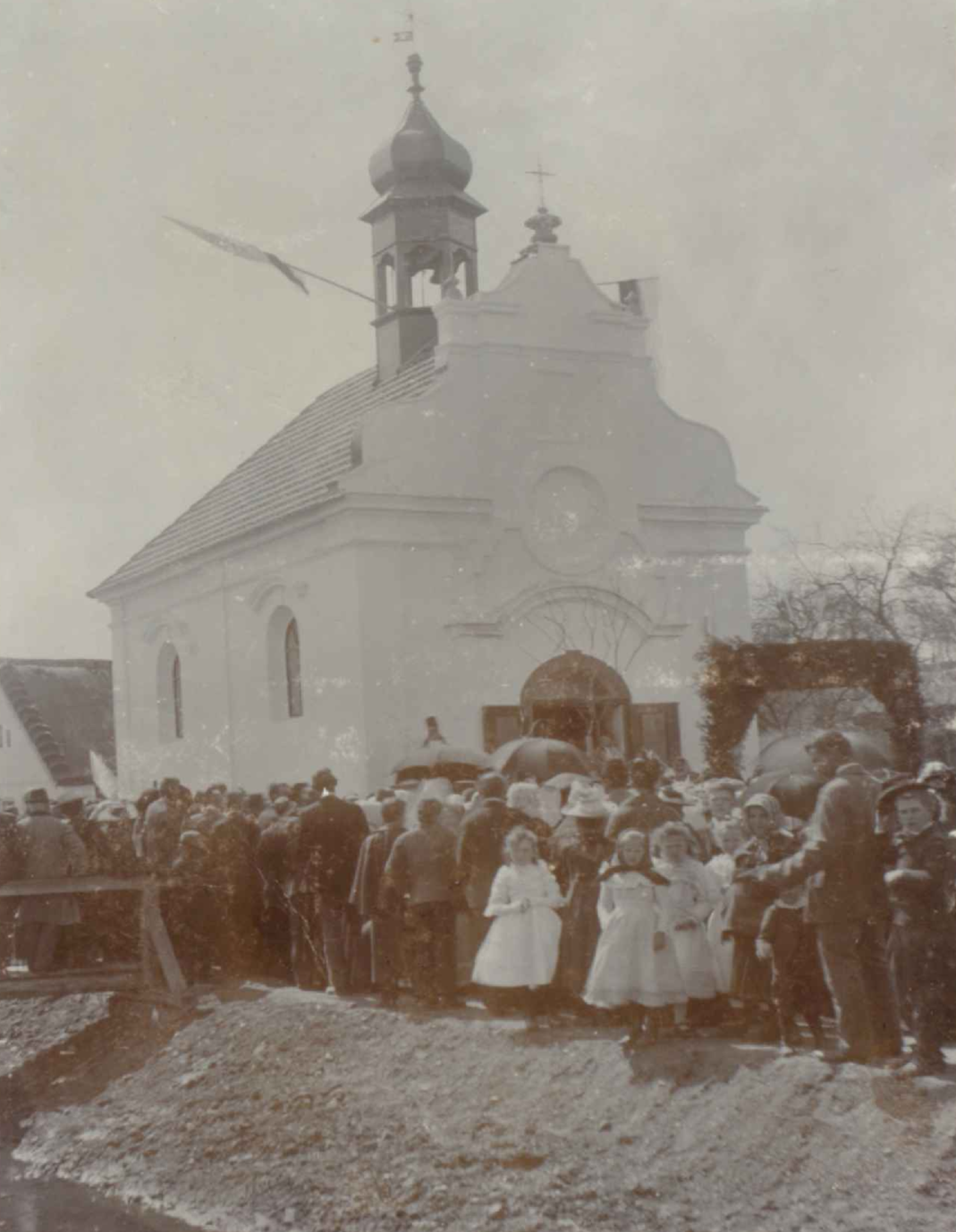
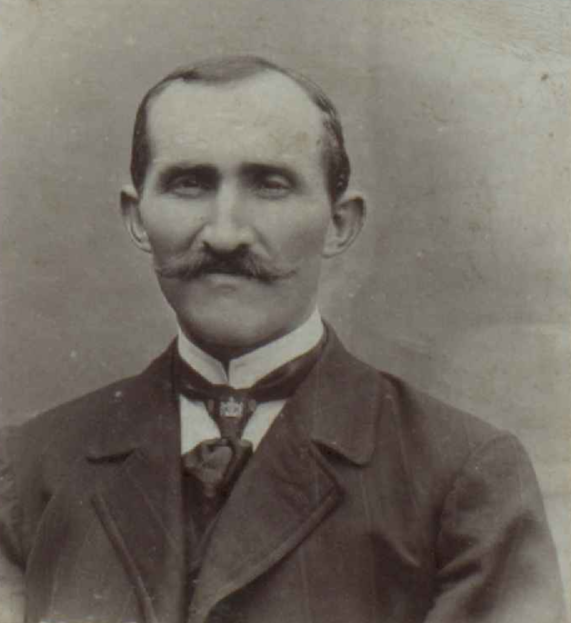
The Výrov I Sub-branch of the Výrov Branch
The descendants of Marie Šteflová of Výrov, born there a Prusíková.
1815 – 1844
The fifth child of Vojtěch Prusík, the reeve of Výrov, and his wife Anna, née Fenclová, was their daughter Marie. She was born in Výrov, at No. 18, in the house called “U Boudů”, on 20 May 1815. In that very year the Emperor Napoleon was defeated at Waterloo. The Fates were probably not kind to Marie at her birth. Her life was a short one. On 26 November 1833, at the age of 18, she married the farmer Josef Štefl of Výrov No. 6. The Štefl family was already farming in Výrov in the first half of the 18th century, and a descendant bearing the name is on that holding to this day. It is therefore one of the oldest families settled in Výrov. Josef Štefl, Marie's husband, was born on 24 December 1809. That was at No. 6, although before the new numbering this house in Výrov had been No. 12. Two children who reached adulthood were born of this marriage: a son, Josef Štefl, born on 3 February 1838, and a daughter, Marie, born on 22 August 1840. Josef Štefl later became heir to the holding and died in Výrov on 12 April 1891. Marie married into the Soukup family in Potvorov and died there on 4 June 1918. In 1841 a son, Vojtěch, was born to Marie Šteflová, née Prusíková, who soon died, and on 7 December 1844 a little daughter, Barbora, was born to her. This child too soon died, but she was fatal to her mother, for as a result of this birth Marie died as early as 27 December 1844 [sic; the section on the founder, Vojtěch Prusík, above has her die after the birth of her third child, here after the fourth, so one of the two accounts is wrong]. She was only 29. So she lived on the Štefl holding for only 11 years. Her husband Josef then married a second time, in April 1845, taking Marie Škubalová from Hodyně. With her he had a number of further children. Josef Štefl died on 21 July 1879 and outlived his first wife, Marie, née Prusíková, by 43 years [sic, probably 34].
The first child of Marie Šteflová, née Prusíková, was her son Josef. He was born at Výrov No. 6 on 3 February 1838. At the age of thirty he married Anna Vlková, the only daughter of a farmer in Hrádecko. She then proved herself an excellent farmer's wife, and in running the whole farm she surely surpassed her husband, Josef. Josef Štefl died in Výrov on 12 April 1891. He had four children. His son František Štefl was born on 2 March 1873. As the first-born he might perhaps have received the farm from his father, but because he did not show proper diligence and initiative, the holding was not given to him. František Štefl, perhaps because of this bitterness, remained unmarried until his death and helped out at home with whatever was needed. He died on 13 March 1947.
The second child of Josef and Anna Štefl was their daughter Josefa. She was born in Výrov on 11 March 1875 and married into the Urban family in Výrov, at the house formerly called “U Půtů”. The Urbans had come to Výrov from Kopidlo. Josefa Urbanová, née Šteflová, had eight children who reached adulthood. The eldest was Václav. He was born on 6 November 1896 and lives at Výrov No. 26. He has four children from two marriages. The eldest, Václav Urban, born on 31 October 1914, is an employee of the Czechoslovak State Railways (ČSD) and lives in Podbořany, Strejcova 187. He has two children: Jaroslav Urban, born on 17 April 1941, and Eva, born on 27 February 1944. The second son, Josef Urban, was born on 17 September 1921. He is an employee of the state farm at Manětín, where
he lives at No. 157. He has a little son, Jiří Urban, born on 22 March 1962. The next is Jaroslav Urban, born on 5 December 1924, who is deputy director of RaJ (Restaurants and Canteens) in the Sokolov district. He lives in Karlovy Vary-Tuhnice, Krymská 19. He has a little daughter, Alena, born on 1 February 1953, and a son, Václav, born on 31 January 1964. Václav Urban's fourth child is his daughter Jarmila, born on 29 January 1927. Her husband is Vašek, a member of the collective farm (JZD), and they live at Borek No. 4, near Kozojedy. They have three children: Jarmila, born on 3 November 1950, Miloslav, born on 21 February 1953, and Vladislav, born on 23 September 1957.
The second child of Josefa Šteflová, married name Urbanová, is her daughter Božena. She was born on 30 November 1898; her married name is Sládková, and she lives at Kopidlo No. 8. She is a member of the collective farm. She has three children. Her son Václav Sládek, born on 27 September 1921, adopted a child not his own. It is a little son, Václav. Her daughter Miluše, born on 23 October 1923, has the married name Juhová, at Kopidlo No. 23, and she and her husband still work as private owners. She has two daughters: Miluška Juhová, born on 13 February 1947, and Jitka Juhová, born on 10 September 1950. Božena Sládková's third child is her daughter Božena. She was born on 26 August 1926 and married the joiner Kovařík, and they live in Teplice I, Čapkova 1854. They have two children: Jaroslav, born on 11 August 1950, and a daughter, Jana, born on 7 July 1958.
Josefa Urbanová's next child is her daughter Marie. She was born in Výrov on 20 January 1901. Later she married Vojtěch Vopat, a native of Výrov. He was a railway employee, and they then lived together for a long time in Ústí nad Labem. Now, as pensioners, they live in Prague 6, Ruzyně, K mohyle 456. They have two children. Their son Josef Vopat, born on 12 December 1927, is a designer and lives in Prague-Malešice, Černokostelecká 2016. He has two children: Květa, born on 12 May 1959, and Blanka, born on 24 May 1965. The second child of Marie and Vojtěch Vopat is their daughter Libuše. She is a dietetic nurse, and her husband, Štolba, is the manager of the “Rudá hvězda” spa house in Mariánské Lázně. Libuše was born on 17 December 1936 and has a little son, Marek, born on 14 August 1964.
Josefa Urbanová's fourth child is her son Josef. He was born in Výrov on 9 March 1903. Later he bought a farm homestead at Kožlany No. 325, and there he is today a member of the collective farm. Josef Urban has four children. The eldest is his daughter Marie, married name Krocová, of Buček No. 1. She was born in Výrov on 23 June 1928. The Krocs used to have an inn in Buček, and today they work in the collective farm. They have three children. The eldest, Eva, born on 24 December 1948, has the married name Černá and lives in Prague 9, Čakovice, Sokolská 357. She works in television. The second is Bohunka, born on 13 December 1950, and then Miloš Kroc, born on 15 January 1954. His son Josef Urban, born on 19 April 1930, is unmarried and works in the collective farm in Kožlany. His daughter Božena has the married name Klausová, in Kožlany. She was born on 3 November 1931, also in Výrov, like all her brothers and sisters. She has two children, Vladimír, born on 24 January 1960, and a daughter, Jaruška, born on 18 June 1955. Josef Urban's fourth child is his daughter Vlasta. She was born on 13 October 1934 and today has the married name Knotová, at Buček No. 19. She has four children: Pavel, born on 27 July 1954, Jindřiška, born on 1 September 1955, Drahuše, born on 27 July 1959, and Ivana Knotová, born on 17 May 1966. The Knots work in the collective farm. Josef Urban died on 9 February 1968.
Josefa Urbanová's third son was Vojtěch. He was born on 3 May 1905, trained as a locksmith, and died young and unmarried, as early as 26 June 1927.
Another child of Josefa Urbanová, née Šteflová, is her daughter Anna. She was born on 8 October 1908 and married the gamekeeper Antoš, who worked for a long time in Trojany. Now they both live as pensioners in their own little house at Sedlec No. 20. Both their sons became foresters. The engineer Jaromír Antoš, born on 8 November 1930, lives at Manětín No. 7. He works for the forest administration. He has a daughter, Jaromíra Antošová, born on 3 January 1959. The second son, the engineer Jaroslav Antoš, was born on 20 December 1931. He works for the forest administration at Trhanov in the Domažlice area. He lives at Trhanov No. 98. He has two little sons: Jaroslav, born on 6 August 1957, and Kamil, born on 20 March 1959. His wife is the daughter of the farmer Růžička of Výrov, whose father bought the “U Boudů” homestead in 1912. It was there that the reeve Vojtěch Prusík served from 1803.
Another child of Josefa Urbanová was her son Jaroslav. He was born on 12 January 1911, was a railway employee, and died unmarried on 10 November 1958.
Josefa Urbanová's last child was her daughter Jarmila. She was born in Výrov on 23 January 1913. She married Antoš, an employee of the forest administration, at Kopidlo No. 47. For many years she had weak nerves, and these also caused her untimely death. She drowned in the pond at Kopidlo on 15 June 1964. Jarmila Antošová had four children. The eldest, Jarmila, born on 24 May 1934, married name Novotná, lives today at Rovinka, No. 78, near Habartov in the Sokolov district. She has two sons: Josef Novotný, born on 26 March 1963, and Václav Novotný, born on 16 March 1965. The second is Zdeňka, married to the worker Nový; she was born on 11 April 1936 and lives at Kopidlo No. 47. Her sons are Jaroslav, born on 17 October 1957, and Miroslav, born on 4 February 1961. The third is a son, Václav Antoš. He was born on 29 May 1943 and works at the tractor station in Kralovice. He lives at Lomany No. 18, near Plasy. He has a daughter, Ivana, born on 16 May 1964, and a little son, Václav Antoš, born on 21 August 1965. The last is Jana, born on 8 May 1945, married name Rýdlová. She has a little son, Václav, born on 6 January 1967. She lives in Kaznějov. She also has a little daughter, Jana, born on 2 October 1968.
The third child of Josef Štefl, the farmer at Výrov No. 6, was his son Václav. He was born on 18 September 1878. Unlike his brother František, he soon showed himself to be a good farmer. That was why he became heir to the holding. For his abilities he was also mayor of Výrov for six years. He took up this office after Vojtěch Prusík, who had been mayor of Výrov for several decades. In the summer of 1918 Václav Štefl caught typhoid fever, which was then raging there, and succumbed to it on 27 August 1918. So he did not live to see the proclamation of Czechoslovak independence. Václav Štefl had five children who reached adulthood. The eldest is Marie Čihová, born on 5 March 1903, who lives at Hadačka No. 55. She had three children. Her son Rudolf Čihák was born on 28 December 1924 and died, a boy of twelve, on 15 December 1936. Her son Josef Čihák, born on 6 March 1926, lives with his mother at Výrov-Hadačka No. 55 and has two children: Helena, born on 15 December 1951, and Josef, born on 22 September 1954. The third child is Marie, married name Aksamitová, of Výrov No. 35. She was born on 4 January 1940 and has two children: Pavla, born on 18 March 1963, and Luboš, born on 11 June 1966. The Čihas and the Aksamits both work in the collective farm.
The second daughter of the farmer Václav Štefl of Výrov No. 6 was Anežka; she married Hoch, the owner of the ancient Dyškánka inn, at Hadačka No. 12. She was born on 3 September 1904. She has two children. Her daughter Marie, born on 8 December 1930, lives in Prague 9, Nad Kolčavkou 1438. Her husband is the designer Glückselig; she herself is a clerk. They have two children. Their daughter Iva was born on 25 April 1956 and their son Pavel on 21 December 1958. Anežka Hochová's second child is her son Alois. He was born on 20 October 1934, also lives at the Dyškánka, at Výrov-Hadačka No. 12, and works in the collective farm. He has a daughter, Jiřina, born on 3 November 1957, and a little son, Jiří, born on 9 July 1962. The Hoch family has long been settled in Výrov. The Dyškánka inn was built by the Plasy monastery in the 18th century, and after the monastery's dissolution the Religious Fund sold the estate inn “Duškánka” in 1788 to Václav Hoch, a German from Minice. The price paid for the inn was 602 Rhenish gulden. So Anežka Šteflová came into a family that has lived in the same place in Výrov for 180 years now.
Václav Štefl's next child was his son Josef. He was born at Výrov No. 6 on 17 March 1906. He became heir to the holding after his father, and he was an excellent farmer. In the search for all the descendants of Marie Šteflová, née Prusíková, he contributed uncommonly to the success of this inquiry. He died relatively early, on 1 December 1964. He had three children. His daughter Marie, born on 18 July 1932, married the clerk Skuhrovec of Rokycany, where she lives at No. 799. She has a daughter, Dana, born on 13 April 1958. Josef Štefl's second daughter, Zdeňka, was born on 21 April 1934. She married the headmaster of an agricultural school and lives at Mýto No. 13, near Rokycany. She has a daughter, Zdeňka, born on 31 October 1954. On the native holding, Výrov No. 6, there lives today his son Josef Štefl. He is already the fifth generation of the Štefl family whose ancestress was Marie Prusíková of Výrov No. 18. Josef Štefl was born on 7 July 1941, and his little daughter Jana, the sixth generation of the family, was born on 3 October 1962. Josef Štefl works in the collective farm.
The third [sic, properly the fourth] child of Václav Štefl is his son Václav. He was born on 25 July 1913 and was a farmer at Kočín No. 19, near Kralovice. He has three children: Václav, born on 29 January 1946, a daughter, Zdeňka, born on 4 May 1948, and Jitka, born on 25 June 1957. Václav died on 23 April 1968.
The last is Božena Šteflová, born on 26 May 1915. She married the farmer Koča, of Žebnice No. 9. They both still farm there privately and, in spite of that, have excellent results. Božena Kočová has two children. Marie, born on 30 December 1938, has the married name Bulínová and lives in Plzeň-Slovany, Motýlí 28. She has two daughters: Jana, born on 23 June 1962, and Hana Bulínová, born on 10 August 1964. Her son Václav Koča, born on 8 December 1941, works on his farm with his parents. He has a little son, Václav, born on 6 May 1966.
Josef Štefl's last child was his daughter Marie. She was born at Výrov No. 6 on 1 January 1881 and later married the farmer Sláma in her native village, at No. 14. Marie Slámová died on 29 September 1960. Long before Marie married into the Sláma family, two of its members had left for America. Marie Slámová had five children. The eldest was Marie. She was born on 15 May 1903 and married the farmer Mancl, of Kralovice No. 134. She died on 18 July 1967. She had two children. Her son Václav Mancl, born on 25 September 1924, lives in Kralovice and works in the collective farm. Her daughter Marie, born on 4 April 1942, has the married name Horáková, of
Zábřeh na Moravě. She has a little son, Ladislav, born on 13 December 1966.
The second daughter of Marie Slámová, née Šteflová, is Božena. She was born on 27 June 1905 and is married to Polívka, a railway employee. She lives at Kralovice No. 515. She has two children. Her son Jaroslav Polívka, born on 31 May 1933, lives at Kralovice No. 550. He has a son, Jaroslav, born on 5 February 1958, and a second, Pavel, born on 24 January 1963. Her daughter Věra has the married name Bulínová and lives at Hadačka, No. 50. She was born on 19 June 1935 and has a little son, Vladimír, born on 9 November 1959.
Marie Slámová's third child is Anna. She was born in Výrov on 19 October 1907 and lives under her married name, Králová, at Hadačka, No. 13. She works in the collective farm. Her daughter Anna, married name Urbanová, of Trojany No. 3, was born on 12 November 1940. She has a little son, Roman Urban, born on 17 July 1964. Her second daughter, Božena, married name Horynová, of Hadačka, was born on 9 November 1945.
Marie Slámová's fourth daughter is Blažena. She was born at Výrov No. 14 on 25 March 1913 and still lives on this homestead; her husband is the farmer Slach, today a member of the collective farm. Blažena Slachová has two sons. Her son František, born on 27 June 1937, is an instructor at the agricultural training school in Nečtiny. He lives there, at the place called Hrad Nečtiny, No. 4. He has a little daughter, Hana Slachová, born on 1 July 1962. Blažena's second son is Jaroslav Slach, born on 4 February 1940. He has two children: Jaroslav, born on 1 November 1963, and Dana Slachová, born on 10 January 1965.
The last child of Marie Slámová, née Šteflová, was at last a son, baptised Vojtěch. He was born on 19 December 1916 and married into Dolní Hradiště No. 7, near Kozojedy. He has three sons. The first son, Vojtěch, born on 2 September 1944, lives at home and works in the collective farm. He has a little daughter, Jana, born on 4 November 1966. The second son, Jiří Sláma, born on 14 November 1945, works at the tractor station in Kralovice and lives there too. He has a son, Petr, born on 10 August 1967. The third is Václav Sláma, born on 9 November 1947.
The second and last child of Marie Šteflová, née Prusíková, in Výrov was her daughter Marie. She was born on 22 August 1840. She married the farmer František Soukup of Potvorov. She had three children who reached adulthood. The first was her son Josef Soukup, born on 11 April 1966 [sic, probably 1866; the next paragraph gives his birth as 1 April 1866], who later took over the homestead from his parents. He died on 13 January 1951. The second was her daughter Josefa, born on 10 August 1872, married name Romová, of Chrašťovice. She died there on 30 January 1936. The third was her son František Soukup, born in Potvorov on 12 March 1875. He was an innkeeper in Žilov. He died on 17 December 1957 at his daughter's in Plzeň. Marie Šteflová, married name Soukupová, of Potvorov, often thought back to her home in Výrov, and although her mother, Marie, née Prusíková, had died when she was four, so that she did not remember her, she was always glad to own her kinship with every member of the Prusík family. Whether they lived in Potvorov, or in Bílov, Sedlec and the nearby neighbourhood, she visited these relatives and they visited her. She died half-blind in Potvorov on 4 June 1918.
Her first son, Josef, was born on 1 April 1866. For many years he farmed his native homestead, but later the farm fell into decay, and today there is no longer any trace of this house of theirs in Potvorov. Josef Soukup died in Potvorov on 13 January 1951.
Josef Soukup of Potvorov had four children who reached adulthood. The eldest is his daughter Marie Soukupová, born on 22 September 1897. She never married and lives today in Horní Hradiště, near Plasy, with her sister Ludmila Krejčová.
The next was his son Bohuslav Soukup. He was born in Potvorov on 23 May 1900 and married into Trojany No. 1. There he used to keep an inn with a farm attached. He has two daughters. Bohuslava, born on 2 December 1925, has the married name Šmídlová and lives at Lom near Most, No. 458. She has three children. Her daughter Bohuslava was born on 29 September 1947, her son Jiří Šmídl on 23 January 1950 and her daughter Jana on 10 October 1958. The second daughter of Bohuslav Soukup of Trojany is Marie, born on 4 February 1931. She is married to Josef Kroupa, who married into the village from Bukovina. They work in the collective farm. They too have three children: Jaroslava Kroupová, born on 9 December 1953, Václav, born on 1 November 1956, and Jiří, born on 23 August 1963. Bohuslava Šmídlová now has the married name Hynková, at Kralovice No. 52.
The third child of Josef Soukup of Potvorov is Václav. He was born there on 28 October 1905 and married into Hrádecko, near Kralovice. He lives there at No. 3 and is a member of the collective farm. He has three children. The eldest is Olga, born on 3 February 1932, married name Prýmasová, of Kozlovice No. 53, near Nepomuk. She has a daughter, Olga, born on 7 November 1956. His son Václav Soukup was born on 14 October 1938 and lives in Hrádecko with his parents. Václav Soukup's second daughter is Vlasta, born on 14 April 1941. She married Pekárek, a technician with the Spoje, the post and telecommunications service, and lives in Prague-Kobylisy, Sedlecká 31/808. They have two children: Pavel, born on 10 May 1963, and Ivana, born on 30 April 1965.
The last was his daughter Ludmila, born in Potvorov on 9 February 1908. She married the farmer Krejča, of Horní Hradiště No. 18, near Plasy. Her son Jaroslav Krejča, born on 16 December 1944, died of a tragic leukaemia, a boy of twelve, on 24 August 1956. One small child of Ludmila's drowned in a little pond, and so her only consolation is her daughter Jarmila, born on 7 January 1947.
The second child of Marie Soukupová, née Šteflová, was her daughter Josefa. She was born in Potvorov on 10 August 1872 and later had the married name Romová, in Chrašťovice. They had a fine homestead there. She died on 30 January 1936. Josefa Romová had only one daughter. She was Marie, born in Chrašťovice on 2 July 1898; she stayed on her native homestead and later had the married name Hlousová. She died childless on 17 July 1952.
The last child of Marie Soukupová of Potvorov, who had been born a Šteflová in Výrov, was her son František. He was born on 12 March 1875. He settled in Žilov, where he kept an inn until 1945. There his immediate neighbour was the Bayerle homestead, into which Eliška, née Kabátová, from Nevřeň, had married, also a member of our family, of whom we have already told as a descendant of Tomáš Prusík of Horní Bříza. When František Soukup could no longer carry on his business, as thousands of others too were prevented from doing in the post-revolutionary times of that day, he moved to his daughter's in Plzeň and died there on 17 December 1957. He was married three times, and of all these marriages two children were born to him, from the first and from the third. His first child was his daughter Marie, born on 2 February 1903. Her mother, who came from Nevřeň, died after the birth. Marie married Josef Škoula, a technical officer at the Škoda Works, and lived with him in a pretty little house in Plzeň-Škvrňany.
Her father, František Soukup, lived with her until his death. She did not outlive him for long: she died of cancer on 30 August 1963. Marie Škoulová had an only son, Stanislav. He was born on 27 May 1929, is a technical officer at the Škoda Works and lives in Plzeň-Slovany, Náměstí 16. They sold their little house in Škvrňany. Stanislav Škoula has a little son, Pavel, born on 10 August 1963.
František Soukup's second child, from his third marriage, is his son František. He was born in Žilov on 7 April 1923 and was thus 20 years younger than his sister Marie. He is an engineer at the Škoda Works, and for his professional abilities he is often sent abroad, among other things as an instructor of our fitters. He spent a particularly long time in Egypt. He lives in Plzeň, Čechova 33. The engineer František Soukup has two children: a little son, František, born on 4 August 1946, and Svatopluk, born on 28 July 1949.
There was always a close bond with the Štefl family. Probably also because the ancestress of this family, Marie Prusíková, married onto a homestead in her native village. Not only her own children, and then in turn their descendants, kept up their ties with the Prusík family, but also her stepchildren, who came from Josef Štefl's second marriage, after she had died so prematurely, so young. In particular, František Štefl, a son of Josef Štefl's second marriage, had the friendliest of relationships with the Prusík family. When his father died in 1879, he was fifteen. Václav Prusík, Marie Šteflová's brother, became his guardian. František then studied with the support of Blažej Prusík, a secondary-school teacher in Klatovy, who was 20 years older than he. His great friend from his youth to the end of his life was another of Blažej's brothers, Josef Prusík. They studied together in Klatovy and later saw each other in Prague too, where both of them lived. František Štefl wrote short memoirs of his homestead in Výrov and of his family, which throw a very interesting light on life in this village in the last century. In his recollections he also mentions the brief history of the school in Výrov. He writes: “At the beginning of 1869 the teacher Fišer moved to Výrov. They nicknamed him ‘šlapant’, the tramper. He had already been in several villages before, often got drunk, made himself impossible there and had to ‘tramp’ on again to another village. The village rented a larger room from Vopat at the lower end of the village; the teacher had a few school benches, a blackboard, and the multiplication table written in large figures on a big sheet, hung on the wall. Then there was a black cross there, and the schoolroom was also adorned by his bed. His teaching consisted chiefly in dealing out the birch rod generously across the hands if a pupil did not answer him quickly enough. The multiplication table was learned every day, together and aloud. Writing was taught first in the German Gothic script, as the official regulations of the day required, and only later in the Latin script. The teacher received ‘sobotáles’, a Saturday fee, for each pupil. For his midday meal he went to the houses that had children at school. Each child always meant one meal, until his turn came round again, the whole village taking it in rotation. On St Gregory's Day in March he taught each pupil a little verse about the spring work in the fields and led them from farm to farm, so that they might recite their verses everywhere.
In some places the teacher Fišer got a four-kreuzer piece from the farmer and from the farmer's wife an egg, or a bit of butter, a bun or a cake, which an old woman engaged for the purpose carried to the school for him. These were the ancient customs of the old non-compulsory school and of teachers of every sort. After 1870 this came to an end with the new school laws. The first and last teacher in Výrov, Fišer, then moved away with his school to Petrovice. The school in Výrov ceased to exist, so that it had lasted there only two years. In 1871, on the basis of the new school laws, there were also official negotiations about establishing and building a school in Výrov, at least a one-class school with two divisions, as was then the custom. At least for the youngest children. Because of the strong opposition of two farmers, old Háža, who already had three grown-up sons, and Jirka Kozel from the lower end of the village, who also already had a daughter past school age, the school in Výrov was never established. People often used to say that the little children of Výrov would always have to curse those two farmers whenever they dragged themselves through frost, snowstorm or downpour to school in distant Kralovice.”
František Štefl goes on to recall the farming of the fields in his birthplace, Výrov: “Until the years of my childhood (around 1864 – 1867) a third of all the fields of Výrov lay idle every year. They lay fallow, unworked, so that, it was said, they might gather new strength for yielding a crop the following year. Until those days, too, all the grain here was reaped with sickles. Only at that time did Uncle Václav Prusík, who had an elder brother who was vicar in Prague, at St Vitus's, begin on his advice to introduce new methods in farming. He was against leaving fields fallow, he began to lime them and he introduced the cutting of wheat and rye with the scythe. Many neighbours, not only here but in the wide neighbourhood too, shook their heads gravely at the novelties that Uncle Prusík was introducing. In the second year they were already joining in this novelty, and in the third year everyone here was already cutting the grain with scythes, and in the wider neighbourhood too. My father, Josef Štefl, also took advantage of this and began to make at home not only rakes, as before, but also scythe snaths, that is, handles for scythes, with small and large grips. His products sold very well; he supplied them to friends and strangers alike, but I do not remember that we grew rich from this new trade.”
“In 1870 [sic; the metric weights and measures were introduced by a law of 23 July 1871 and became compulsory on 1 January 1876],” František Štefl writes in his memoirs, “new metric measures and weights were introduced throughout Austria, and so in Bohemia too. Ells and fathoms, žejdlíky and věrtele, the old measures for liquids and for grain, came to an end, at least officially. It goes without saying that it took a long time before metres, kilometres, kilograms and quintals, hectolitres and litres took root. At the beginning of the harvest in 1871 I was out in the field with my sister. In the afternoon we suddenly saw a great column of smoke above Výrov. That was when Chalupák, Vopat at the upper end of the village and Vojtík were burnt out, up on the hill in Výrov. A cow then cost 60 to 80 gulden. A horse, up to 200 gulden. A holba of beer (a little more than half a litre) cost a four-kreuzer piece (4 kreuzer = 8 heller). The baker sold rolls for one or two kreuzer, according to their size. We bought sugar and salt for the house by the loaf. Our farm, at the Štefls', was once divided into two equal parts, half-lány. The whole lán survived only at ‘U Boudů’ (the Prusíks'). But the division of our holding took place long ago, in the 18th century. It seems, however, that the place called ‘U Šteflíků’ was the second, new half of the divided holding. And that not only from the name, but also from the style and the state of preservation of the buildings of both homesteads.”
František Štefl recalls further: “As a boy I used to run with a jug for drinking water, when our well had turned muddy after heavy rain, across the stream to the Slachs', to the Hážas' or to the Maršes at the lower end of the village. The shale formation which, they say, stretches from White Mountain near Prague across the Kladno and Rakovník areas ends just in the hill above our farm. It does not give good drinking water, and the other side of Výrov, across the stream, always had better drinking water. I remember that in 1872 or 1873 a rumour spread everywhere that one day, at noon precisely, a great comet would strike our earth and destroy it entirely. I waited by the stream that day, so that the comet would not burn me, but nothing happened. Only in Vienna, at that time, there was a great crash on the stock exchange, and it struck many of the ‘ouly’ being set up in the countryside too, that is, grocers' shops, especially in Potvorov, Kralovice and elsewhere. The only larger garden in the village was at ‘U Boudů’, where my one-time guardian, Václav Prusík, farmed. I also remember vividly the day of 25 May 1872. As children we were going to school in Kralovice in the morning. Just before noon the sky clouded over with black clouds, there was lightning and terrible thunder, and soon a downpour broke. Water was pouring terribly everywhere; the meadows below the parish house and the footpath running through them were flooded deep by the torrent. Only just before evening, when the rain had stopped, did the Hochs' light carriage come for us from the Dyškánka and take us back to Výrov. Our whole farmyard was flooded, the wall of the little garden facing the village green was torn down, and elsewhere in Výrov too there was a great deal of damage. The water even carried off the little shack in the meadows of the court usher Šiml in Kralovice, and later a fine new little brick house was built for him by the road at the edge of the town. Only on the third day did we learn what destruction of property and of lives this cloudburst, and then the flood on the river Střela, had caused at Plasy, Nebřežiny and elsewhere.”
This concludes our account of the fortunes and life of Marie Prusíková, married name Šteflová, of Výrov, and we have added to it a few recollections of the young years of her stepson, František Štefl. Although Marie Šteflová, born at “U Boudů” in Výrov, died so young and had only two children who reached adulthood, she has left behind her, down to the present day, a fairly large number of descendants. They number 157 people with Prusík blood, 20 of whom have already died.
The Hodyně Sub-branch of the Výrov Branch
The descendants of Matěj Prusík, a native of Výrov, who settled in Hodyně.
1818 – 1900
The sixth child of Vojtěch Prusík, the reeve of Výrov, and his wife Anna was their son Matěj. He was born at the “U Boudů” farm on 22 February 1818. From childhood he was a very devout man, and he was content in his home, where he helped until he was 25. Only when his brother Václav married, on 30 January 1843, did the family begin to consider that he too should not stay single, and might settle, say, in some other village nearby. When word reached Výrov that homestead No. 17 in Hodyně, then farmed by Jan Tischer, was for sale, this farm was bought. Matěj Prusík bought it with his parents' help, together with his future companion in life, Anna Fakanová of Hodyně. This was on 3 November 1843. Until 1805 this homestead had been No. 10. Until 1830 its owners were the Janeček family. It is interesting that in 1782 the farmer here was Adam Janeček, whose wife was Barbora Prusíková, born in Sedlec on 6 May 1756. And so, at the beginning of November 1843, by a play of fate, a member of our family came here once again: Matěj Prusík of Výrov. The homestead was bought for 2,800 gulden.
Today about 140 people live in Hodyně. Of course, 125 years ago there were fewer. This village, which lies near the Kralovice brook, belonged at first to the royal chamber, but around 1220 it passed to the Plasy monastery in exchange for Všehrdy. Over many centuries the village was owned by various noblemen, such as Hanuš Kolovrat of Krašov or Jan of Gutštejn at Nečtiny, and in part the renowned Florián Gryspek of Kaceřov was also an owner here. There used to be a privileged reeve's holding in the village, and at the time when the Plasy monastery was the owner, and it held Hodyně longest, every farmer apart from the reeve owed corvée. In this small, charming village near Kralovice a daughter, Anna, was born on 11 July 1820 to Prokop Fakan and Anna Jindříšková of Kočín. It was she, then, whom Matěj Prusík took as his wife. That was on 28 November 1843. From that day, then, the Prusík family was settled in Hodyně. Anna Prusíková, née Fakanová, died of convulsions at the age of 47, on 21 November 1867.
Matěj Prusík and his wife Anna had many children, but only five sons reached adulthood. All their daughters, Barbora, Marie, Anna and Josefa, died early, in childhood. Matěj Prusík was a more conservative farmer than his brother Václav, and this showed in his own life too. A mirror, for instance, meant vanity to him, and in all his life he never looked into one. He was a very kind-hearted man, and everyone was always sincerely welcome at his farm. He was the last to die of the four Prusík brothers born at “U Boudů” in Výrov. He lived to 82. He lived contentedly in retirement on the farm for over thirty years, while his first-born son Vojtěch already farmed the homestead on his own. Matěj Prusík died of marasmus on 17 October 1900.
The eldest son of Matěj and Anna was Vojtěch Prusík, born on 11 April 1847. He died in Hodyně on 31 December 1924. He became heir to the holding. The next was Josef, born on 20 March 1849. At the age of twenty he emigrated to America, founded a large family there and died on 4 August 1927. He ended his days on his farm near Shawano, in the state of Wisconsin, in the USA. He never returned to his homeland.
The third son was Václav. He was born on 13 August 1853, settled in nearby Kozojedy and died there at the fine age of 90, on 28 July 1943. The fourth child of Matěj and Anna was František Prusík. He was born on 14 March 1857 and in the end settled in Louny, where he was a storekeeper at the sugar refinery, and died there on 1 August 1941. The last was Jan Prusík, born on 25 May 1859. He served in the revenue guard and was stationed for a long time in Hrádek nad Nisou and above all in Königshahn (Královec), near Žacléř. He died at his son's in Prague on 26 October 1937.
The first son, as we have already said, was Vojtěch Prusík. He was born at the farm at Hodyně No. 17 on 11 April 1847. He completed six forms of the grammar school in Plzeň, but when his mother, Anna, née Fakanová, died so early, he did not finish his studies and returned home, where he took over the homestead from his father. His father Matěj never remarried. Vojtěch Prusík was a very intelligent farmer. For a long time he was mayor of Hodyně, and for a time he was also a member of the District Committee in Kralovice. After a great natural disaster in the 1890s, which also all but destroyed the whole harvest in Hodyně, he was sent with other delegates from the surrounding villages to the emperor in Vienna, to plead for help. Because he could speak German, he became the spokesman of the deputation there. He liked to quote the words of Emperor Franz Joseph I, who said to him in Czech as he left the audience: “Ti s Pohem a já Ti pudu napomocen”, that is, “Go with God, and I shall be of help to you”. Vojtěch Prusík gladly supported everything new that was introduced in farming, whether fertilising, new implements or machines. Just as his uncle Václav Prusík in Výrov had earlier begun to cut the grain with the scythe instead of the sickle, he too led the way in Hodyně. Just as people in Výrov were mistrustful at first, so in Hodyně the other farmers followed Vojtěch's example only a year after him.
Vojtěch Prusík chose as his companion in life Anna Jánská of Dřevec. She was born there on 28 January 1851, but like Vojtěch's mother Anna, his wife Anna also died relatively young. She was 41 when she died of peritonitis in Hodyně on 24 January 1892. Vojtěch and his wife had twelve children. Seven of them reached adulthood. They had three little daughters named Marie, who died in childhood, and only the fourth to be christened with this name grew up. Their twins, Cyril and Anna, also died when they were a year old. At the beginning of the 20th century Vojtěch Prusík married again, Marie Štěpánová of Dřevec. This marriage was childless. Marie Prusíková, Vojtěch's second wife, died in Hodyně on 4 December 1939. Homestead No. 13, which belonged to the Fakan family and from which Matěj Prusík's wife came, was sold in 1871
to the blacksmith Jan Kožíšek for 1,170 gulden, but with only part of its land. The remaining fields and meadows passed to Vojtěch Prusík, who thereby enlarged his acreage. After his mother's death Vojtěch Prusík paid out to each of his brothers, or guaranteed them, a share of 200 gulden. The first share was drawn in cash by his brother Josef, who emigrated to America. Vojtěch Prusík was respected and well liked in Hodyně, not only because he had been mayor, but also for his kind-hearted and hospitable nature. He died of pneumonia, in retirement on the farm, on 31 December 1924.
Vojtěch Prusík and his wife Anna had these seven children. The eldest was their daughter Františka, born on 7 April 1870. She became heir to homestead No. 17, which had been called “U Laibů” since time immemorial, and in 1912, with her husband František Hanzlíček, a native of Obora near Kaznějov, she bought the fine Machek farm, which she also later handed on to her brother Vojtěch. The marriage of Františka Hanzlíčková, née Prusíková, was childless. Her husband was, it is true, a sharp and well-read man, but he was not an outstanding farmer. The main burden was borne by his wife. Františka Hanzlíčková died on 27 January 1938. The second child to reach adulthood was their son Václav. He was born on 6 December 1873, became an engine driver on the railway, was settled in Plzeň for many years and died in Třemošná on 3 March 1938. The third was Anežka, married name Kasalová. She was born on 1 March 1878 and died in Prague on 24 July 1928. The second son of Vojtěch Prusík of Hodyně was Josef. He was born on 30 October 1879, worked as an official on the railway and died tragically in May 1945 near Wałcz, in present-day Poland, when the prison in Gollnow, where he had been held, had already been liberated. The next was František Prusík, born in Hodyně on 23 August 1881; he owned a druggist's shop and died in Hodyně [sic; his own paragraph below has him die in hospital in Plzeň], where he had settled towards the end of his life, on 31 December 1959. The sixth child of Vojtěch Prusík of Hodyně was his son Vojtěch. He was born on 21 March 1888, farmed in Hodyně after his sister Františka Hanzlíčková and died on 18 August 1948. The last is his daughter Marie, born on 22 September 1890. Her first husband was the teacher Ladislav Vodák. She married him in 1914, but after ten years the marriage was dissolved.
She lived with him in Čivice and Kožlany. In 1930 she married again, the railway official František Bílek, and now, as a widow, she lives in Prague 7, Na Maninách 32. For a long time she also lived with her sister Anežka, married name Kasalová, whom she also nursed until her untimely death.
Marie Bílková, née Prusíková, who remained childless, is often turned to in trust by her many nephews and nieces and by their descendants too, as the last member of the family of Vojtěch Prusík of Hodyně. She died on 31 December 1974.
The first son of Vojtěch Prusík and Anna, née Jánská, in Hodyně to reach adulthood was Václav. He was born on 6 December 1873. He studied briefly at the grammar school in Klatovy. There, however, he got up to all sorts of mischief. As a student, although he suffered no want, he sold an eiderdown. And when it became clear that steady study and sitting in school were not to his liking, he was apprenticed as a locksmith. He grew very fond of this trade, and later he became a very capable engine driver on the railways. His first posting was Karlovy Vary. Then he was transferred to Rakovník, and he spent the greater part of his life in Plzeň. He took as his wife Marie
Němcová, born in Plzeň on 25 March 1882. They had five children. Václav Prusík died in his little villa in Třemošná, where he lived on his pension, on 3 March 1938, and was buried in Plzeň. His wife Marie survived him by only a year; she died in Třemošná on 21 June 1939.
The eldest child of Václav Prusík and Marie was their daughter Milada. She was born in Karlovy Vary on 19 July 1900. For some years she also lived in Prague; later she married the merchant Václav Lang, and today she lives in Plzeň, Divadelní 4. Milada Langová, née Prusíková, has four children. Her son Václav Lang was born on 16 October 1926. He is a building technician and lives in Plzeň, Škrétova 43. He has two children: a daughter, Libuše, born on 19 December 1952, and a little son, Václav, born on 24 May 1961. The second was her daughter Marie, born on 22 September 1927. Marie's daughter Alena Langová was born out of wedlock. She was born on 19 December 1949.
Marie Langová then married, becoming Bobková, and had two more little daughters. Jindřiška Bobková was born on 21 November 1954, and Marie Bobková on 22 February 1956. Their mother, Marie Bobková, died young, of cancer, on 1 July 1956. Their grandmother and grandfather devotedly took the orphans in and brought them up. The next is her daughter Milada, married name Martinková. She was born on 28 October 1934, is a nurse and is childless. She lives in Plzeň, Tomanova 5, and it is she above all who devotedly looks after the children of her sister Marie, who died before her time. The last child of Milada Langová is her daughter Josefa. She was born on 5 March 1939. She lives in Plzeň, Kollárova 5. She has a little son, Václav Zuna, Zuna being her married name. He was born on 8 February 1959.
The next son of the engine driver Václav Prusík, a native of Hodyně, was Václav. He was born in Plzeň on 1 April 1902 and was a driver for the post office in Prague, but he soon fell ill and died of consumption at the young age of 24, on 1 April 1926. He is buried in Plzeň. The next was his son Ervín Prusík. He was born on 20 August 1904 in Rakovník. He trained as a druggist with his uncle František Prusík, then had his own druggist's shop in Chudenice near Klatovy and in Plzeň, but this business did not go very well for him. Finally he was co-owner of a soap factory in Prague-Libeň, under the firm name Prusík & Co., but he did not succeed there either. His wife was Marie Jirásková, born on 18 May 1903. Ervín Prusík died at the young age of 38, on 5 July 1942, and is buried in Plzeň. His widow, Marie Prusíková, lives in Prague-Košíře, Holečkova 52. Ervín and his wife Marie had an only son, Ervín. He was born on 11 May 1934 in Plzeň. He had a gift for foreign languages, but he could never establish himself in a place where he could use his abilities. For a time he worked as a mechanic, but that did not appeal to him. He longed to see the world. One day in 1953 he crossed the border illegally into Austria, together with several friends, and from there, after an arduous journey, he finally reached the USA. His beginnings there were hard, as perhaps everyone's are, but now he has done very well for himself there, as a clerk in an insurance company and at the same time as a data-processing technician in an industrial firm. He lives near New York, at 11 Midlesex Court, Newfoundland, New Jersey. His wife
is a Frenchwoman, Monika, née Guiffantová, born on 21 August 1931 in Brest, in Brittany. Ervín and Monika have no children as yet. Monika also works as a clerk. She and Ervín have built themselves a fine little house north of New York, in wooded lake country near Wanda-lake. Of the friends who once left their homeland with Ervín, only one still lives in the USA, as Ervín does. The others are scattered elsewhere around the world.
The next child of Václav Prusík, a native of Hodyně, is his son Karel. He was born on 8 September 1907 in Plzeň. He trained in a grocer's shop, at one time also with the well-known large Prague delicatessen firm of Dřevo. For a short time he also had his own business in this line. Finally he was an inspector of the Regional Administration of Restaurants and Canteens in Plzeň. He took as his wife Herma Echtnerová, who was born on 27 March 1911 in Nýřany near Plzeň. Karel Prusík and his wife Herma have two children. They live in Plzeň, Zámečnická 32. Their son Václav Prusík was born on 28 September 1933, trained as a photographer and is still employed in that line in Plzeň. His wife is Jitka Hoblová, born on 12 October 1936 in Starý Plzenec. The couple live there too, at Nerudova 766. They have two children: a son, Václav Prusík, born on 27 December 1960, and a little daughter, Jitka, born on 8 May 1964. Václav Prusík is one of those young people, by no means the rule among them, who take an exceptional interest in the history of the family to which they belong. He is always a most willing helper in this historical work of ours. Karel Prusík's daughter Jana, married name Kudrová, was born on 25 January 1940 in Plzeň; her husband is the technician Josef Kudra. They live in Plzeň, Čermákova 62. They have a son, Pavel, born on 22 May 1964.
The last child of the engine driver Václav Prusík is his daughter Jarmila. She was born in Plzeň on 7 March 1910 and married the railway official Jaromír Fiala. They live in Plzeň-Čechurov, Zelenohorská 71. She has two daughters. Jarmila, born on 21 September 1936, is married to the officer Pytlík in Plzeň, where they live in Slovany, Šeříkova 30. She has a daughter, Ivana, born on 25 June 1959. The second daughter of Jarmila Prusíková, married name Fialová, is Vlasta. She was born on 21 December 1939 and married Kokoška, a technician at the Škoda Works. They live in Plzeň-Letná, Partyzánská 2. Vlasta Kokošková has two little sons: Karel, born on 9 November 1963, and Petr, born on 20 December 1964.
The second daughter of Vojtěch Prusík and Anna in Hodyně was Anežka. She was born on 1 March 1878. She married the post-office employee Josef Kasal, who was born in 1864 in Skořice, in the Rokycany area. They settled in Plzeň, and so Anežka was not too far from her birthplace, Hodyně. Her father, after all, still lived there for many years. When her sister Františka, married name Hanzlíčková, bought a new and better homestead in Hodyně, Anežka Kasalová saved her birthplace, homestead No. 17 in Hodyně, from falling into strangers' hands. The farm on which Matěj Prusík of Výrov had settled in 1843 was bought in 1912 by the Kasals. Anežka Kasalová and her husband Josef had an only son, Jaromír. He was born on 9 February 1899 and studied at the modern secondary school in Plzeň and at the technical university in Prague, electrical engineering. For a short time he worked at the Škoda Works, but then, until his retirement, he was employed in the technical department of the Prague municipality. He left no descendants.
With his wife Julie, the daughter of the sculptor Piccardt, he long lived in his own house in Smíchov, U Nikolajky, and now, after its sale, they live in Smíchov, Nádražní 50. Jaromír Kasal was always attached to his mother's birthplace, Hodyně, and to the whole Prusík family. His mother, Anežka Kasalová, née Prusíková, lived with her husband for several years in Krušovice near Rakovník, where the father of the engineer Jaromír Kasal was postmaster. Anežka died in Prague at the age of fifty. That was on 24 July 1928, and she is buried in the Malvazinky cemetery. Her husband survived her by two years.
Another child of Vojtěch Prusík of Hodyně was his son Josef. He was born on 30 October 1879 in Hodyně. He joined the railway early, and his first post, in 1904, was Klatovy. Then he went to Brod nad Lesy, where he was at the station until 1930. Later he built himself a fine little villa in Klatovy, Pod Hůrkou, and retired there on his pension. His wife was Barbora, née Rádlová, born on 23 October 1883, from Štěnovice near Plzeň. She died in Klatovy on 17 April 1952. Josef Prusík, whom the family called “signál”, the signal, was arrested in 1944, sentenced to a year and a half for seditious talk against Hitler and imprisoned in Gollnow near Stettin, in Germany. There he did live to see liberation in 1945, but on his way home in May of that year his trail mysteriously vanishes. According to witnesses he was last seen near the small town of Deutsch Krone, in former East Prussia [sic; Deutsch Krone was never in East Prussia; in 1945 it belonged to Pomerania], today near Wałcz in Poland. So he never came home. He was 66. Josef Prusík and his wife Barbora had an only daughter, Libuše. She was born on 4 November 1922 in Prague. Today she is a clerk at the railway station in Klatovy. She lives in the little villa her parents built in Klatovy, čs. tankistů 364. Libuše, who has always acknowledged the family too, is still unmarried.
The fifth child of Vojtěch Prusík of Hodyně was his son František. He was born on 23 August 1881. He studied briefly at the grammar school in Klatovy, but it soon became clear that he had little appetite for study. He then trained in a druggist's shop, and by his great diligence and his pleasant manner he rose to a fine position. He had his own, fairly large druggist's shop in Prague-Radlice. For a time he also had a branch shop in Radotín. Over many years he trained many druggists in his business, who remembered him fondly and did well in life with the Prusík schooling. For many years František Prusík was a member of the board of directors of the Citizens' Savings and Loan Society in Smíchov. From 1913 he was also a member of the Smíchov municipal council, for the former National Democratic Party. At the Smíchov town hall he devoted himself above all to social questions and poor relief, and in this respect too he did a great deal for the neediest. It was also on his initiative that the footbridge over Smíchov railway station was built. His wife was Anna Grünwaldová, born on 18 February 1876 in Jesenice near Prague. This marriage, however, remained childless. In later life František Prusík built himself a little villa in his birthplace, Hodyně, on the land of the farm No. 17, by then no longer in existence, where he had been born. He always liked to return to his home, and so it was always his wish to spend the end of his life there.
The end of his life was not a happy one, for, like hundreds of thousands of tradesmen, he was left without money after the Second World War, and he lived very modestly. His wife Anna died in Hodyně on 12 November 1950. As fate would have it, František Prusík died exactly a quarter of a century [sic, properly 35 years] after his father, also on New Year's Eve, on 31 December 1959, in hospital in Plzeň.
The last son of Vojtěch Prusík and Anna, née Jánská, was Vojtěch. He was born on 21 March 1888 in Hodyně. Vojtěch Prusík had more than his fill of soldiering. He lived through the annexation of Bosnia and Herzegovina in 1908, and then in the First World War he was on the Italian front. There he suffered considerable wounds, especially to his hands. In 1921 he married Leontýna Konopásková of Hodyně, born on 12 October 1892. Soon afterwards his sister Františka Hanzlíčková handed the farm over to him, and Vojtěch Prusík farmed it well. He sold it, though, while he was still alive. Two daughters were born of this marriage. Vlasta, born on 5 February 1922, married Jan Fiala, an official of the town of Plzeň. They live in Plzeň-Čechurov, Lomená 20. They have two children. Their son Jan Fiala, born on 4 February 1943, has a little daughter, Jana, born on 3 September 1967; their daughter Vlasta, married name Herinková, born on 27 March 1946, has a daughter, Eva, born on 28 September 1967. All of them live in the same little villa, except Jana. The second daughter is Miluška, who was born on 11 March 1925 in Hodyně and married into Výrov No. 1, to the farmer Václav Vopat. They have two children. Their daughter Miroslava, born on 5 November 1946, has the married name Rodová and lives today in the little villa of her great-uncle František Prusík in Hodyně. She has a little daughter, Miroslava, born on 12 April 1967. Their son Václav Vopat was born on 16 February 1955. Vojtěch Prusík, by then living in retirement, which he did not enjoy for long, died on 18 August 1948. He was buried in the Kralovice cemetery. His widow, Leontýna Prusíková, died on 10 March 1965.
The First Prusík to Settle in the New World
The second son of Matěj Prusík and Anna, née Fakanová, in Hodyně was Josef. He was born on 20 March 1849. Until he was twenty he helped at home on the farm, and when it had been decided that the first-born, Vojtěch, would become heir to the holding, the family considered what to do with Josef. His mother was dead by then, the holding was not meant for him, and after the Austro-Prussian War of 1866 the times were still unsettled. In those days many Czechs, from the Kralovice area too, were leaving for America. And so Josef Prusík decided that he too would seek his fortune overseas. At the beginning of 1869 he took leave of his loved ones and his native village and left his homeland for ever. At the beginning of February 1869 he reached New York, and from there he later made his way to the port of Green Bay, in the state of Wisconsin. He lived there for several years and earned his living in all sorts of ways. There he also met his future wife, Kateřina. She was born a Janková on 17 September 1858, also in Bohemia. Her mother was a midwife, and she too learnt the craft, which was a great help to her when she later lived in the American countryside with her husband and the doctor was endlessly far away. Some years later Josef Prusík and his wife Kateřina moved to the neighbourhood of the small town of Shawano, in the same state. There they finally settled on their own farm and farmed it for over fifty years. Josef Prusík always liked to reminisce, as
indeed all our countrymen in America do, and he and his brothers wrote to one another until the end of his life. He was a staunch Catholic, and when after the First World War his elder brother Vojtěch went over to the Czechoslovak Church, he reproached him sharply for it. None of his three children who grew up wanted to farm, however. When the work was already becoming far too much for Josef and Kateřina, Josef sold his farm near Shawano and lived in retirement for only about two years. He died on 4 August 1927. His wife Kateřina survived him by 20 years; she died at the home of one of her daughters on 16 November 1947.
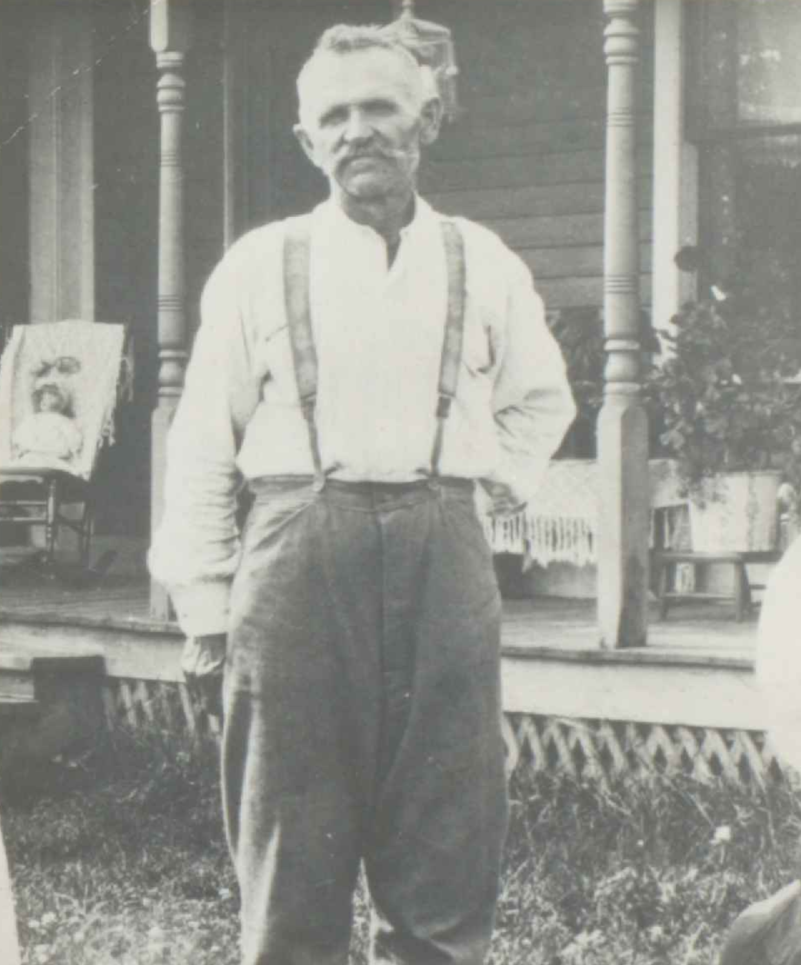
Josef Prusík and Kateřina, née Janková, had six children. Čeněk and Otylie died very young, and Arnošt Prusík died when he was four. His only son to reach adulthood was Adolf. He was born on 5 December 1881, worked in paper mills and lives today in retirement in Shawano, as the oldest Prusík living in the world today. His daughter Emma was born on 25 October 1892, married the machinist Jiří Boehler and lives in the city of Milwaukee, in the state of Wisconsin. Josef Prusík's second daughter, Kateřina, born on 25 November 1895, married the electrical technician Karel Radtke. As a widow she lives today in Shawano. We shall now tell more of the fortunes of this whole family.
Josef Prusík's son Adolf, although he was born on a farm and had to work in the fields from his youth, had no wish to anchor himself in farming for good. The state of Wisconsin is heavily wooded, and so the paper mills there offered plenty of work, and Adolf took advantage of it. He became a worker in one such paper mill, and he worked there as a worker all his life. He was born on 5 December 1881 and is today among the oldest people in the world with this name. No other Prusík older than he is known anywhere else in the world so far. His wife was a woman of Czech origin, Otylie, née Tatovská. She was born in Bohemia on 14 December 1883. Adolf Prusík and Otylie had one daughter and four sons. All the sons have descendants with the name Prusík, so that across the “big pond”, too, numerous members of our family live today, in the male line and in the female line. They have multiplied the name Prusík in the Hodyně sub-branch of the Výrov branch as abundantly as could be. Adolf Prusík and his wife Otylie live in retirement in Shawano, Maurer Street, in the state of Wisconsin in the north of the USA. Adolf Prusík died on 4 July 1969.
The eldest child of Adolf Prusík in the USA is his daughter Evelyn. She was born on 29 September 1908 and was married twice, but not happily. Each time her marriage ended in divorce through her husband's fault. Today Evelyn is employed in a hotel in Green Bay, Wisconsin, and she lives there with her daughter Georgette at 328 Main Street. Evelyn Prusíková's first married name was Schenková. Four sons were born to her of this marriage. All of them work as skilled workers in the “black trade”, as it is called, that is, metalworking, in various factories in the state of Wisconsin. The eldest is Elmer Schenk. He was born on 27 April 1926 and lives in Green Bay, at 2744 Whipponwill Drive. He has two children. They are Reyne Anna Schenková, born on 12 March 1951, and a son, Robert, born on 1 April 1949. The second son of Evelyn, née Prusíková, is Lyle Schenk, born on 7 December 1927. He lives in the city of Milwaukee, at 17345 65th Street. Like
his brother Elmer, he too has two children. They are boys, Alan, born on 15 April 1960, and Glenn Schenk, born on 10 July 1956. The third is Dale Schenk. He was born on 30 March 1930 and has only one little son. That is Michal, born in March 1955. The last child of Evelyn Prusíková's first marriage is her son Eduard Schenk. He was born on 5 July 1936, and he above all proudly acknowledges his mother's Czech origin. Eduard has three children. They are his sons Daniel Schenk, born on 17 September 1962, and Štěpán, born on 5 October 1960, and his daughter Stacy Sue Schenková, born on 10 April 1964. The children live with their parents in a fine little house of their own in Green Bay 54301, at 2634 Oakwood Drive. Green Bay is a port city, and his mother lives there, as do his brother Elmer and his sister Georgette. His brothers Lyle and Dale Schenk live in the city of Milwaukee. Dale Schenk's address is 6101 West Plainfield, Milwaukee.
Evelyn Prusíková's second married name was Schefdorová. This marriage did not turn out well either: the father did not look after the family and drank instead. So the marriage was dissolved. A daughter was born of it, Georgette, on 1 November 1944; she lives with her mother in Green Bay, in the place where their grandfather and great-grandfather, Josef Prusík, first worked when he came to America almost a hundred years ago.
The second child of Adolf Prusík was his son Josef. He was born on 11 May 1911. He remembers how as a boy, until he was fifteen, he always helped on his grandfather's farm in his free time. He picked stones off the fields there. He loved his grandfather. Sometimes, he says, they could hardly understand each other: his grandfather never learnt to speak English well, and he in turn no longer understood well the native tongue of his forebears, Czech. Josef Prusík became a wood turner and a skilled worker in the manufacture of refrigeration equipment. His hobby is mink breeding, and with a partner he keeps quite a large farm of these precious fur-bearing animals. He married Lucie, née Olssonová, who was born in Norway on 19 January 1912. They had two children. After a few years, however, the marriage ended in divorce, and Lucie, divorced once more after that, kept the name Prusíková and lives today with her daughter Glorian. Josef Prusík lives in Shawano, at 918 East Lieg Avenue.
Glorian was born on 3 June 1935 and married the mechanic Meyer. They live in Shawano, at 922 South River Street. They have a little son, Michal, born on 3 August 1956. The second child was a son, Ronald Prusík. Was, sadly. He was born on 19 April 1942, studied pharmacy at the university in Madison and was truly a most promising member of our family. His father bought him a Jaguar car, and driving it he was soon killed, near Shawano, on 3 September 1961. So he was only 19. He died unmarried. Josef Prusík, who lives today as a recluse, takes the loss of his only son hard.
Adolf Prusík's next son in the USA is Bernard. He was born on 30 November 1912, studied economics and became a successful official. He lives in Shawano, as his parents do, at 305 Arlington Street. His wife is of Scottish-German origin. She is Jana, née Kupská. She was born on 30 September 1919. Bernard Prusík helped most of all, by gathering all the names
and dates he could of the descendants of Josef Prusík, the Hodyně native who emigrated to the USA. He and his wife have two sons. The first son is Bernard. He is an electric welder and lives today in the town of Appleton, Wisconsin, where he has his own little house. His address there is Route 5, Box 234 A. Bernard Prusík junior served as a soldier in Korea and elsewhere. His wife is of Dutch origin, Mary van Hoof, born on 17 September 1943. Bernard was born on 22 April 1940. They have two children: a little daughter, Lisa Prusíková, born on 3 March 1965, and a little son, Daniel, born on 9 March 1966. Bernard Prusík junior is a keen and very successful basketball player, and Bernard senior, for his part, a passionate Nimrod. The second son of Bernard senior is Dennis. He was born on 22 August 1949 and is a student.
Adolf Prusík's third son is Norman. He was born on 17 June 1916. He married Genevieve, née Peebles, born on 3 January 1921, who is of Irish-Scottish origin. They live in Shawano, at 29 East Highway. Norman Prusík and his wife long had a restaurant in Shawano, a town of about 7,000 inhabitants. Now, since selling the business, he works for a dairy. His great love is painting. He has several times held exhibitions of his pictures, with success. Norman has three children. The eldest is his daughter Judita, born on 29 December 1940, married name Guetschowová, in Shawano. She lives there in West Richmond Street. She has two children: a daughter, Julie Lynn Guetschowová, born on 1 February 1961, and a son, Wayne Kenneth, born on 28 October 1963. Norman's second child is his son Kenneth Prusík. He was born on 28 March 1943 and studied at the university in Madison, but he soon decided to enter a Catholic order in the town of De Soto on the Mississippi. He stayed there several years. Now he works in a hotel in the city of Green Bay. He is unmarried and seems to have no intention of marrying at all. The third is his daughter Linda Prusíková. She was born on 9 July 1952.
The last son of Adolf Prusík and his wife Otylie is Elmo Prusík. He was born on 30 September 1923. He is a turner and lives in the town of Hartford near Milwaukee, at 742 Wheelock Avenue. His wife is Geraldina Acettová, born on 5 April 1929 in Italy. They have two children. The first is a little daughter, Kateřina, born on 23 April 1952; the second is a little son, Alan Prusík, born on 17 March 1958. That, then, is the list of all the descendants of Adolf Prusík, the oldest living Prusík in the world. So the name Prusík lives on after him in quite considerable numbers, even though one of them, Ronald, ended his life tragically at so young an age.
The second child of Josef and Kateřina Prusík to reach adulthood on the Waukechon farm, not far from the small town of Shawano, was their daughter Emma. She was born there on 25 October 1892 and married the machinist Jiří Boehler, of German-Polish origin. Emma often remembers her parents with love. At first they lived in a little sod house; school, doctor: far away, nowhere. Later, though, when the American countryside had become civilised and settlers were growing in number, she could go to school after all. Her parents never stinted on her education. She even learnt to play the piano
and to sing, and she used to sing at services in church. Emma Boehlerová, née Prusíková, lives with her husband, a pensioner, in the city of Milwaukee, in the state of Wisconsin, at 4481 44th Street. Emma has three children. They are: her son Jiří Boehler, born on 8 July 1922. He is an official in a shipping company. He too lives in Milwaukee, at 3871 56th Street. The suburb of Milwaukee where he lives is Greenfield. He has two children, a son, Ronald, born on 7 June 1949, and Rusel, born on 22 April 1955. The second child of Emma Boehlerová, née Prusíková, is her daughter Dorota. She was born on 11 October 1925 and married the metalworker Walter Bomber. They too live in Milwaukee, a city of three-quarters of a million in the north of the USA. The address is 3314 91st Street. They have two children. Their daughter Marie was born on 3 October 1950, and the second, Diana Louisa, on 26 December 1961. The third child of Emma Boehlerová, the daughter of the Hodyně native Josef Prusík, is her daughter Bernice. She married first the official Frank and, after his early death, the worker Edenhofer. She was born on 9 March 1927. From her first marriage she has two children. Her son James (Jakub) Frank was born on 16 December 1950, and her second son, Jan Frank, in 1953. From her second marriage a little daughter, Zuzana Edenhoferová, was born on 7 February 1963. They live in Milwaukee, at 3127 80th Street. Bernice works in an office.
The third child of Josef and Kateřina Prusík was their daughter Kateřina. She was born on her parents' farm near Shawano on 25 November 1895. In 1918 she married the electrical technician Karel Radtke, who had lived in California in his youth. Later Karel Radtke built up a fine electrical business of his own in Shawano. He was a respected and well-liked, very pious man. Kateřina, his widow, lives in Shawano, at 201 Richmond Street, in her fine little house with a garden. She too likes to remember her Czech origin and her parents with gratitude. Unfortunately neither she nor her sister and brother has much command of Czech any more, and their descendants still less. Kateřina Radtkeová, née Prusíková, had, like her sister Emma [sic; Emma had three children], four children too.
Kateřina's eldest son, Karel Radtke, was born on 20 June 1918 and inherited the business from his father. He has eight children. The eldest is Kenneth Radtke, born on 9 June 1941; the second is his daughter Kateřina, born on 17 April 1943. She has the married name Zaddacková, in the small town of New London in the state of Wisconsin, at 319 Wisconsin Avenue. She has a little son, Scott, born on 8 April 1963. Karel Radtke's other children are his sons Billy, born on 18 January 1945, Tommy, born on 16 February 1948, and Donny, born on 25 March 1949, his daughter Marie, born on 23 August 1950, Petr, born on 23 June 1959, and the last, a little daughter, Karolina Radtkeová, born on 17 February 1961. The second son of Kateřina Radtkeová, née Prusíková, is Milton. He was born in Shawano on 21 December 1926, lives there too and has two children: a little son, Richard, born on 3 November 1959, and a little daughter, Eliška, born on 7 February 1962. A little son, Michal, died at the age of three. Kateřina Radtkeová's daughter Beatrice, born on 20 March 1933, married the machinist Bane. She lives with him in the city of Minneapolis on the Mississippi, at 5601 12th Avenue. They have six children. They are a son, Pavel, born on 17 June 1955, a daughter, Juliana, born on 22 May 1956, and Marie, born on 17 June 1957, then another son, Josef Bane, born on 17 September 1958, a daughter, Anna, born on 22 April 1963, and finally another son, Tommy, born on 23 October 1964.
As can be seen from the account so far, a great many children are born in the USA. The last child of Kateřina Radtkeová, née Prusíková, is her daughter Marie, born on 10 February 1938. She is married to the veterinary surgeon Fischer. They have two little daughters: Laura, born on 16 January 1963, and Marie, born on 4 September 1965.
These, then, are the descendants of Josef Prusík of Hodyně, who emigrated from there to America almost a hundred years ago. They are not few, whether they bear the name Prusík or one of many others. There are 70 people in all. None of them knows the language of their Czech forebears any more. But they all proudly acknowledge their distant Czech origins.
Josef Prusík of Hodyně was not, it is true, the first Prusík to cross the ocean, but he was the first member of our family to settle there for good and to leave numerous descendants in the New World.
The third son of Matěj Prusík and Anna, née Fakanová, in Hodyně was Václav. He was born on 13 August 1853. Until 1889 he helped at home on the farm his brother Vojtěch, who had taken over the family holding after their mother's early death in 1867. He found his wife in nearby Kozojedy. She was Josefa Smolíková, born on 28 February 1854 in Holovousy. Later she moved with her parents from that village to Kozojedy No. 35.
Holding No. 18, after the renumbering No. 35, in Kozojedy was once called “Adamovský”. As early as 1686 Jan Kotas farmed here. The Kotas family were here until 1873. The last farmer, Martin Kotas, embarked in the first half of the 19th century on a risky industrial venture. At that time the beginnings of industry were being built in the Radnice area, and above all in Břasy, and that tempted many farmers too. The rich Jew Starck, however, had far more money, push and ruthlessness, so that the money the farmers had put into the new venture was soon lost. At that time the Kotas family also ran their holding into debt, so that in 1838 Martin Kotas's son Jan already had liabilities of 2,500 gulden and was placed under guardianship. He and his three siblings emigrated to the USA. In homestead No. 35 in Kozojedy, in 1826, was born Josefa Kotasová, who in 1843 married the farmer Václav Prusík in Výrov. Her sister Kateřina, born in 1837, then lived in straitened circumstances as a result of her father's adventurous venture. So when she married Jan Plaček of Rakolusky, she chose to emigrate with him to the USA. There they had a large family, and one of their sons in particular, Emil Plaček, became a prominent and successful citizen and businessman in the state of Nebraska, in the United States of America. Another sister, Marie Kotasová, had the married name Kosová, in Buček. When the Kotas farm had declined so far, it was bought by Václav Prusík of Výrov, the husband of Josefa Kotasová. This happened on 29 January 1873, and in the autumn of that same year, on 12 November 1873, Václav Prusík of Výrov granted the Smolíks the entry of their title in the land register. It was here, then, that Václav Prusík of Hodyně married into the farm in 1889. Václav was an excellent farmer, and for a long time he was chairman of the Kampelička, the village savings and loan bank, and of the fire brigade. His wife Josefa,
née Smolíková, was also very industrious. Václav Prusík and Josefa had three children. The eldest is their daughter Marie, born on 24 February 1890. She was married first, briefly, as Šourová, and later as Šustová. The second is their son Václav Prusík. He was born on 26 July 1893, took over the holding in Kozojedy and died on 7 November 1961. The third child of Václav Prusík of Kozojedy is Jaroslav. He was born on 11 April 1897 and married into Bujesily No. 18. Josefa Prusíková, née Smolíková, died on 19 May 1921. Her husband Václav Prusík reached a great age, and when he was 15 days short of ninety, he died in Kozojedy on 28 July 1943. He was buried there, with a great attendance of the townspeople and of the whole wide neighbourhood.
The first child of Václav Prusík, a native of Hodyně settled in Kozojedy, was his daughter Marie. She was born on 24 February 1890. She first married the butcher Šoura of Planá. This marriage was short, as her husband died tragically. In 1927 she married a second time, the railway official František Šusta, by then a widower. Šusta had a son from his first marriage. A son, Václav, was born to Marie Šustová on 13 February 1928. Marie Šustová was widowed while her son was studying, but even so, with great sacrifices, she managed to see Václav through his law degree. He lives in Prague 7, Kostelní 24. He has a little son, Petr, born on 5 March 1954. His mother Marie lived with him. She died on 29 March 1968.
The second child of Václav Prusík of Kozojedy was his son Václav. He was born on 26 July 1893 and took over the family holding, No. 35, from his father. He took as his wife a very industrious woman, a native of Kozojedy, Božena Volínová, born on 19 June 1901. Václav was an excellent farmer and well liked in the village. For seven years he was mayor of Kozojedy, from 1922 to 1928. In his time a higher primary school was built in the village, a medical district was set up, a brickworks was built and a memorial was put up to the fallen of the First World War. Towards the end of his life he grew brooding, and on 7 November 1961 he hanged himself at home. He was the last in the whole village to bring his farm into the collective farm (JZD). Václav Prusík and his wife Božena in Kozojedy had two children. The first is their daughter Zdeňka, born on 12 October 1922. She married a native of Kozojedy, Rudolf Špirk. His parents had an inn in Kozojedy. Rudolf Špirk is today the manager of the brewery in Litoměřice, and he lives there with his wife Zdeňka, at Lidická 15. The Špirks have two children: Milan was born on 2 September 1947, and their little daughter Zdeňka Špirková on 24 March 1954. The second is their son Václav Prusík. He was born at Kozojedy No. 35 on 29 January 1928. He took over the holding from his father and is a member of the collective farm. His wife is Alena, née Helebrantová, of Hlince near Kralovice, born on 8 January 1931. Václav Prusík and Alena have three children: a little daughter, Alena, born on 19 April 1958, a son, Václav, born on 16 September 1960, and the youngest, Libor, born on 25 June 1964. The Prusíks in Kozojedy are very industrious people; they have built themselves a fine new house to live in, and they are as well liked in the village as their grandfather and father were.
The third child of Václav Prusík of Kozojedy is his son Jaroslav Prusík, born on 11 April 1897. Jaroslav stayed at home for quite a long time. In 1929 he married into Bujesily. There he took as his
wife Marie Mudrová, born on 24 April 1895. The Mudras had an inn there and a very respectable farm. A son and two daughters were born to them. The eldest is Marie, born on 16 June 1930. She is married to Václav Maleček, today a member of the collective farm, at Bujesily No. 27. They have three boys: Vladimír Maleček was born on 14 October 1952, and the twins Jaroslav and Václav on 23 August 1958. The second daughter is Zdeňka. She was born on 9 April 1932 and married Josef Volín at Kostelec nad Mží No. 6. They have two little daughters, Zdeňka, born on 1 September 1958, and Alena, born on 17 November 1959. They too are members of the collective farm. The youngest child of Jaroslav Prusík of Bujesily No. 18 is his son Václav. He was born on 3 April 1935. He married Věra Šubrtová, born on 14 June 1942 in Hlince. They have a little daughter, Vendulka, born on 10 March 1964. Václav Prusík was for a long time a team leader in the collective farm. He also has a daughter, Dana, born on 22 April 1968. Jaroslav Prusík, settled in Bujesily, a native of Kozojedy, is a very kind-hearted man. For a long time he was chief instructor of the Sokol gymnastic society and a member of the local national committee. Even now he is not idle at home.
The fourth son of Matěj Prusík of Hodyně was František. He was born there on 14 March 1857. With the support of his uncle, Blažej Prusík, vicar at St Vitus's in Prague, he completed a two-year commercial school. Then he did his military service with the dragoons in Klatovy. He took part in the occupation of Bosnia in 1878 and liked to tell how, in bitter winter weather at Candlemas, he rode on horseback from Klatovy all the way to Bosnia. Later fate carried him to Louny, where he found employment in Walter's sugar refinery, and there he became head storekeeper. His wife was Marie, née Fricová. She was born on 16 November 1873 in Úlovice near Louny. Her father, the farmer Josef Fric, gave up farming in later life and built a little house with one upper floor in Louny, at Prokopova 490, where he then lived until his death, together with his married daughter. František Prusík had an only son, Josef. He was born on 18 June 1895 in Louny and was an official of the savings bank there. He took as his wife Marie Pišoftová, the daughter of a farmer from Lenešice, born on 17 April 1907. František Prusík, however, and, surprisingly, his son Josef too, kept up no close contact with the Prusík family or with his birthplace, Hodyně. František Prusík died in Louny on 1 August 1941, at the age of 84. His wife Marie, despite her frail constitution and frequent ailments, lived to eighty. She died on 6 May 1953.
Josef Prusík and his wife Marie in Louny had two children. His son Jiří Prusík was born on 27 August 1935 and became a forestry engineer. He inherited his love of the forests and of game from his father, for his father was a passionate Nimrod and for many years a member of hunting associations. The engineer Jiří Prusík took as his wife Helena Fišerová, born on 16 December 1942 in Senkov near Louny. They live together in Louny, at Prokopova 490, but have no children as yet. The second child of Josef Prusík and his wife Marie is their daughter Jana. She was born on 14 March 1939 and is married to the building technician Josef Dragoun, a native of Vrbičany. This couple too live in the house of their parents, the Prusíks. Jana Dragounová, née Prusíková,
has two boys: Josef Dragoun, born on 28 August 1961, and Jiří, born on 11 July 1964. Jana Dragounová is a clerk at the Elektroporcelán enterprise in Louny. Josef Prusík died suddenly in Louny on 12 January 1960. He was well liked everywhere.
The last son of Matěj Prusík of Hodyně was Jan. He was born on 25 May 1859. He too was helped on his way to a better livelihood by his uncle, the vicar Blažej Prusík. But when school did not go well for him, he was apprenticed at a printing works. He learnt the trade, but it did not agree with his health. Then he joined the revenue guard and served in Hrádek nad Nisou, in Zittau and in Oldřichov, and longest at the border customs office of Königshahn (Královec), near Žacléř. He was there for over 22 years. There he also married a German woman, Berta, née Pietschová, born on 16 May 1873 in Hrádek nad Nisou. Jan Prusík was uncommonly kind-hearted. Anyone could call on him at any time and would be received as a friend and given hospitality. His wife Berta was also a good woman, but she never properly learnt Czech. Even so, their son Karel was kept for the Czech nation. That is not always so when the mother is a German woman. Unlike his brother František, who lived in Louny, Jan liked to see his brothers and other members of the Prusík family, and saw them often, and he always liked to travel to Hodyně, his birthplace. He retired on his pension to Chrastava; in illness he then often stayed in Prague with his son, where he died on 26 October 1937, and he is buried in the Malvazinky cemetery in Prague. His wife Berta died the same year, also in Prague, on 31 August 1937. Jan Prusík and his wife Berta had a son, Karel. He was born on 12 August 1898 in Zittau. A little daughter, Marta, was born to them in Königshahn; she was a charming little girl, but she died at the age of only five. Karel Prusík first trained as a locksmith. In the World War he served in the navy. After the First World War he studied at the municipal technical school in Děčín, and he was employed by various firms. For a long time he was at the Škoda Works, also with the Walter firm in Jinonice, at Telegrafia in Prague, longest at Jednotný čas in Prague and finally with the firm Navika. He was granted the company title of engineer. His first wife was a German woman, Marie Dörreová, born on 11 July 1901 in Děčín. He divorced her. His second wife was Anastazie Sejkorová, born on 25 August 1896 in Újezd near Nový Bydžov. She died of cancer on 19 August 1949 in Prague-Smíchov, U Nikolajky, where the engineer Karel Prusík lived until his death. His third wife was Marie Laksarová, born on 7 August 1904 in Litětiny near Pardubice. She lives today as a widow in Prague-Smíchov, Černý vrch, Františka Šrámka 14. Karel Prusík had no children from any of his marriages. He died in Prague on 11 August 1961.
That has been the brief history of the lives and fortunes of all the descendants of Matěj Prusík, who was born in Výrov in 1818, in the days of corvée, and settled in Hodyně in 1843. He left 147 descendants, of whom 19 are dead today. Of the whole Výrov branch, the Hodyně sub-branch also has the largest number of members of the family bearing the name Prusík. Many of them, of course, live in America today; there, it is true, they acknowledge their distant origins, but none of them knows Czech any more. In Hodyně itself only one member of our family still lives today, and under another name at that.
It is interesting that in the places where the founders, men and women, of the various sub-branches of the Výrov branch lived, we still meet many of their members. Only rarely, of course, are there still people with the name Prusík there. The places in question are Horní Bříza, Výrov and Kostelec nad Mží.
Of all the twenty Prusíks living today as descendants of the Hodyně sub-branch, 11 are in the USA. Only one of them, Ervín Prusík, who got there only after the Second World War, has a command of Czech.
The Výrov II Sub-branch of the Výrov Branch
The descendants of Václav Prusík, a farmer of Výrov.
1822 – 1892
The seventh child of Vojtěch Prusík, the reeve of Výrov, who had come here from Sedlec in 1803, was his son Václav. He was born still in the days of corvée, on 7 September 1822, at Výrov No. 18. The homestead where he was born had been called “U Boudů” since time immemorial, and his mother, Anna, née Fenclová, was likewise a descendant of the first Bouda, who took over the farming of this farm in 1610.
Although Václav Prusík had no opportunity to attend higher schools, he nevertheless acquired a fairly considerable education. He read farming journals, specialist books and much else that was instructive, which his brother, the vicar Blažej, sent him from Prague. When his father Vojtěch died in 1841, his brother-in-law Vojtěch Karez of Horní Bříza became his guardian. Soon, however, he married. He found his bride in the little town of Kozojedy. She was Josefa Kotasová, from homestead No. 35 there, born on 20 September 1826. Her father, Martin Kotas, was born on 18 October 1795 and died in retirement at his daughter's in Výrov on 12 July 1879. By that time, you see, the farm in Kozojedy no longer belonged to the Kotases. Before then it had been heavily in debt and was sold to a married couple, the Smolíks, but in 1889 a member of our family came there again, Václav Prusík of Hodyně. Josefa's mother, Marie Kotasová, also died in Výrov. She was born a Píplová in Kozojedy on 29 January 1802 and died on 22 February 1882. The marriage contract of 28 January 1843 between Václav Prusík and Josefa Kotasová contains this opening sentence, whose spirit was then truly fulfilled in full in the life of the newly-weds: “The intended spouses Václav Prusík and Jozefa Kottas promise each other faithful and sincere love until death.” Two days after this marriage contract, concluded on the Metternich estate at Plasy, Václav Prusík married Josefa Kotasová. That was on 30 January 1843.
Even before 1848, when corvée was abolished and a new political order came into being in the villages and the district, Václav Prusík was reeve in Výrov. Just as his father Vojtěch Prusík and his predecessors had been before him. There had been a reeve's office at the “U Boudů” farm since time immemorial, as we have already described on page 20. From 1850, when the Kralovice district was formed and the mayors of the villages were elected, and no longer appointed as the reeves had been before, Václav Prusík became the first elected mayor of Výrov. He remained mayor until his death, and after him so did his son Vojtěch, until 1912, when he sold the farm.
Václav Prusík and his wife Josefa had eleven children. They were these. The eldest was their son Blažej, born on 1 January 1844. He became a secondary-school teacher of philology; his chief place of work was Klatovy, and he died in Prague on 15 October 1912. The second was their son František, born on 24 November 1845. He too became a secondary-school teacher of philology, a field in which he won particular distinction, and he died at Stupčice near Tábor on 7 June 1905. The third child was their daughter Josefa. She was born on 28 February 1848 and married the farmer Matěj Urbánek in Lednice, where she died on 28 April 1924. The second daughter
was Marie, born on 29 July 1851. She married the farmer Josef Koukl in Bílov, where she died on 6 February 1908. The third son was Václav Prusík, born on 2 January 1854. He became a municipal official in Prague, where he died on 16 September 1915. The sixth child was their son Vojtěch, born on 3 April 1856; he took over the family holding from his father, but sold it in 1912, and he died at his daughter's in the Germanised village of Kolešovice on 15 March 1920. The third daughter was Anna. She was born on 15 December 1858 and married Josef Koura, a farmer in Bílov, where she died on 14 December 1935. After her a daughter, Veronika, was born, on 24 November 1861. She was married to the farmer Josef Valenta in Výrov and died there on 5 November 1936. Then a son, Josef, was born, on 27 February 1863. He was a customs official and died in Prague on 8 August 1940. The last daughter was Barbora, born on 27 November 1865, married to the tradesman Walter in Klatovy, where she died on 29 May 1958, having lived longer than any of her brothers and sisters. The last was their son Antonín, born on 19 February 1869. He was the youngest, and the first to die. At first he served in the revenue guard; for a short time, as a married man, he had a business in Příbram, where he died on 16 April 1899.
It was, then, an uncommonly large family, with cares more than enough. It would surely have led to the breaking up of the farm, had a rescuer not appeared in the eldest of Václav's brothers and sisters. This was Blažej Prusík. At the time when the boys were being sent away to study, he was already vicar of the metropolitan cathedral of St Vitus in Prague. This priest agreed to take some of the boys, his nephews, into his care during their studies. And so four sons left home and completed their studies in Prague. They were Blažej, František, Václav and Josef. The last, Antonín, studied at least for a time in Klatovy, and the farm remained to their son Vojtěch.
For his time, Václav Prusík was a very progressive farmer. It was not only the specialist writings, which he read diligently, that helped him to this, but also the valuable advice of his brother Blažej in Prague. Václav Prusík was the first farmer in Výrov and the wide neighbourhood to begin cutting the grain with the scythe instead of the sickle. Already in his lifetime many fruit trees were planted in Výrov, and new farm machines were brought into use. This farmer's good influence, however, did not stop at the village; it reached the district too, for he was also for a fairly long time a member of the District Committee in Kralovice. Many of his good ideas were carried out.
A great misfortune struck Václav Prusík when his wife Josefa died at the age of fifty-one. That was on 25 May 1877. At that time his son Vojtěch was away on military service, and the whole burden of caring for the family and the farm lay on him alone. His letters, which have survived, bear witness to his love for his parents and his whole family, and also for the whole wide neighbourhood.
A fine example is his letter about the death of his mother, Anna Prusíková, née Fenclová. She was born still in the reign of Emperor Joseph II, in 1785, and died on 6 January 1859. She was seriously ill for only two days. The letter of 16 January 1859, addressed to his brother, the vicar Blažej, in Prague, begins
as follows:
“My dearest brother!
I informed you previously, in brief, of news that was surely unexpected, namely the time of the death of our dear mother, and I then promised you that I would write to you about it more fully in future, since I had no more time for it then, as I wished by that short letter only to make known when and on which day we should accompany our dear mother to her burial; and therefore I must now describe it to you fully, for my somehow uncommonly mournful and sad heart urges me continually to give you news of it as quickly as I can; perhaps it hopes to find relief in you, as the most faithful and most sincere friend, after God, in this world; and therefore hear:
It was precisely on the morning of 5 January, when I had led our dear mother from the little room into our living room, as was usual, and seated her, and, neither I nor she nor anyone else thinking of anything out of the ordinary, I went off again, as usual, about my work, and she herself told me that I should just go about my work, that she would pray for a while yet. Upon that I went off. Then, after a while, I come back into the living room, and she was sitting by the stove. My wife set breakfast before her, and she had breakfast with that youngest boy of ours, Vojtěch, and played with him, for he was her greatest darling. And so she did not let the least thing amiss be seen in her.”
In the letter Václav Prusík goes on to describe the short course of his mother's illness and her death, which came on the following day. He writes further about the funeral and describes his melancholy when, after his brothers and sisters and friends had left, he remained alone, and he remembers his dead mother in these words: “And so, having gone back again to the town, and having there duly entertained all our friends, acquaintances and neighbours according to the usual custom, and having at last gone home with my brothers and sisters, while they stayed with us two nights more and at last went home, and being thus left alone again, I was very melancholy and mournful at home. At every glance at the place where our dear mother used to sit, it was always as if something stabbed me in the heart and said, ‘Ah, my dear mother, if only you were still here…’ And so, whenever I went into the cowshed or into the barn, or went out into the fields, she stood beside me everywhere, as she used to rejoice in the harvest and took the best care of everything. If only I could speak with you, brother, and tell you here all this pain of mine. With this I close and end my letter; I send you my heartfelt and respectful greetings from all who live here and from our friends, and I kiss you and wish you good health.”
Václav Prusík, the father of eleven children, saw all his other daughters well married while he was still alive, except his youngest daughter, Barbora. He also took great care that his sons should complete their studies well and find a decent livelihood. He died in retirement on the farm, of what is known as a twisted bowel, in Výrov on 11 February 1892. In his young days he still knew corvée and the more backward farming of the countryside; at the end of his life he already saw the rapid rise of our nation and new, more modern farming. By his life and his work he contributed substantially to all of it.
The first child of Václav Prusík and his wife Josefa, née Kotasová, in Výrov was their son Blažej. He was born on 1 January 1844. He was the second nephew of the vicar Blažej Prusík to come to him in Prague, and with his help he completed his studies. Blažej Prusík studied at the Academic Grammar School in Staré Město in Prague from 1855 to 1863. Then he studied at the Faculty of Arts of Charles University, and he had just finished these studies at the time of the Austro-Prussian War in 1866. Travelling from the Kralovice area to Prague was not easy in those days, and Blažej Prusík recalls very aptly what it was like.
How the Students Travelled
“Before people began to travel by the railway from Rynholec to Bruska in Prague, and that was only from 1861, we travelled from home to Prague and from there home again with carters, or else we went on foot. Before we could get out through the Strahov Gate, or back in through it, we had to have a pass. We got home only once a year, and that was after the school reports, at the beginning of August. At other times we could not go home, for the holiday between Christmas and the New Year was short. We burned with longing for home precisely because we did not get home all year. We saw our parents on St John's Day, when they used to come to Prague. Because we lived in Hradčany, at the Vikárka, as soon as we had brought away our reports we went straight to Pohořelec to look among the many coaching inns there for some cart going in the direction of Rakovník. For there used to stand wagons there that had brought grain or something else to Prague. Our bundles were small, just some of the most necessary food. Often we were soaked to the skin in the Rakovník forest, and when it would not work with a cart we went on foot. Very often we came home with grazes and blisters on our feet. Here and there a merciful innkeeper's wife, when we were soaked through, lent us some dry clothes and dried ours on the big stove in the taproom. It sometimes took a good long while before they were dry and the sky cleared and we could set off on the next stage of the journey home. Such travelling had one advantage, though. It was cheap.
Travelling by stagecoach was a merrier affair. Outside the town the horses broke into a gentle trot, but that did not last long. After all, one pair of horses had to last the whole journey. So when the road began to climb, the coachman got down from the box and soon called into the coach: ‘If you please, the gentlemen will get out, it's uphill here!’ And so we not only got out but also pushed, each according to his strength, so that the coach could go on. Sometimes there was good company in the stagecoach; at other times the fellow travellers were not pleasant.
An immensely important event for us came in 1861, when the horse-drawn railway from the station at Bruska began to carry passengers as well. It had been built in 1836, as far as Lány, and from there it carried nothing but timber from the Křivoklát forests to Prague. Only in 1861 was the happy idea born of carrying people too, in special carriages like omnibuses, with seats on the roof as well. The last station was Rynholec. In the direction from Prague two horses, one behind the other, used to be harnessed to the carriage; towards Prague one was enough. In the end our railway managed even without that one horse. For when we reached the station
‘U černého koníčka’, which was beyond Jeneč, 15 km from Strahov, the horse was unharnessed there and the carriage ran down the natural slope towards Prague. Whenever we approached a station, the conductor put on the brake, the carriage stopped, the passengers changed, whereupon the attendants gave the carriage a push and it sped merrily on, until it came to a stop at the last station, at Bruska.”
That is how Jan and Tomáš Prusík travelled to Horní Bříza in their student years, and Blažej and František Prusík to Výrov. Later it was already easier for the others.
After completing his studies at the university, Blažej Prusík became a supply teacher in the Czech parallel classes at the German Premonstratensian grammar school in Plzeň, in the years 1866 to 1871. On 1 October 1871 he became a secondary-school teacher at the grammar school in Klatovy, and he worked there for 34 years. He did not confine himself to teaching but was active in public life too. At one time he was even chairman of five societies, and he himself recalls that he would much rather have sat in each society as an ordinary member. He presided over the Literary Union, the Šumavan Choral Society, the fire brigade, the brewery of the burghers with brewing rights and the Skating Club. In later years the SK Klatovy sports club grew out of this club. For a time Blažej Prusík was also chairman of the Beautification Society. He was also a member of the municipal and district councils in Klatovy.
Blažej Prusík was one of those teachers who were just but very strict. Among his pupils were the later famous physician Thomayer and the poet Jaroslav Vrchlický too. The writer Hais-Týnecký recalls his work in his novel “Osení” (“Young Crops”). In this work the writer depicts life in Klatovy in the last century, and also the Klatovy schooldays of Jaroslav Vrchlický (Emil Frída). He writes: “For Latin, Greek and German they got, after Hylman, Blažej Prusík as their teacher. He came to Klatovy from Plzeň and became their form master, who was to take them right through to the school-leaving examination. He was an exceedingly handsome man, tall, slim, with a full black beard. He never lost his temper, but he was very strict. He came in, sat down at his desk and did not stir from it again. And like him, they (the pupils) too sat in their benches and answered when he called on them, and read Plato, Sophocles and Horace. This method of Prusík's did not greatly amuse Vrchlický's restless spirit.”
When Šmilovský, who in those days was also a secondary-school teacher at the grammar school in Klatovy, wrote his “Krupař Kleofáš” (“Kleofáš the Groats Dealer”), taking as his model a citizen called Jung, a collector of antiquities in Klatovy, the students studied this work for the first time in Prusík's class. There are many recollections of Blažej Prusík's years as a teacher in Klatovy.
Already in Plzeň, where Blažej was a supply teacher, he met his future companion in life, Emilie, née Holá, from Štěpánovice near Klatovy. She was the daughter of the tenant of the Černín manor farm there, where she was born on 10 April 1859. Blažej and Emilie were married on 11 May 1881. Of this marriage a son, Bohumil, and a daughter, Blažena, were born, who reached adulthood. A daughter, Marie, died of scarlet fever in 1893, at the age of five.
For a time Blažej Prusík was also editor of “Klatovské listy”, at whose founding he had stood godfather. With his wife's help, however, he also had to see to the dispatch of the paper for a time, and this whole editorial activity cost him a hundred gulden. Blažej also collected a great number of songs which he used to hear in the fields, and at hop-picking and harvest-home too. They came from the regions of Plzeň, Klatovy and Domažlice, but also from those of Písek, Tábor and České Budějovice. He also had a large collection of folk names of plots of land, that is, what particular plots of fields and meadows were popularly called. Thus, for example, at the Prusík holding in Sedlice some of the fields and meadows were called: na vršíčku, skalice, jezera, za humny, baba, zahrádka, na velkým, za luhem, u jámy, pruchlavice, kamenej, paseka, or u luk, na psinách, hranice, za luhem, za poustkou, palouk, mezi jamama, předeství, and so on.
In the summer of 1905 Blažej Prusík retired on a pension, and because his son entered the university that year, where he began to study medicine, he moved with his whole family to Prague. There he taught for some time more at the Higher Girls' Grammar School in Vinohrady. In his free time he went to the Land Archives and gathered very valuable material about our ancestors, especially as regards the Výrov branch. Blažej Prusík died in Prague-Vinohrady on 15 October 1912, and his wife on the same day of the same month, 15 October 1939.
A Cardiologist of World Renown
Blažej Prusík's son, Bohumil, was born in Klatovy on 26 May 1886. He went successfully through the Klatovy grammar school. His schoolfellows remembered him kindly, for although he was top of the class, he did not forget in lessons those who found it harder. He willingly prompted them and let them copy. He had a gift for music. At that time the students formed a band, in which Bohumil was the conductor. His friend Václav Talich, who was then also a pupil at the Klatovy grammar school, was only an ordinary player. Later they exchanged roles. Talich became our most famous conductor, and Prusík, for his part, a famous conductor of medicine. Bohumil studied in Klatovy together with his cousins Blažej Prusík of Výrov and Blažej Koukl of Bílov. His step-cousin Vojtěch Walter, the son of his aunt Barbora, who had married in Klatovy, also studied with him. Bohumil Prusík took his degree as a Doctor of Medicine in 1910, together with his cousin Blažej Prusík. Already as a student he set foot on the first rung of a university career, as a demonstrator under the famous founder of Czech pathological anatomy, Professor Jaroslav Hlava. After graduating he worked at several clinics, and before the beginning of the First World War he had risen through further academic ranks under Professor Thomayer.
As early as 1912, as a young doctor of twenty-six, he went to England. There he came to know famous researchers in the field of heart disease, above all J. Mackenzie and Thomas Lewis, with whom he worked in London. It was from there, too, that in 1912 he brought the first electrocardiograph to Bohemia, and with it he then began to work at the clinic. Young doctors today can hardly imagine what that meant at the time.
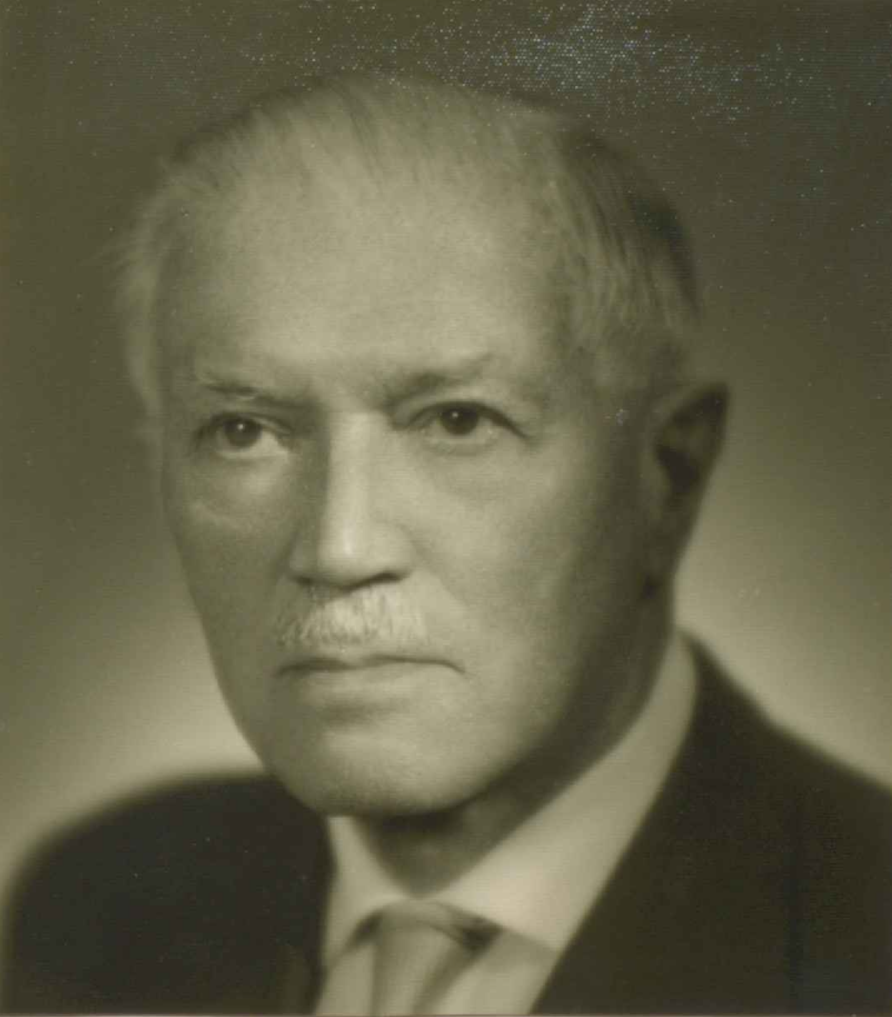
In 1920 he obtained his habilitation in the pathology and therapy of internal diseases, and in 1928 he became an extraordinary professor of Charles University. Five years later, in 1933, he became head of the propaedeutic clinic. In 1935 he was appointed full professor of Charles University.
The English way of scientific medical work found in Bohumil Prusík an enthusiastic adherent and champion. A great many of the scientific papers he published concern heart disease. His scientific work, however, covered the whole of internal medicine. Bohumil Prusík made so many discoveries that were world firsts that he was proposed for the Nobel Prize. The coming of the Second World War, however, put an end to any further proceedings on it.
Bohumil Prusík was the first in our country to recognise a myocardial infarction in a living patient from the curve of the electrocardiograph. Today it is hardly credible that until then we did not know this diagnosis clinically in our country. Bohumil Prusík was not only one of the first of our doctors who began to travel abroad further than just to neighbouring Germany; he was also one of the first of ours to whom scientists began to come from France, Belgium, Holland, the United States and England. His younger colleague, the academician Professor Dr Josef Charvát, said this of him: “I wish to point out that more than thirty years ago (this was said in 1964) he sensed where medicine would go. In those days people fell ill and died chiefly of infections. And Prusík suddenly began to study the blood vessels intensively and with concentration. He worked his way up to become the world's leading angiologist (angiology being the study of the blood vessels). Today developments have proved him right. People no longer die of typhoid fever or diphtheria, nor so much of tuberculosis, but of the blood vessels. The same holds for another of Prusík's interests, namely gerontology. When he began to occupy himself with it, some thought it an eccentricity. Today it is one of the main concerns of civilised mankind. Professor Prusík was an ornament of the Czechoslovak Academy of Sciences. He left a body of work that substantially directed our medical development over the last forty years and that reached far beyond our borders. It will remain immortal.”
In September 1961 the scientific work of Professor Bohumil Prusík's life reached its peak with the Fourth International Congress of Angiology in Prague. He became president of this congress and for several years was also president of the International Union of Angiology, with its seat in Paris. Professor Bohumil Prusík was, of course, also an honorary member of a great number of societies and associations at home and abroad. His scientific achievements were recognised throughout the world, and when in 1967 the famous American scientist Professor White of Harvard University spoke of him in Prague, he declared openly, in a lecture at the Purkyně Society, that Prusík was one of the most famous cardiologists in the world.
It was with Professor White, who was personal physician to the American President Eisenhower, that Bohumil Prusík had begun his scientific career in England as a young man, and White was also the best witness of his later rise. That is why his words carry such weight.
Bohumil Prusík had countless friends, in the world of the arts too. Among his closest friends were artists with resounding names, such as Talich, the painter and sculptor Obrovský, the painter Otakar Nejedlý and others besides. After the Second World War Professor Bohumil Prusík went to Mariánské Lázně almost every year and spent an active holiday there, always seeing patients there as a guest physician in the summer. During the First World War Bohumil Prusík married Anna Kotlandová, born on 1 January 1891 in Prague. A son, Bohumil, was born of this marriage. It was not, however, of the happiest, and it was dissolved before the Second World War. His sister Blažena then kept house for him in Prague-Vinohrady, Na Valdeku.
Bohumil Prusík devoted a great part of his life to diseases of the heart and blood vessels, and it is an irony of fate that it was this very disease that ended his life too. He was staying once again, in the summer, in his beloved Mariánské Lázně and was preparing for a journey to Paris, where he was to act as president of the International Union of Angiology. But he never got there; he died of a stroke on 6 September 1964. That was his last journey to Prague, to which he had so often returned in his life from the world, where he lectured and studied and from which he brought our medicine so much valuable knowledge. His ashes are laid in the Vinohrady cemetery, in his parents' grave.
It is surely no exaggeration to say that Professor Bohumil Prusík was one of the greatest ornaments of our ancient family. He himself was always attached to it, too, and proudly acknowledged it. We claim that Professor Bohumil Prusík was an ornament of the family, and so it truly is. Why? Whenever any one of us Prusíks introduced himself, or introduces himself, he will perhaps always meet the question whether he is related to the famous doctor Prusík. That is how well known he was everywhere among our public. And abroad it is the same, at least in the medical circles there. And it seems that until his death he was not fully appreciated in our country. He did become a member of the Czechoslovak Academy of Sciences, and he was awarded the Order of Labour for his 70th birthday, but surely, if only for the way he made the name of our country famous in the world, he deserved greater recognition, and precisely in the very highest places.
Professor Prusík was head of the Fourth Clinic of Internal Medicine of Charles University in Prague; he was called to medical consultations for the highest representatives of the state, such as, in former days, the Prime Minister A. Švehla, President Dr Beneš, President Dr Hácha and others. That, however, is not the most important thing. The main thing is that it is rightly said of him that he moved our internal medicine a whole generation forward, and that he modernised it between the two wars as no one did before him or after him. Yes, Bohumil Prusík, a native of Klatovy and a member of our old family, which sprang from the Plasy area, was a shining star of the first magnitude in it. The main building in Konstantinovy Lázně is named after him, in his memory and honour.
His only child was his son Bohumil. He was born on 19 January 1922 in Prague. He went through grammar school and then devoted himself to the study of chemistry at the technical university in Prague. He became an engineer. For over 10 years he was at the Canning Research Institute, and now for over 12 years he has been working as a
physical chemist for the ČKD Dukla enterprise in Prague. The engineer Bohumil Prusík married Jana Vyštejnová, born on 20 May 1931 in Prague. She is a doctor. She worked for six years in the Kladno hospital and now works as a specialist radiologist at the polyclinic in Břevnov. They have two children together: Jitka Prusíková, born on 19 December 1956, and Jana, born on 22 September 1963. In the family, though, they call her Zuzka. The engineer Bohumil Prusík lives in Prague 6, Jaselská 3. Since September 1968 he has worked at the Hydrometeorological Institute in Prague.
The second child of Blažej Prusík and Emilie, née Holá, to reach adulthood was their daughter Blažena. She was born on 31 August 1896 in Klatovy. When her parents moved to Prague in 1905, she went through the Higher Girls' School there. For almost 27 years she was a clerk of the Agricultural Council, and later of the Union of Farmers, in Prague. She remained unmarried. When her brother, Professor Bohumil Prusík, was divorced from his wife, she ran his household for a number of years. She now lives in Prague 6, Na Dionýsce 14. Countless patients from her brother's consulting room remember her, and so do a great many friends of Professor Prusík, with whom she too was in contact during his lifetime. The written papers she inherited from her father, which she always looked after with great reverence, were a valuable source for much of what is contained in this history of the Prusík family.
On a Czech Slavist and Defender of the Manuscripts
At homestead No. 18 in Výrov, or, as it was called, “U Boudů”, which until 1805 had been No. 4, František Prusík was born on 24 November 1845. In later life he always added Xaver to his Christian name, and so he also appears as F. X. Prusík in his scholarly work. Like his brother Blažej, almost two years older, he too went to Prague to study. He lived in Hradčany with his uncle Blažej. In 1857 he began to study at the Academic Grammar School in Prague; in 1865 he then entered the Faculty of Arts of Charles University, where, besides the classical languages, he devoted himself with particular zeal to the study of the Czech language and literature and of Slavonic philology in general. Already in his grammar-school days he used to read the outstanding works of Slavonic literature with special love, and this youthful fondness of his later gave direction to his career and to his writing too.
F. X. Prusík was a man of great initiative from his youth. While he was still completing his university studies, he and several of his companions worked for the founding of the Union of Czech Philologists. On his initiative the founding congress of the Union was held on 8 February 1868, and F. X. Prusík became its first chairman. At a time when lectures at the university were still given in German, the founding of a professional society of Czech students of philology was surely a very meritorious act. From the autumn of 1868 he became a supply teacher in the Czech parallel classes at the state German grammar school in Plzeň. His brother Blažej was already working there at that time, and a great friend of both brothers was Karel Klostermann, who was also teaching in Plzeň then.
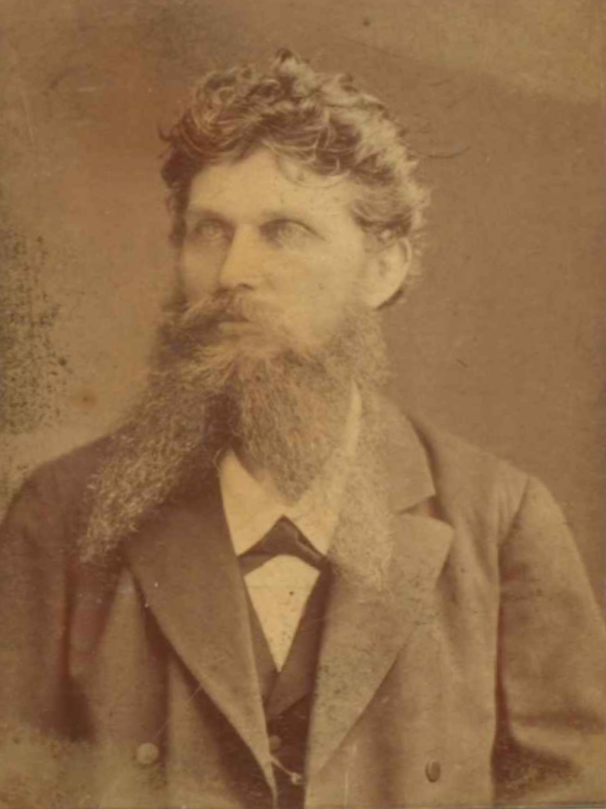
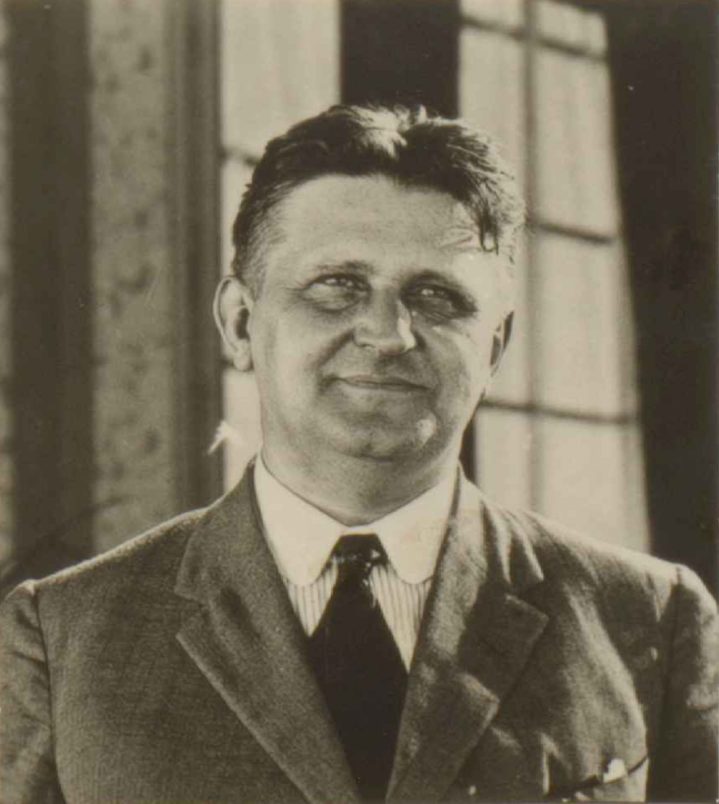
In Plzeň F. X. Prusík met his future wife. She was Ludmila Šteffelová, born on 25 August 1852. Ludmila was a very go-ahead woman and helped her husband substantially in his work; she learned several languages, translated from them and left remarkable memoirs of her frequent journeys abroad. She outlived her husband by 20 years and died at the home of her daughter Olga in Jičín on 1 November 1925. They were married on 8 January 1872 in Plzeň.
From Plzeň F. X. Prusík went to Příbram, where he taught until 1877. Then the town of Roudnice elected him headmaster of the Realgymnasium newly founded there. He saw to the flourishing of the young institution in Roudnice nad Labem until 1885, when he gave up the headmaster's post and went to Prague as a secondary-school teacher at the Academic Grammar School. In those years he was at his most active, and his life was then at its most fruitful from the scholarly point of view.
F. X. Prusík took part in the battles over the authenticity of the Manuscripts. Although the Dvůr Králové and Zelená Hora Manuscripts were later declared forgeries, they nevertheless meant a great deal for our nation. The Manuscripts inspired great works by Smetana, Mánes and Myslbek. With what fury this battle was waged in the nation is shown by an anecdote that Ludmila Prusíková recorded in her memoirs. She writes: “The other day F. Náprstek (of the well-known Náprstek Museum) had himself driven to Masaryk's wine bar in Pasířská Street and asked: ‘Are you a relative of that scoundrel Masaryk too?’ The wine-bar keeper replied that he was his brother and that the professor himself was sitting at the table. Náprstek let fly at the professor: ‘So it's you, the rogue who brings such shame on the Czech nation, what do you get out of it?’ ‘I get a hundred thousand out of it,’ Masaryk answers flippantly. To that Náprstek: ‘No one will give you a hundred thousand for your knavery, but you and the nation get more than a million's worth of shame out of it!’”
F. X. Prusík was an ardent defender of these old Manuscripts, about whose authenticity a debate is being held once again even in 1968, and which are being subjected to a new chemical examination, of the kind that once proved their indisputable authenticity. The finest edition of the Dvůr Králové Manuscript, with illustrations by Mánes and a historical and philological commentary by F. X. Prusík, is a fine memorial to him.
F. X. Prusík once found an unknown manuscript of Hus's Postil in the Plzeň museum. He then edited it and published it in 1887 in the Proceedings of the Royal Bohemian Society of Sciences. The Chronicle of Alexander the Great was one of the finest Old Czech poems. The first translation of the Alexandreis was made centuries ago by Ulrich von Eschenbach. To make the reading of this magnificent monument of Old Czech romance easier for the Czech nation too, F. X. Prusík edited it and provided it with a commentary in 1896. This work received an award from the Imperial Academy of Sciences in St Petersburg. For his exceptional merits in linguistics F. X. Prusík was appointed a member of the Royal Bohemian Society of Sciences in 1891.
When Eliška Krásnohorská and a number of other nationally conscious Czech women had won the right for Czech girls too
to have their own secondary school, F. X. Prusík was asked by the Minerva society to contribute to the carrying out of this difficult work. He already had much experience in this direction; he willingly complied with Eliška Krásnohorská's request, drew up the curriculum for Minerva and directed the young institution, the very first of its kind in Central Europe, from 1890, with the exception of 1892, until 1895. F. X. Prusík therefore rightly ranks among the founders of secondary schooling for girls in our country.
F. X. Prusík travelled widely about the world with his wife and often with his children too. Besides Czech and German he knew Russian, French and English excellently. From his journeys in Russia, Austria-Hungary, Germany, Holland, Denmark, Belgium or England he always brought back a great deal of valuable material. Thus, for example, he writes this of a visit to Naarden, to the grave of Comenius: “It is impossible to describe our feelings at the simple mound, formed of boulders, in memory of our great man. We felt strange at heart when we beheld the places where the hunted scholar ended his noble life. In the infantry barracks they showed us the little cellar where his bones were found. The officers keep their beer there now. What a profanation! In Holland they speak of Comenius in general with great respect, and in the university library in Amsterdam, when they heard that we were from Prague, they welcomed us very warmly and brought everything that concerned Comenius into the archive, to which no outsider otherwise has access.” F. X. Prusík then discovered in Holland much that was interesting and hitherto unknown about John Amos Comenius. Until then it was not known, for example, that in 1662 Comenius had his own bookshop in Amsterdam.
From 1887 to 1899 he published the philological journal “Krok”. The first journal of this name was founded in 1818. Its editor was Jan Svatopluk Presl, one of the founders of the National Museum. The third journal of similar standing to bear the name Krok in its heading was Prusík's journal. In the twelve years of its existence many valuable studies were published in it, which can still be a source of new knowledge for philologists and historians today.
F. X. Prusík was not, of course, only a scholar; he was a lively man, he liked to swim, and he went in for cycling and high-mountain walking too. His contacts with scholars and men of letters were extensive.
His correspondence is kept in the literary archive of the Museum of Czech Literature in Prague, and names appear in it that were the backbone of our culture in their day. There are, for example, letters from Julius Zeyer, Jaroslav Vrchlický, Svatopluk Čech, J. V. Sládek, Václav Vlček, Soběslav Pinkas, Adolf Heyduk, T. G. Masaryk and Ignát Herrman; there are also 80 letters from Eliška Krásnohorská from the time when Minerva was being founded, and letters from Gabriela Preisová, Zikmund Winter, Alois Jirásek and many others too.
F. X. Prusík also devoted himself diligently to etymology and to the analysis of place names and of old Czech inscriptions. That the urbarium of the Gryspeks of Kaceřov, who were once lords over our ancestors in the Kralovice area, was made accessible to Czech readers is his
work. It would be too much if we were also to mention the valuable correspondence that F. X. Prusík conducted in the last century with the most famous Slavists of the day, Jagić and Miklosich, and with many other scholars around the world. F. X. Prusík undoubtedly ranked among the eminent Czech philologists. In the last years of his life F. X. Prusík, the native of Výrov, was rather often ill, and he was not yet 60 when he died of cancer at Stupčice near Tábor on 7 June 1905. F. X. Prusík had six children, three of whom reached adulthood. The eldest was his son Bořivoj, who was born on 31 October 1872 in Příbram. He was chief librarian of the University Library in Prague, a translator and a diplomatic official, and he died in Prague on 1 April 1928. The second was his daughter Ludmila, born on 21 May 1876 in Příbram. Her first husband was the Governor's Office councillor Schmatt, her second the hotelier Prokop at Špičák in the Šumava. She too died relatively young, on 8 March 1928. The third was his daughter Olga, married name Schlindenbuchová. She was born on 2 November 1877 and lived with her husband in Vlašim, Opočno and, longest, in Jičín, where she is buried. She died in Prague on 30 August 1953.
We have described at what may seem great length, but in fact as briefly as we could, the meritorious life and work of F. X. Prusík, a member of our old family. We owe him an uncommon debt for much that we did not know about our family before and that is known to us about our ancestors today only thanks to his research. F. X. Prusík is buried in the Olšany Cemeteries in Prague, and the rather neglected state of his grave arouses great surprise, since he of all people is also included in the list of famous people buried in this cemetery that is posted at the cemetery entrance. His memory surely deserves greater respect.
Bořivoj Prusík, a Pioneer of Slavonic Writers in Our Country
The first child of F. X. Prusík, his son Bořivoj, was born on 31 October 1872 in Příbram. Bořivoj was the first grandson of the Výrov farmer Václav Prusík. He began grammar school in Roudnice nad Labem, and when his father became a secondary-school teacher at the Academic Grammar School in Prague, he finished his studies there. Then he studied at the Faculty of Arts of the Prague university, and in Munich too. For his doctoral dissertation he took as his subject the work of the famous German dramatist Lessing. He took his doctorate in May 1895. In 1896 he became a volunteer at the University Library in Prague, where he rose quickly. From 1913 to 1919 he was senior librarian. At the change of regime in 1918 he was one of the deputy directors of this celebrated institution. Bořivoj Prusík was the first in Bohemia to promote new library methods, that is, decimal classification, and as early as 1900 he translated the foreign book Decimal Classification. Today this method has been introduced in all large libraries.
From his young days he devoted himself to the study of foreign languages and began to follow the development of foreign literature. He was particularly interested in the Russian and Polish literatures, but also in English, French and German. Later he became a renowned translator.
Bořivoj Prusík and both his sisters, Ludmila and Olga, learned foreign languages from their youth. Their father, F. X. Prusík, took very great care over this, and in his family a different language was spoken every day. German, Russian, French and English were cultivated. So from childhood Bořivoj too acquired a very good knowledge of foreign languages. Later he also learned Polish, and all this was of uncommon benefit to him later in his life.
At the University Library, where he worked, he had an excellent overview of all the world's new literary works, and he began to translate many of them. He supplemented the University Library very thoroughly with the Slavonic literatures, which was surely not without significance under the Germanising regime of the day. In his lifetime he translated over 150 novels and over 300 plays and wrote over 500 articles for various periodicals, such as Světozor, Zlatá Praha, Česká revue, Květy and others. This abundance was sometimes to the detriment of perfection and precision of expression. Yet it remains his immortal merit that with his first translations, and sometimes with improved second translations, he introduced to our country for the first time the works of many writers who later proved to be among the pillars of world literature. Among his first translations are Dickens's The Pickwick Papers, Thomas Mann's Buddenbrooks, Grunwald by Bolesław Prus, W. Reymont's The Peasants, the Napoleon trilogy by Gasiorowski and many others from English, German, French and Polish.
Russian literature forms a chapter of its own in his work as a translator. Bořivoj Prusík translated Gogol's The Marriage and The Government Inspector, Gorky's The Philistines and The Lower Depths, Dostoevsky's Raskolnikov, Tolstoy's Anna Karenina, Pushkin's The Captain's Daughter and, above all, all the most important plays of the famous Anton Pavlovich Chekhov.
He was bound to Chekhov, this great figure of Russian and world drama, by a sincere friendship. His famous works, such as The Seagull, Ivanov, Uncle Vanya, Three Sisters or The Cherry Orchard, are first translations by Bořivoj Prusík, through which Chekhov was introduced to the Czech stage for the first time. The entire literary estate of Bořivoj Prusík is kept in the Museum of Czech Literature at Strahov, as his father's work had been before. In the Lenin Library in Moscow some forty letters from Prusík to A. P. Chekhov are preserved, from the years 1896 to 1904, when the famous Russian dramatist dies before his time.
Bořivoj Prusík tells Chekhov what success his plays had in Prague or in Plzeň. From this correspondence one can see well how it was not always easy, sixty years ago, to place the plays of an author so celebrated today on the Czech stage. Thus, for example, in 1898 Bořivoj tells Chekhov that he has at last succeeded in placing The Seagull on the stage of the Švanda Theatre. Elsewhere he tells him with what uncommon success Uncle Vanya was received in Prague.
Bořivoj Prusík corresponded with Chekhov not only when Chekhov was staying in Russia, but also when he was taking a cure in Nice, in France. At one time Chekhov asked Prusík to send him a few photographs of Czech people, so that he might come to know their physiognomy. At another time Prusík turns to Chekhov for advice on how a tour of Russia by the famous actress Hanna Kvapilová might be arranged.
At the turn of the century Bořivoj Prusík was regarded in our country as the best expert on conditions in the Polish and Russian theatre. At that time Jaroslav Kvapil, Vendelín Budil, the director of the Plzeň theatre, Laudová-Hořicová and many others often turned to him. When the Vinohrady Theatre was founded in 1907, Dr Bořivoj Prusík became its first reader. From 1910 his successor was K. H. Hilar. In 1910 Bořivoj Prusík was also dramaturge of this theatre, and after him Hilar and Dr Karel Čapek. With his translations Bořivoj opened to the Czech society of the day, which was poorly informed, a new view of burning social conditions. It will remain his immortal merit that he was the first to bring to Bohemia the most important works of Chekhov and of Maxim Gorky.
Bořivoj Prusík also wrote several books of his own. They are mainly stories of a social character.
When the Czechoslovak Republic came into being in 1918, Bořivoj left his post at the University Library and entered the diplomatic service of the new state; he served throughout in the United States of America, where he was consul in Omaha and St Louis, and lastly he was appointed consul general in New York. Bořivoj was married twice. His first wife was a Polish woman, Anna, née Greszynská, born on 20 September 1874 in Nisko, in former Galicia. She too was active in literature, under the name Dolores Prusíková. This marriage was dissolved in 1919, and Bořivoj's first wife died on 25 February 1931 in Sadská. For his second wife he again took a woman of another nationality. She was a German woman, Anna Ecklebenová, née Winklerová. She too came from Galicia, from Záblatí, where she was born on 23 May 1885. In the family she was called Melly. Bořivoj, as he always said, was happy with her, but her poor knowledge of Czech caused him great difficulties in his diplomatic office. After several years in the USA, Bořivoj Prusík returned to Prague and worked for a time at the Ministry of Foreign Affairs, but he soon died. The cause of his death was cancer, as with his father František. He died on 1 April 1928. His second wife married again, and under the name Sládková she took her own life four years after him, on 20 March 1932. Both are buried at Olšany. Bořivoj Prusík left no descendants, but he left good work behind him.
The second child of F. X. Prusík was his daughter Ludmila. She was born on 21 May 1876 in Příbram. From there she soon moved with her parents to Roudnice, where her father founded the new grammar school. Ludmila was a very beautiful and intelligent girl. The noble traits of her character did not leave her all her life. While still young she learned German and French very well. Her first husband was the Governor's Office councillor Emanuel Schmatt, with whom she lived for a time in Vienna and then in Prague. She had a little daughter by him, but she died in childhood. Soon afterwards her husband died too, and after some time she married again, without her mother's knowledge, Jan Prokop. He was the
owner of the well-known Hotel Špičák in the Šumava. The marriage was contracted in Cairo, in Egypt. Ludmila Prokopová was the soul of the whole business at Špičák, and many famous people who spent their holidays in the lap of the Šumava forests remembered her gratefully, often in literary works too. Ludmila died tragically, of poisoning after having a tooth pulled, relatively young, on 8 March 1928 at Špičák. She is buried in Železná Ruda. She had three children. The eldest is Ludmila, born on 30 September 1912. She became a Master of Pharmacy, and her husband, Just, was also a pharmacist. The marriage, however, ended in divorce. She lives in Prague-Vršovice, třída SNB 99. She has an only daughter, Jarmila Justová, born on 7 May 1941. She studied history and prehistory and works today at the Archaeological Institute in Prague. She can already point to some archaeological discoveries in the Poděbrady area, too.
The second daughter is Anna. She was born on 22 October 1914, and her married name is Ludikarová. In May 1949 she left the republic, and in September 1950 she reached Australia. She has two daughters. Danica was born on 14 January 1942, and Michaela Ludikarová on 1 January 1948. Today they all have Australian citizenship. She lives in the city of Perth, on the west coast of Australia; her address is 66 Flinders Street, Tuart Hill. The city where Anna Ludikarová lives today with her family is flat, there are no mountains, palms, oranges and lemons grow there, but she misses the beautiful Šumava forests around Špičák, where she was born.
The last child of Ludmila Prokopová, née Prusíková, is her son Jan. He was born on 1 November 1915 at Špičák, from where he had to flee with his father after the occupation of the Sudetenland. After the Second World War he took over the management of the hotel again, but when it was nationalised he worked in Prague, Dobříš and, longest of all, in Mariánské Lázně. There he was regarded, for his linguistic and organisational abilities, as an excellent hotel specialist, but his work was constantly made difficult for him because of his background. Today he lives in Munich. He has no children. His address is: München 8/61, Denninger Strasse 216.
The last child of F. X. Prusík and his wife Ludmila was their daughter Olga. She was born on 2 November 1877 in Roudnice nad Labem. In 1899 she married Hugo Schlindenbuch, who was an administrative official and in the end vice-president of the court in Jičín. They lived together in Vlašim, Opočno and, longest, in Jičín. Ludmila Prusíková, the widow of the Slavist F. X. Prusík, also died at their home. She too, of course, stayed at times with her elder daughter, married name Prokopová, at Špičák. Olga Schlindenbuchová had two sons. The elder, Vladimír, was born on 11 May 1901 in Vlašim. He became a commercial engineer and worked for many years at the National Bank, and later at the State Bank. He lives in Prague 5, Košíře, Na Výšině 20. He has three children. Jiřina, married name Kolavíková, born on 7 April 1928, lives in Prague-Malešice, Malešická 397. She has a little daughter, Eva, born on 12 May 1955. His son Vladimír Schlindenbuch was born on 19 December 1931; he is a designer and lives in Prague-Hradčany, Bašta sv. Ludmily 3. He has two little sons: Petr, born on 9 October 1959, and Michal, born on 13 April 1965.
The second son of Vladimír Schlindenbuch is Svatopluk. He was born on 12 February 1946; he worked in precision mechanics and is now studying at the technical university. He lives with his parents in Košíře. Olga Schlindenbuchová, née Prusíková, had a second son, who was given his father's name, Hugo. He was born on 11 June 1907 in Opočno. He went through the technical university, and after finishing his studies he took up a post as a surveying official in Nové Město nad Metují. In 1935 he was transferred to Frýdlant, but after the occupation of the Sudetenland he was in Nový Bydžov and Jičín by turns. In 1945 he returned to Frýdlant as one of the first Czechs. There he was head of the resettlement commission of the Ministry of Agriculture. He lived to be only 45 and died of stomach cancer on 17 November 1952. He had three children. His son Jan Schlindenbuch, born on 16 May 1943, is today a miner and lives at Rtyně v Podkrkonoší No. 616. He has a little son, Martin, born on 4 June 1966. The second child of Hugo Schlindenbuch is his daughter Zuzana, born on 8 September 1946. Her married name is Bangiová, and she now lives in Liberec, Leninova 44. The youngest son, Pavel Schlindenbuch, born on 23 June 1949, is a trained mechanic at the Škoda Works and lives in Hradec Králové. These three children also lost their mother early, and so their life in their youngest years was not always the easiest. Hugo's untimely death grieved his mother, Olga Schlindenbuchová, uncommonly. She died less than a year after him, in a Prague hospital, on 30 August 1953.
The first daughter of Václav Prusík and Josefa, née Kotasová, in Výrov was Josefa. She was born on 28 February 1848, that is, a few months before the abolition of corvée. At the age of seventeen she was married to the farmer Matěj Urbánek in Lednice, at No. 12. The homestead where she then lived had been called “U Martinců” since time immemorial. Josefa Urbánková, née Prusíková, was very homesick, especially at first, and she was uncommonly happy afterwards when Václav Prusík of Hodyně settled in Kozojedy. Apart from the manor farm, the Urbánek farm was the largest in the village. Josefa's husband was already mayor of the village, and then in turn her son František and her grandson Josef. Twelve children came of the marriage, but only seven of them reached adulthood. Josefa Urbánková has the most numerous descendants of all the children of Václav Prusík of Výrov.
The children who reached adulthood were these: Marie, born on 24 September 1871, married name Řezáčová, at the homestead “U Hlušíků” in Lednice, where she died on 10 April 1924. The second was Anna, born on 19 April 1874, married to Soukup, an innkeeper and farmer in Řemešín, where she died on 18 March 1953. The third child to reach adulthood is František Urbánek, born on 20 October 1876. He took over the family holding from his parents and lives with his son and grandson at Lednice No. 12. The fourth is Kristina, born on 20 September 1879; she married Václav Zikmund in Mladotice and today lives with her granddaughter Tůmovcová in Česká Doubravice. The fifth child to reach adulthood was their son Josef. He was born on 26 February 1882. For a relatively long time he was at home in Lednice, helping on the farm, and he was a passionate musician. Later he married into a smaller homestead in Kožlany, where he died without descendants of his own on 23 May 1946. Their daughter Josefa, born on 5 October 1888, married František Sopr, a railwayman in Vroutek,
where she lives today as a widow. The last is Anežka, born on 9 April 1891. She married the farmer Václav Krýsl in Kočín. She still lives there.
The first child of Josefa Urbánková, née Prusíková, of Výrov was her daughter Marie. She was born on 24 September 1871. She married the farmer Řezáč in Lednice. She was an uncommonly kind-hearted woman, but unfortunately her life was relatively short. She died a few days before her mother, on 10 April 1924. She had four daughters: Anežka, Marie, Anna and Blažena. The eldest, Anežka, born on 20 May 1898, had the married name Fenclová and stayed at home. This is the homestead known as “U Hlušíků”, No. 28. Her sisters Marie and Blažena also married Fencls, who are likewise all brothers. The Fencl family has two peculiarities: they were always great musicians, and a remarkable number of twins were born in their families. All these Fencls are distinguished by great intelligence and a love of history.
Anežka Fenclová had three children. Her daughter Jaroslava, born on 14 April 1928, has the married name Beránková, in Rakovník, Píseckého 768. She always devoted every free moment to her parents and helped substantially in her home in Lednice. She has three children: Josef Beránek, born on 25 October 1957, Hana, born on 3 May 1961, and Pavel, born on 25 June 1963. Then twins were born to Anežka Fenclová on 24 May 1930, Miroslav and Miroslava. Miroslava has the married name Lüftnerová, at Kralovice No. 80, and she has three children: Jarmila, born on 4 February 1955, Miroslava, born on 12 May 1959, and František, born on 24 August 1961. The Lüftners work in the collective farm (JZD). Miroslav Fencl stayed at home in Lednice. He too is a member of the collective farm. He has a son, Miroslav, born on 27 June 1965, then Vendulka, born on 12 October 1966, and Jaroslav, born on 1 May 1968. Another daughter of Marie Řezáčová, Marie, was born on 28 March 1901. Her married name is Fenclová, at Kobčice No. 2, and she has two children. Her daughter Jiřina was born on 7 March 1929, and her son Jiří Fencl on the same day. Twins again in the Fencl family. Jiří is employed in the forest administration in Petrohrad and has three children: Věra was born on 28 September 1957, Jiřina on 8 August 1959 and Jiří on 26 December 1960.
The third daughter is Anna, born on 21 March 1904 in Lednice, at “U Hlušíků”; she married the farmer Václav Škubal in Dřevec, at No. 21. She has two daughters. Miluše was born on 24 August 1934; her married name is, once again, Fenclová, and she lives with her mother in Dřevec. She has two children: Marie, born on 6 April 1961, and Václav, born on the same day. The third pair of twins already. The second daughter of Anna Škubalová is Blažena, born on 18 September 1937. Her married name is Folková, at Jarov No. 54, near Plasy. They too work in the collective farm there. She has two little daughters, Jiřina, born on 24 February 1961, and Eva Folková, born on 15 March 1964.
The youngest daughter of Marie Řezáčová was Blažena. She was born on 2 February 1911 in Lednice, and her married name is Fenclová, at Borek No. 2. Her husband, like all the Fencls, was also a great musician, and he was killed in an accident near Liblín on his way home from a dance by motorcycle. Blažena has two children. Her son Josef, born on 9 January 1939, married into Žichlice, at No. 43. He has a little daughter, Jana Fenclová, born on 27 February 1966, and a little son, Miloš, born on 26 December 1967. Her daughter Blažena has the married name Tauberová and lives with her mother in Borek. She was born on 31 December 1941 and has a little son, Zdeněk Tauber, born on 26 October 1966. Anežka Fenclová died on 4 August 1966. Blažena Tauberová also has a little daughter, Laděnka, born on 7 February 1968.
The second child of Josefa Prusíková, married name Urbánková, in Lednice was her daughter Anna. She was born on 19 April 1874. She married into the Soukup family in Řemešín near Mladotice. They had an inn and a farm there. She had four daughters, Marie, Milada, Růžena and Anna, and a son, Josef. Anna Soukupová died in Řemešín on 18 March 1953.
Her eldest daughter, Marie, was born on 3 October 1903 and married the worker Tureček in Chrašťovice, at No. 36. She died relatively early, at the age of fifty-seven, on 9 July 1960. Marie Turečková had four children. Stanislav, born on 3 January 1932, lives in Chrašťovice and has a son, Stanislav, born on 30 October 1961. Ladislav Tureček, born on 23 May 1936, lives at Dobrá No. 69, near Kladno. He works in industry in Kladno. He has a little son, Martin, born on 30 July 1967. Her daughter Marie has the married name Kočková, in Kalec, near Chrašťovice. She was born on 16 July 1943 and has a little son, Jaromír, born on 29 July 1967. The last child of Marie Turečková is her daughter Dana, born on 10 September 1953.
The second child of Anna Soukupová was her son Josef. He was born on 5 August 1905 at Řemešín No. 27 and stayed on his native homestead. He is today a member of the collective farm. He has two children. His daughter Květoslava has the married name Hajšmanová and lives in Olšany near Sedlec, where her husband is the manager of a farm of the state farm. Květoslava, born on 10 October 1935, has a daughter, again of this name, born on 14 November 1958. Her second child is Václav Hajšman, born on 19 January 1961. The son of Josef Soukup in Řemešín is also Josef. He was born on 31 August 1941 and likewise works in the collective farm. He has two children: Ludmila, born on 23 September 1964, and Vlastimil, born on 30 March 1967.
Another child of Anna Soukupová was her daughter Milada. She was born on 31 August 1907 and married the farmer Beránek, at Borek No. 9. She has an only daughter, Milada, born on 20 October 1940. Her married name is Tragenreifová, and she lives in Plzeň, Zámečnická 36. She has two children. Her little daughter Taťána was born on 17 June 1963 and her son Radek on 20 June 1967.
The third daughter of Anna Soukupová in Řemešín was Růžena. She was born on 26 January 1910, and her married name is Lišková, at Řemešín No. 40. She has three children. Her son Jaroslav Liška, born on 11 April 1930, lives in Mirošov near Rokycany. He has two sons, Jaroslav, born on 10 September 1956, and Miroslav, born on 4 April 1960. The second son is Miroslav Liška. He was born on 19 July 1931 in Řemešín and today works in the Karlovy Vary area. He lives there in Nové Sedlo, Revoluční 194. He has a little daughter, Miroslava, born on 28 June 1961. The last is Josef Liška, born on 24 October 1950, who lives with his mother in Řemešín.
The last child of Anna Soukupová was her daughter Anna. She was born on 22 May 1912 and, under her married name Jánská, lives at Řemešín No. 31. She has two children. Her son Ladislav Jánský, born on 17 April 1940, has a little son, Ladislav, born on 10 September 1964. Her daughter Stanislava married the forester Dlouhý. She was born on 11 August 1941 in Řemešín. Her husband worked for a time in the Manětín forest district, and there he succeeded in shooting a white stag, which is surely a rare occurrence. They lived in Nové Městečko near Nečtiny. Today they live at Bukovina No. 25. They have a little son, Milan, born on 7 June 1963. Then a little daughter, Stanislava, was born to them on 12 June 1968.
The first son of Josefa Prusíková, married name Urbánková, in Lednice was František. He was born on 20 October 1876 and took over the holding at home from his parents, known as “U Martinců”. Today he is among the oldest members of our family. He is still mentally alert. He still remembers well his grandfather Václav Prusík in Výrov, whom he helped with small jobs on the farm where his mother was born. He was an excellent farmer, and as a horse breeder Urbánek was renowned not only in the Kralovice area but throughout the republic. At the horse show at the agricultural exhibition in Prague in 1929, František Urbánek of Lednice won first prize for the mare he exhibited. The Urbáneks were never horse dealers, as some farmers were, but true lovers of horse breeding. František Urbánek was mayor of Lednice for many years and often represented the municipality in Prague too, together with other delegations from the district. His farm is today incorporated into the collective farm as well, though as a larger farmer he too had to suffer his share in the turbulent post-revolutionary times. František Urbánek had two sons. His wife was Františka, née Šourová, of Kozojedy. His elder son is Josef Urbánek, born on 22 November 1904 at Lednice No. 12. He always followed well in his father's footsteps, and when his father gave up the office of mayor, he too, for his popularity among his fellow citizens, was elected mayor. He has two sons. Josef Urbánek, born on 9 December 1936, lives at home and works in the collective farm. He has two boys, Luboš, born on 27 May 1963, and Václav, born on 24 May 1965. His brother Václav Urbánek was born on 30 December 1939. A graduate of the industrial secondary school, he works as a technician in Kaznějov. He has his own little house there. His son Pavel was born on 20 March 1968.
The second son of František Urbánek is František. He was born on 25 February 1911 and married into a farm in Lednice, at No. 34, known as “U Paterů”. He has a son, Vladimír, born on 5 June 1945, who is an agricultural engineer. At “U Paterů” they have always had excellent results in rearing pigs. František Urbánek the elder died on 15 July 1968 at the age of 91 and a half.
The third daughter of Josefa Urbánková was Kristina. She was born on 20 September 1879 and married the farmer Zikmund in Mladotice. She had two daughters. Marie, born on 22 August 1905, stayed at home in Mladotice and married a farmer of the old Mix family of Koryta. She died of cancer at fifty-one, on 11 February 1956. She had an only daughter, Irena, born on 14 August 1929. Irena is married to a very astute farmer, Tůmovec, at Česká Doubravice No. 2, near Manětín. She has a little daughter, Irena, born on 17 July 1954. Kristina now lives with this granddaughter of hers in Česká Doubravice. Her second daughter is Anna, born on 23 April 1907. She married the farmer Jaroš, at Chockov No. 1, near Radnice. She has a son, Václav, born on 16 June 1935. He is an agricultural engineer. He has a little son, Milan, born on 22 November 1963.
Another daughter of Josefa Urbánková was Josefa. She was born on 5 October 1888 and married Sopr, a railway employee, in Vroutek. During the occupation she lived in Mladotice. She now lives with her daughter in Vroutek, Nádražní 426. Josefa Soprová has two children. Her daughter Anna, born on 23 July 1919, has the married name Baláková, in Vroutek. She has four children. Her daughter Ludmila, born on 29 April 1943,
lives in Podbořany, Dělnická 328. She has a little son, Zdeněk Takáč, born on 31 January 1966. The second daughter of Anna Baláková is Jaroslava, born on 14 November 1946. Under her married name Koderová she lives in Vroutek, Vidhostická 426. Then there are two boys, Josef Balák, born on 15 January 1949, and Jiří Balák, born on 21 November 1951.
Josefa Soprová's son Václav, born on 13 June 1922, works and lives at Mladotice No. 94. He has three children: Věra Soprová, born on 23 March 1950, Václav, born on 4 September 1951, and Hana, born on 24 April 1955.
The last child of Josefa Urbánková of Lednice was her daughter Anežka. She was born on 9 April 1891 and married the farmer Krýsl, at Kočín No. 17. It is not far from Lednice, and she does not forget her birthplace either: of all her brothers and sisters she was always the one who visited the family there most often. She has an only son, Jaroslav. He was born on 29 November 1920, works in the collective farm and lives in Kočín with his mother and his family. He has two children. Anna Krýslová was born on 13 November 1949 and Jaroslav on 28 November 1953. Anežka Krýslová also has two daughters. Zdeňka was born on 29 September 1922; her married name is Baborová, at Bílov No. 16. She has three children: Josef, born on 6 September 1944, her daughter Zdeňka, born on 23 November 1945, and Jaroslava, born on 25 October 1951. Zdeňka has the married name Houdková, in Kralovice. The second daughter of Anežka Krýslová is Blažena. She was born on 7 October 1925, and her married name is Valentová, at Výrov No. 17. She has a son, Jiří, and a daughter, Marie, but we shall give them in more detail under the descendants of Veronika Prusíková, married name Valentová, who also belongs to the Výrov II sub-branch.
Another child of Václav Prusík of Výrov was his daughter Marie. She was born on 29 July 1851 at Výrov No. 18 and on 16 September 1873 married the farmer Josef Koukl in Bílov. Since time immemorial this holding has been called “U Kymlů”. Marie Kouklová had four sons: Mikuláš, František, Blažej and Josef. We shall, however, tell of them in more detail under the Sedlec branch, in the sub-branch known as Bílov, whose founder was Kateřina Prusíková of Sedlec, married name Kouklová, in Bílov. Marie died relatively young, on 6 February 1908.
The third son born to the Prusík couple at “U Boudů” in Výrov was Václav. He was born on 2 January 1854 and, like his two brothers Blažej and František before him, he too went to Prague to study. In Prague he too was cared for by the benefactor of our family, the vicar Blažej Prusík. Václav studied law in Prague but did not obtain the doctorate. He became a municipal official and was last head of the trades department of the Prague municipality. He remained unmarried and lived in Vikářská Street in Hradčany until the death of his uncle Blažej, and only then moved down into the city. After that he lived in various places, last of all at Vyšehrad. There he died of pneumonia at the age of 61, on 16 September 1915. As an old bachelor he had many friends, above all the dramaturge František Stroupežnický. He inherited all the fine mementoes of his uncle, and after him they vanished for ever into the possession of his last housekeeper.
The fourth son of Václav Prusík in Výrov was Vojtěch. He was named after his grandfather, the reeve of Výrov, who had come here from Sedlec in 1803. Vojtěch Prusík was born on 3 April 1856 in Výrov. He studied briefly at the grammar school in Klatovy, but soon returned home from these studies, and it was decided that he would become the heir to the holding. He married Josefa Julusová of Sedlec, born there on 24 March 1861. The farm she came from stands opposite the Prusík holding, where the cradle of our family stood as early as the 16th century. Vojtěch Prusík took over his native farm in Výrov on 22 February 1884. He was a big, strong and healthy man, and at the same time good-hearted to the core. Until the day he sold the homestead in Výrov, he was mayor of the village. From 1901 to 1905 he was also district chairman for the Kralovice area. After that he served as a member of the District Committee until 1914. When he was district chairman in Kralovice, the members of the District Committee were the following citizens of the Kralovice area: Josef Holeček of Plasy, Antonín Jelínek of Buček, František Juha of Bílov, Josef Kožíšek of Jarov, František Slach of Kralovice and František Vodák of Dřevec.
As district chairman, Vojtěch Prusík showed great initiative. In his time the road Sedlec–Bílov–Potvorov was built, then Čistá–Zdeslav, then Chříč–Studená–Hlince, then Slatina–Lhota and the road Mladotice–Křečov. Schools were built in Žebnice and in Hedčany, and major river works were carried out on the Střela and the Mže. On Vojtěch Prusík's initiative a collection was launched for the building of the National Theatre in Brno, and public support was expressed for the declaration of the city of Prague concerning the founding of Slavonic universities in Brno, Lviv and Ljubljana.
On the feast day of Master Jan Hus in 1903, Vojtěch Prusík led a delegation from Kralovice to the ceremony of laying the foundation stone of the Hus monument in the Old Town Square. Vojtěch Prusík was among the outstanding farmers. He was the first in the district to introduce the new fertilisers, which considerably raised the fertility of the fields in the whole region; he planted fruit trees, and he was also the first in the whole district to have a threshing machine and some other machines. He was also among the founders of the Agrarian Party, which, alone of all the parties, best defended the interests of farmers. Vojtěch Prusík and his wife Josefa had four children: a son, Blažej, daughters Anna and Josefa, and the youngest, Václav, who was to become the holder of the holding after him. As a soldier, Vojtěch Prusík took part in the campaign of the occupation of Bosnia and Herzegovina in 1878. He often and gladly told how he had escaped death there only by a miracle. His hospitable homestead was open to everyone. And to this day the old people of Výrov who remember him think of him with respect.
He himself, but especially his son Václav, longed, however, for an even larger and more modern farm. To the regret of the other members of the family, the native farm in Výrov was sold on 7 April 1912, and Vojtěch settled at the nearby Černín manor farm in Přehořov. They also had a fine brickworks there, but when his son Václav married, Vojtěch
Prusík moved with his wife to his married daughter in Kolešovice. There, however, he lived only two years, and he died of pneumonia at the age of 64, on 15 March 1920. His wife soon followed him: she died on 17 July 1920.
With the farmer Vojtěch Prusík and his departure from Výrov in 1912, our family in Výrov comes to an end in the male line. It was there, then, for 109 years, which is not really a long time, but the Prusíks certainly left a good mark there by their deeds, and they are still remembered there. The inscription on their grave in Kolešovice is surely right in what it says: “Their love, honesty and life full of work and self-sacrifice are the brightest memorial they have left.” Prusíks from other branches of the family live in Výrov today.
The eldest child of Vojtěch Prusík and his wife, née Julusová, in Výrov was their son Blažej. He was born on 30 November 1884 at Výrov No. 18. He studied at the grammar school in Klatovy, where his uncle Blažej already taught and his cousin Bohumil studied. They took the school-leaving examination there together in 1905, and together they went on to study medicine at the university in Prague. They also graduated together, on the same day, in 1910. The young doctor Blažej Prusík then went to gain experience at the hospital in Olomouc. Already there he excelled not only in internal medicine but also in surgery. When the Balkan War broke out in 1912, he willingly answered the call for volunteer doctors to be sent to help our Slav brothers. In Moravia he also met his future wife. She was Bedřiška Vocílková, the daughter of a head forester, born on 26 February 1890 in Hulín. With her he then settled in 1913 as a doctor in Dobříš. He came there on the recommendation of Princess Coloredo-Mansfeld, or rather of Professor Kukula. Then he set up his own practice, and for 40 years Dr Blažej Prusík worked in the Dobříš district. He treated everything, and with great success. Later he also gained practice in dentistry, so that people from the town and the whole region found help with him for every ache of their bodies. Blažej Prusík was one of those people who are open, perhaps at times a little rough, but uncommonly sincere and selfless. When he saw that he had a poor person before him, he never took anything from him. For a time he was also the representative of the Czechoslovak National Socialist Party at the Dobříš town hall. His death on 9 February 1953 called forth genuine sorrow at his irrevocable passing, which all the people of the region showed. People there still remember his “miraculous powders” and how excellently he mended teeth. His wife Bedřiška died on 14 May 1957. Both are buried in the Dobříš cemetery.
Blažej Prusík had an only son, Karel. He was born during the First World War, on 3 November 1915. He studied at a grammar school in Prague and, following in his father's footsteps, he too took up medicine. He did not complete his studies, however, until after the Second World War, because the Germans closed our university less than a year before he would have finished his medical studies. During the Second World War he worked as a laboratory assistant in the Dobříš sanatorium. Like his father, he was also in contact with the partisans who were then active in the extensive Dobříš forests.
The writer Eduard Valenta recalls this finely in his novel “Jdi za zeleným světlem” (“Follow the Green Light”). After the Second World War Karel Prusík completed his medical studies and went to practise in Hradec Králové, where he worked in particular under Professor Dr Lukl. At that time he married Eva Uhrová, who was born on 25 April 1926 in Berehovo, where her father was then serving as an army veterinary surgeon. From Hradec Králové Dr Karel Prusík went to the psychiatric hospital in Dobřany, where he stayed for a number of years as an internist and had excellent results. Together with his wife Eva he introduced new nursing and recreational methods for the patients there. His desire, however, was to return to his birthplace, Dobříš. There, too, he now works as a doctor. He lives at Dobříš No. 892. The house with a beautiful garden that his father had built fell victim to clearance and to new building in Dobříš. Dr Karel Prusík has two children. Blanka was born on 20 April 1950 in Hradec Králové and Pavel on 17 August 1952 in Plzeň.
The second child of Vojtěch Prusík in Výrov was his daughter Anna. She was born on 8 June 1886 and in 1908 married a German farmer, Arnošt Meixner of Kolešovice. At the time this marriage aroused considerable displeasure in the whole Prusík family, and her fate afterwards was indeed not a happy one. At her mother's express wish she did marry a man of property, but a very ardent German. Anna Meixnerová then lived in Kolešovice, and her parents died at her home, but after 1918 they bought an even larger farm in Německé Hořovice. After a time they sold the farm and became people of private means in Prague, but even before the Second World War they again had their own farming business. They farmed at Choteč near Radotín. A son, Arnošt, was born of this marriage. Even though Anna's husband was a convinced German, he was nevertheless fair to the Czechs, and he and Anna did not deserve the fate that the May upheaval of 1945 prepared for them. It is interesting that for some time they hid on their farm a man whose deed caused a great sensation in the Protectorate. It was Jan Smudek, who shot a German policeman in Kladno. Later Jan Smudek was brought to safety abroad. That certainly did not testify to a hateful attitude on Arnošt Meixner's part towards the Czech nation. In the May days of 1945 an unhealthy trait of the Czech character once again showed itself in a bad light. The Meixners were driven from their homestead and detained, and all their property was looted. Anna's husband hanged himself, and she became an utter beggar. She then lived by turns with her brother in Dobříš and in Prague as a maid, and finally settled with her son in Šluknov. She died on 13 November 1967 in an old people's home in Krásná Lípa, after a short, severe illness. She was the last person born at the “U Boudů” holding in Výrov, and she has now gone to her eternal rest.
Her son Arnošt was born on 18 May 1909 in Kolešovice. It was always thought that he would take over the farm there from his parents, but fate played otherwise. He has had various jobs and is now a storekeeper in Šluknov, where he lives at Gottwaldova 301. After a short and childless marriage
that ended in divorce, he now lives there alone, with his memories of the turbulent past of his parents and above all of his beloved mother. It will always be to the credit of Anna Meixnerová, née Prusíková, that her son did not forsake his nation and is a Czech.
The third child of Vojtěch was his little daughter Josefa. She was born on 17 March 1888. She was an uncommonly pretty little girl and an excellent pupil. Unfortunately diphtheria, which was so deadly in the last century, cut short her life at the age of ten, on 26 May 1898.
After Pepička a son, Václav, was born. That was on 2 March 1890, and he was destined to be the future farmer. From his youth he loved machines. He was particularly interested in everything that could ease the hard work of agriculture. He trained as a machinist, and with the threshing machine, which they had in Výrov as the first in the district, he then helped with the threshing in numerous neighbouring villages. His spirit was very restless and always aimed only at higher goals. It was Václav Prusík who convinced his father that the holding in Výrov was by now too small for them, that the fields were not consolidated into large plots and that mechanisation could therefore not be put to such good use there. He therefore welcomed the decision of his father Vojtěch that they should move to the larger manor farm in Přehořov. After the upheaval of 1918 Václav married Marie Řepíková of Milostín. She was born there on a fine farm on 1 January 1895, and she still lives there today as a widow. After the death of his parents in 1920 Václav moved to Milostín. Přehořov now seemed small to him, as Výrov had before, and then he was not very content even in Milostín, which lies in a rich hop-growing region. He succeeded in acquiring a large farm in the German village of Bitozeves near Postoloprty. There are extensive hop gardens there too. Václav Prusík modernised his farm in Bitozeves to an uncommon degree and was very popular among the German farmers. He never betrayed his nationality, however. When, for example, the German army marched into Bitozeves in October 1938, his farm was the only one where no swastika flew. And it was interesting how his German fellow citizens stood up in his defence when the commander of the German troops sharply criticised this conduct to the mayor.
As a great lover of mechanisation, Václav Prusík acquired, at considerable sacrifice, sprinkler irrigation for his hop gardens, and in one critical dry year it won him everything. Almost everywhere in the area the hop harvest was poor that year; he alone showed an abundant crop. The high price then paid for hops paid him back for the costly investment in artificial irrigation. He did not stay long in Bitozeves during the occupation, however, for his farm was in the end taken over by the Reich authorities. He moved back to Milostín, where he lived as a man of private means, since he had meanwhile leased out his farm there. At that time he wrote there an interesting chronicle of his family and especially of his own life. After May 1945 he was employed at the state tractor station, and he died relatively early, on 14 August 1952 in Prague. The cause was blood poisoning following a purulent tonsillitis.
Václav Prusík had two sons, Václav and Bořivoj.
The first son of Václav Prusík was born on 27 August 1919 in Přehořov. He was given his father's name, Václav. His father, as a supporter of everything modern and enterprising, sent him to study at the Tomáš Baťa schools in Zlín. After returning from Zlín he farmed with his father, but all the plans that he and his father had had came to nothing after May 1945. He then no longer worked in agriculture, for he feared, and rightly so, that as the son of a kulak he would always be blamed, even for his best and most honest work, if something should ever go wrong. In Karlovy Vary he drove an ambulance, then he became an employee of the Jáchymov mines and settled in Horní Slavkov near Karlovy Vary. He lives there at ČSSP 3. He married Blanka, née Mouková, of Tišnov in Moravia, born on 11 February 1925. They have two little sons together. Václav was born on 25 August 1954 and Bohdan, whom they call Dan, on 26 October 1956. Since the closure of the Jáchymov mines Václav Prusík has worked in local industry in Horní Slavkov. Instead of a large estate, then, his place is at a lathe. But the Baťa school gave him the best there is for life. He is successful here too. He and his brother Bořivoj proudly acknowledge our family and helped, in everything within their power, towards the success of this historical work. The whole family settled in August 1968 in Dietlingen (Östliche 44), near Pforzheim in Baden, in the Federal Republic of Germany.
The second son of Václav Prusík and Marie is Bořivoj. He was born on 8 August 1925 in Milostín. He studied at the agricultural school in Roudnice, then worked for some time as an agronomist. He too, as the son of a kulak, for obvious reasons preferred to leave this job, and he became an employee of the coal mines at Hrdlovka near Duchcov. There he married Lucie Borjanová, who was born on 30 July 1921 in Hrdlovka. They live there at Duchcovská 63. Bořivoj Prusík has a little daughter, Hana, born on 18 September 1952. She is studying health care.
The third daughter of Václav Prusík in Výrov was Anna. She was born on 15 December 1858. At the age of 26 she married Josef Koura at Bílov No. 13. That was on 13 February 1884. The Kouras have demonstrably lived on this holding since as early as 1558. By the farm there is a beautiful garden such as is found in few other places, and after the devastating fire that destroyed almost half the village in the thirties, the Kouras today also have fine buildings. At the Kouras', not only in Anna's lifetime but also throughout the time her son Josef farmed there, everyone was always sincerely welcome, and members of our family especially. Anna Kourová had four children: her daughters Marie, Anna and Růžena, and her son Josef. Anna Kourová, née Prusíková, died in Bílov on 14 December 1935. She was the prettiest of the daughters of Václav Prusík of Výrov.
The first daughter of Anna Kourová, née Prusíková, was Marie. She was born on 16 June 1885. In 1911 she married into the Slach family at Bílov No. 29. From this homestead, as early as the beginning of the 18th century, Anna Slachová married Martin Prusík in Sedlec, and at another time in that century a woman of the Prusíks from Sedlice married into it in turn. The Slach family always claimed kinship with the Prusíks. Marie Slachová had three children. The eldest, Marie, was born on 22 January 1912, the second, Anna, on 17 July 1913, and her son František on 27 June 1916.
The Slach house, too, fell victim to fire in 1930. Marie Slachová died of cancer on 20 September 1943. The eldest child of Marie Slachová, Marie, born on 22 January 1912, has the married name Vopatová, at Žebnice No. 42. She works in the collective farm there. She has four children. Her daughter Marie, born on 19 January 1936, has the married name Kočová and lives in a pretty little house at Loza No. 21. She has two children: Josef Koča, born on 19 January 1959, and Hana, born on 11 June 1963. Her son Václav Vopat was born on 31 January 1938, and he works and lives at Hrádek No. 105, near Rokycany. He has a little daughter, Soňa, born on 4 June 1964. The third child of Marie Vopatová, Anna, was born on 8 July 1945 and has the married name Zemanová. The last, Božena, born on 17 March 1948, is unmarried and lives in Žebnice. Anna Zemanová has a little son, Pavel, born on 26 October 1968. The second child of Marie Slachová is Anna. She was born on 17 July 1913 and married Vojtěch Kůsa, a railway employee, who until his retirement was stationmaster in Mladotice. Anna Kůsová has a son, Pavel, born on 15 January 1943, who, as a graduate of an industrial school, is employed at the Ceramic Works in Horní Bříza. At the home of Anička Kůsová, as she is called, the door was always open in friendship to all who came.
The last child of Marie Slachová was her son František. He was born on 27 June 1916 and took over the homestead in Bílov from his parents. His wife Marie, née Kozová, of Bukovina, is also a blood member of our family. She is a descendant of Kateřina Prusíková of Sedlice, married name Kouklová, in Bílov. The Slach family is very large. Their eldest daughter, Marie, born on 26 March 1941, always looked after her brothers and sisters with great devotion. She was truly their second mother. Under her married name Vlková she lives today at Kozojedy No. 49. She has a little son, Josef, born on 20 July 1966. She works in the collective farm. The second is Václav Slach, born on 31 May 1942, who married into Odlezly, at No. 11. He has a daughter there, Pavla, born on 30 October 1966. The third, Jiří Slach, born on 25 July 1943, works in the engineering works in Dobříš and lives in Dlouhá Lhota near Dobříš. He has a little son, Jiří, born on 30 June 1965. Then follow: a daughter, Jaroslava, now Jánská, born on 20 March 1947, then František Slach, born on 15 February 1949, then Anna, born on 21 September 1950, and Pavel, born on 16 March 1955.
The second child of Anna Kourová was her son Josef. He was born on 6 February 1888 in Bílov. Josef Koura was mayor of Bílov for a great many years. He was an uncommonly popular man, not only in the village but far and wide around it. After May 1945 he was also chairman of the People's Party in the Kralovice area. Josef Koura always belonged among those members of our family who liked to keep in touch with one another and to support one another where it was needed. He married Marie Valentová of Borek and had two children with her: a son, Vladimír, and a daughter, Marie. Josef Koura died in Bílov on 23 April 1964. His funeral at the little churchyard in Potvorov was a true manifestation by all the people of the region.
Josef Koura's son Vladimír was born on 30 October 1921. He graduated from an agricultural school and became a truly excellent farmer. He, and the whole collective farm in Bílov with him, achieved particular success in seed growing and plant breeding. He excels in the same kindness as his father. He has two children: Vladimír, born on 24 July 1963, and Marie, born on 28 May 1965.
The second child of Josef Koura of Bílov was his daughter Marie. She was born on 9 October 1928, married the clerk Jílek and now lives in her little villa at Žíhle No. 253. She has a little son, Václav, born on 14 November 1953.
The second daughter of Anna Kourová, née Prusíková, was Anna. She was born on 24 June 1891 at Bílov No. 13 and later had the married name Švarcová, at Hrádecko No. 37. Her husband was a road-mender there, and they had a smaller farm. Anna Švarcová died in Hrádecko on 25 February 1952. She had an only son. He is Jaroslav Švarc, born on 20 May 1920. He is settled in Hrádecko and is a member of the collective farm; he married a widow with one child, and from his own marriage he has one son, Vladimír Švarc, born on 11 February 1948.
The last child of Anna Kourová of Bílov was Růžena. She was born on 11 February 1894 and married Herget, a railway employee, in Plzeň. They lived there for a long time in Koterov, and two children were born of their marriage. The first was a daughter, Anna, born on 2 November 1921. She has two sons, Petr, born on 13 March 1943, and Pavel Švik, born on 9 February 1946. She lives in Plzeň, Plzenecká 23.
The second child of Růžena Hergetová was her son František. He was born on 21 October 1923, is an accounts clerk and lives in Plzeň, Sušická 38. He has two children: Hana, born on 3 December 1953, and a son, Jan, born on 5 July 1957. Růžena Hergetová died suddenly on 20 May 1958 in Žebnice, at the Vopats'.
The eighth child of Václav Prusík in Výrov was his daughter Veronika. She was named after her aunt, who was then living in Kostelec nad Mží. Veronika Prusíková was born at “U Boudů” in Výrov on 24 November 1861. Of all the children of Václav Prusík and his wife, née Kotasová, only Veronika stayed in Výrov. Since no Prusík descended from Václav lives in Výrov any longer, the descendants of Veronika Valentová, as she was called after her marriage on 24 November 1885, are the only representatives in the female line of this family, which settled in Výrov in 1803. Since 1912, when the “U Boudů” homestead was sold, the steps of members of our family have turned to No. 20, to the Valentas in Výrov. Everyone was always warmly received there. And this tradition continues to this day. Veronika Valentová, always a most careful housewife, bent almost to the ground at the end of her life, died in Výrov on 5 November 1936 and was buried in Kralovice, as all the citizens of Výrov always were. Veronika Valentová had many children, but only three of them grew up. They were her sons Vojtěch and Josef and her daughter Božena.
The first son of Veronika Valentová, née Prusíková, was her son Vojtěch. He was born on 26 May 1884, that is, half a year before his mother married Josef Valenta [sic; her wedding is given above as 24 November 1885, a year and a half after this birth, so either one of the two dates or this remark is wrong]. It was decided that he would not stay at home and that the holding would go to his younger brother. Vojtěch Valenta married into the “U Bláhů” homestead in Výrov and had three children. He died on 28 August 1945. His eldest child is his son Vojtěch. He was born on 22 May 1916 at Výrov No. 17, “U Bláhů”. He was married twice, but only
from his second marriage does he have children. By coincidence his second wife, Blažena, is also a blood member of our family. Both work in the collective farm in Výrov. They have a son, Jiří Valenta, born on 11 May 1948, and a daughter, Marie, born on 26 October 1953. With them too, as with most farmers, their renovated house is today unrecognisable from what it was before. The second child of Vojtěch Valenta was his daughter Blažena. She was born on 25 December 1918 in Výrov and married Šebek, the owner of an inn in Kralovice. This inn is in the house known as “V zámku”, “in the castle”. This house, now of course altered, was built in the 16th century by Florián of Gryspach. Blažena Šebková, whose marriage had a troubled fate, has two daughters. Václavka was born on 23 March 1945; her married name is Jánská, and she lives at Kralovice No. 184. She has a little son, Milan, born on 13 February 1964. The second daughter, Anna Šebková, was born on 22 July 1948 and lives with her mother at Kralovice No. 74.
The second daughter of Vojtěch Valenta in Výrov is Marie. She was born on 9 May 1920, and her married name is Chlupová, at Výrov-Hadačka No. 5. She has two children: Pavel, born on 3 January 1945, and Marie Chlupová, born on 25 December 1948. The family works in the collective farm. Pavel Chlup has a daughter, Jana, born on 20 July 1968.
The second son of Veronika Valentová, née Prusíková, was Josef Valenta, born on 18 February 1891 in Výrov. He became the heir to holding No. 20. The Valenta family has been settled there for a very long time, since long before the first Prusík came to this village from Sedlec. Josef Valenta, like his father before him, was an excellent farmer. He worked until the last moments of his life and, like many country people, was never to be seen sitting idle. Josef Valenta achieved particular success in breeding pigs and horses. He married Anna Pirnerová of Černá Hať and had two sons with her, Josef and Vojtěch. Josef Valenta died in the hospital in Písek on 9 June 1965 and was buried in his parents' grave in Kralovice.
The first son, Josef Valenta, was born on 1 March 1923. He lives today in his parents' homestead, which with its modern equipment bears no resemblance to how the house looked before the fire of 1911, nor even to the relatively recent past. Josef Valenta works with his family in the collective farm. Out beyond the barns, not far from his house, there stands in the field a cross that the reeve Vojtěch Prusík put up in 1831. Josef Valenta, a descendant of this family, has promised that he, until his death, and then his descendants too will always take care of this family memorial. Josef Valenta has two little sons. Josef was born on 11 January 1951 and works at the Škoda Works in Plzeň; Milan Valenta was born on 12 July 1952.
The second son of Josef Valenta and Anna Pirnerová is Vojtěch. He was born on 28 June 1928. After studying at an agricultural school he graduated from the University of Agriculture in Brno, and today he works as an agricultural engineer, as deputy director of the state farm in Kralovice. He lives there at B. Smetany 448. He has two daughters: Marie Valentová, born on 23 March 1952, and Stanislava, born on 11 October 1958.
The last child of Veronika Valentová, née Prusíková, in Výrov was her daughter Božena. She was born on 19 July 1897 and in February 1921 married a member of our family, a descendant of Tomáš Prusík, a native of Výrov: the farmer Ladislav Prusík, at Horní Bříza No. 26. Božena Prusíková, who lives there, had two children: Eliška, married name Nosková, and Ladislav Prusík, who is an agricultural engineer. We have already told of them in the chapter on the Horní Bříza III sub-branch, whose founder was Tomáš, the second son of the reeve of Výrov, Vojtěch Prusík.
Another child of Václav Prusík and Josefa, née Kotasová, in Výrov was their son Josef. He was born on 27 February 1863. When he was 14, his mother died. For a time he stayed with his brother František Xaver Prusík, who, already married, was a secondary-school teacher in Příbram. When Josef Prusík then went to study in Klatovy, he was again in the care of his brother Blažej, who was by then a secondary-school teacher at the grammar school there. After four years of study in Klatovy Josef Prusík went to Prague, and here he again came into the care of his uncle, Blažej Prusík, the vicar in Hradčany. In 1882 he took the school-leaving examination at what was known as the municipal secondary school in Prague (a grammar school). After difficult beginnings he was then taken into the revenue guard; he served for a shorter time in Český Brod, then in Benešov nad Ploučnicí and for quite a long time in Varnsdorf. From there he moved to the customs service in Prague. In the customs service he then greatly distinguished himself. At the beginning of this century he and his colleague Čermák translated the customs tariff, which until then had existed only in German. It was very difficult work, but it eased the official business of many later generations of customs officials. In 1913, because of his especially zealous patriotism, he was transferred further from Prague, to Kolín. There he became head of the customs office. Immediately after the end of the First World War he was called to Prague by the government of the republic, and here he organised an important section of our foreign trade. He also worked in the Chamber of Commerce and Trade, lectured on customs, as the first Czech to do so, at the Higher School of Commerce in Prague, and was finally a senior official of the State Statistical Office. In this capacity he also travelled abroad as an expert.
Josef Prusík had a literary spirit from his youth: he wrote poems and many newspaper articles, especially about the life of the Czechs in the border region, which he came to know well during his time there, and in 1938 he published a little book on the Prusík family, in which he deals especially with his birthplace, Výrov, and the people who came from there. Josef Prusík married for the first time on 4 June 1901, to Marie Šálová. She was the daughter of a progressive farmer who was district chairman for Kouřim and mayor of the town of Zásmuky. She was born in Zásmuky on 30 October 1878. Her life, however, was not a long one. She died of consumption during the First World War, on 24 August 1916. Josef Prusík married for the second time, to Františka Basařová, née Barochovská, born on 15 April 1887. Their wedding took place in Prague on 21 November 1922, but this marriage was childless. Two sons were born of the first marriage: Vladimír and Jaromír. Josef Prusík died of a liver disease on 8 August 1940 in Prague.
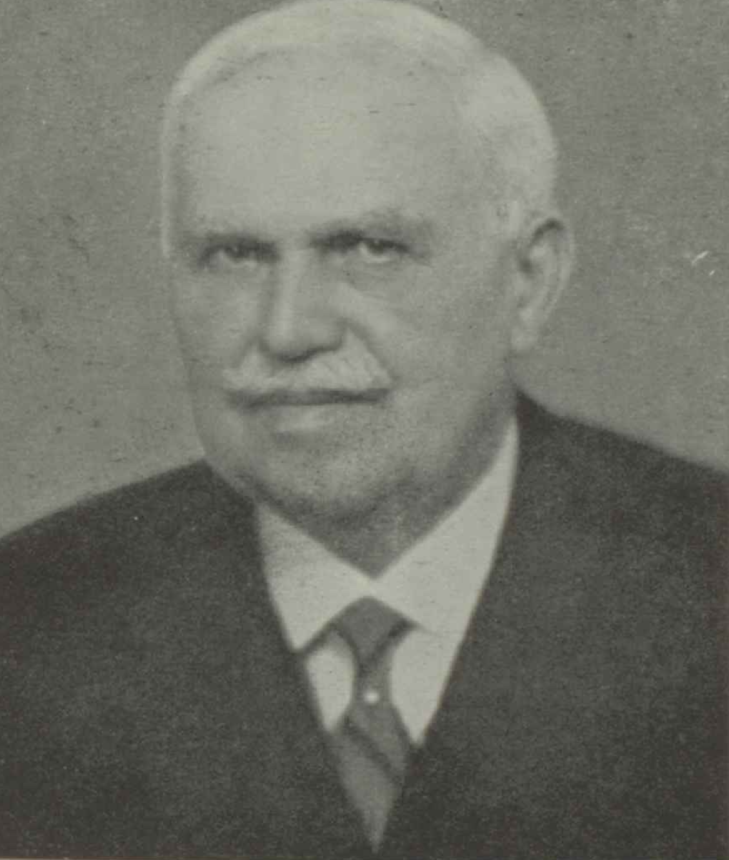
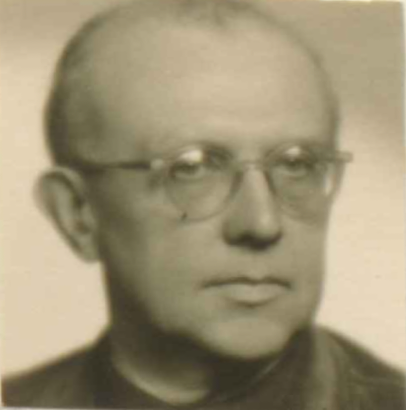
The first son of Josef Prusík and Marie Šálová is Vladimír. He was born in Prague on 29 May 1902. He studied at the grammar school in Kolín and took the school-leaving examination in Prague, and soon afterwards he became a clerk of the Prague Municipal Savings Bank. He worked there for 40 years. He particularly distinguished himself in the organisation department of this large Prague financial institution. His great hobby is gardening, and that not only on the practical side but also in its societies. He devoted and still devotes all his free moments to improving his garden at Dobřichovice No. 426, where he lives. Vladimír Prusík is also active in public life, in the Sokol gymnastic society and on the local national committee (MNV) in Dobřichovice. He married Věnceslava Landová, born on 5 September 1910 in Kosoř near Radotín. Her father was the tenant there of the manor farm of the Vyšehrad chapter. Twins were born of this marriage, Alena and Jiří, on 8 December 1932 in Prague. Vladimír Prusík died suddenly on 9 June 1973 and his wife Věnceslava on 28 August 1972.
Alena Prusíková, born in Prague, was for a time a clerk in Prague and now works in Radotín. Her married name is Pechanová; her husband is the manager of the druggist's shop in Dobřichovice. They live with her parents in this village. They have two children. Vítězslav Pechan was born on 13 July 1953 and Markéta on 26 March 1960. Alena Pechanová died of cancer on 11 February 1974.
The other twin, Jiří Prusík, trained in precision mechanics. Now he works as a technician at Czechoslovak Short Film in Prague. He also lives in Dobřichovice. He married first Božena Bojarská, born on 17 July 1932 in Prague. This marriage, however, ended in divorce, and Božena Prusíková, who has not remarried, lives in Prague 10, Nad vodovodem 487. Of this marriage a son, Radovan Prusík, was born on 15 November 1955 in Prague. Jiří Prusík is married for the second time, to Dagmar Svobodová, born on 5 October 1936 in Prague. Radovan Prusík lives with his mother in Prague, but his father takes a large part in his upbringing, and Radovan very often stays with him in Dobřichovice. Of the second marriage a daughter, Regina, was born on 12 July 1971.
The second son of Josef Prusík and Marie, née Šálová, is Jaromír Prusík. He was born in Prague, in Žižkov, on 13 January 1905. He attended the grammar schools in Kolín and in Prague up to the fourth form and then studied at the Commercial Academy in Prague-Karlín, where he took the school-leaving examination in 1924. After his studies he spent quite a long time abroad, especially in England and France. In 1925 he became a specialist editor, and at the specialist periodicals publishing house of J. Hložek in Prague he was instrumental in founding the modern agricultural weekly Hospodářský Obzor. At that time it was the periodical that did most to promote the mechanisation of agriculture in our country. In 1937 he joined Novina, the Republican Party's publishing enterprise, and until May 1945 he worked there as an editor, especially of Lidový deník. This paper was demonstrably among the most popular papers in the countryside. After the May events, which changed his life considerably, he then worked as a planner in the Livestock Union, for a year he was in the Inspectorate of State Farms for the Prague Region, and from 1951 to 1965 he “rose” to be an auxiliary labourer in the ČKD steel foundry in Prague-Vysočany. In 1930 Jaromír Prusík wrote a small economic work, “Konjunktura, krise a budoucnost evropského zemědělství” (“Boom, Crisis and the Future of European Agriculture”).
By the unanimous judgement of the reviewers, nothing similar had been written and published in our country until then. When fate brought him from the pen to the wheelbarrow, he began, so as not to wither in mind, to devote himself to researching the fortunes not only of his own ancestors but of the whole Prusík family. The History of this family is his work. He thus follows in the footsteps of his father Josef Prusík and of other members of the family long dead. Jaromír Prusík lives in Prague 6-Břevnov, Anhaltova 23. The little house where he lives, at Bílá Hora in Prague, is today called “the world centre of the Prusík family”.
Jaromír Prusík married Jiřina Eliášová on 4 June 1932; she was the daughter of an employee of the Electricity Works and was born in Prague on 12 April 1909. For a long time she was a clerk at the trading company Řempo. A single child was born of this marriage, a son, Zdeněk.
Zdeněk Prusík was born on 11 June 1933 in Prague, attended the grammar school in Prague 7, and then studied at the Faculty of Mathematics and Physics of Charles University in Prague. He graduated in July 1957 and immediately began work as a research student at the Institute of Organic Chemistry and Biochemistry of the Czechoslovak Academy of Sciences (ČSAV) in Prague-Dejvice. Here he has had considerable success, and he is head of a department to which biochemists and physical chemists from many foreign countries come to learn. He is a Doctor of Natural Sciences (RNDr.), and in 1962 he was awarded the degree of Candidate of Chemical Sciences. In his official capacity he has already been abroad a number of times, where he not only studied but also lectured. On 26 April 1958 he married Miluška Ortová, born on 1 April 1934 in Prague. Her father is a Doctor of Law and worked in the Office of the President of the Republic in Prague. Zdeněk and his wife met as students at the university, where their common interest was chemistry. His wife too works as a chemist in research in this field, at the Institute of Macromolecular Chemistry in Prague 6. She is also a Doctor of Natural Sciences. They live together in Prague 6-Petřiny, Nad Alejí 1766. Two little daughters were born of this marriage: Hana, born on 24 June 1959, and Ivana, born on 25 February 1964.
Františka Prusíková, the second wife of Josef Prusík, a native of Lštění near Čerčany in the Sázava area, deserves a further special mention. She became an excellent second mother to Vladimír and Jaromír Prusík, who had been orphaned so early. But she is known in our family in other ways too. When she was widowed in 1940, the love and interest that Josef Prusík had devoted to his family passed to her as his legacy. She was always an uncommonly devoted helper to all who asked her for it, and that not only in the close family but wherever she was needed. Many times she helped out in the places where Josef Prusík's brothers and sisters live or lived, whether it was Výrov, Bílov or Lednice. Often, too, when she was called, she helped to run the household of the physician Professor Prusík. She had no children of her own, and so she surrounded with motherly love not only her husband's children but also his grandchildren and great-grandchildren.
The last daughter of Václav Prusík in Výrov was Barbora. She was born on 27 November 1865. At the age of twelve she lost her mother, and her life was not always so easy. Until she married, she helped out in various places. For a long time she was with her brother Blažej in Klatovy, and for several years she also kept house for her relative, the dean Václav Koukl, in Spálené Poříčí near Plzeň. Her sisters and brothers, and especially her father, took care that their Baruška should suffer neither want nor hardship. In 1902 she married Rudolf Walter, the owner of a gunsmith's workshop in Klatovy. At that time her husband was already a widower and had a son, Vojtěch, who also studied in the same class at the grammar school in Klatovy as the cousins Bohumil and Blažej Prusík and Blažej Koukl. Vojtěch Walter later became a director at the State School Publishing House in Prague. He died childless in Prague. Although he was not a blood member of our family, he always counted himself as one of it, and he also took part in the first gathering of the Prusík family, which was held on Jaromír Prusík's initiative on 26 October 1958 in Prague, in the Municipal House.
Barbora Walterová, née Prusíková, or Betty, as she was called in the family, and her home in Klatovy all became the centre of our whole family, especially from the time when Blažej Prusík, the secondary-school teacher, went to Prague. From 1905 until 1958 people travelled to Klatovy to Betty Waltrová. It was not only for the well-known Klatovy parish fair; the daughters of her brothers and sisters, and others, also used to stay with her. Klatovy and Aunt Betty, in short, became the refuge of our family. Her husband died in 1928, so Betty Walterová outlived him by 30 years. She died on 29 May 1958 in Klatovy, and of all the members of the family named Prusík or Prusíková she has so far lived to the greatest age, almost 93 years. She was an exceedingly kind woman.
The last child born at “U Boudů” in Výrov into the family of Václav Prusík was his son Antonín. He was born on 19 February 1869. When he was eight years old, his mother died. He studied for several years at the grammar school in Klatovy, but he did not much like it there. He then entered state service, in the revenue guard. Even before that, as a soldier on manoeuvres in 1888, he had met Leopoldina Adamcová in Příbram. Of this great love of his and of the further fortunes of Antonín Prusík and Leopoldina, let Antonín's stepdaughter, Leopolda Pospíšilová, who lives in Žamberk, tell. It reads like a novel:
“When Mother was 17, there were manoeuvres in and around Příbram, and with them Antonín Prusík came there as a soldier. The house where my mother lived bordered on a garden where there was an inn and a skittle alley. There Antonín Prusík met my mother. They were terribly fond of each other, but Grandfather did not favour this acquaintance. He forbade him to see Mother, and she, crushed by her lost love, went away to Vienna. On parting Prusík said to her: ‘When I am somebody, Miss Poldi, I shall come for you!’ The years went by, and Antonín Prusík did not get in touch. Meanwhile Mother married my father, the master chimney sweep Karel Pleticha. He was a widower and had four small children. He died after a nine-month
marriage, and I was born ten days after his death. Mother was then 25 years old, a widow and the mother of five children. When her year of widowhood was coming to an end, Antonín Prusík unexpectedly visited Grandmother. He was a respicient in the revenue guard and asked for the hand of Miss Poldi. As Grandmother used to tell it, she was positively stunned. She told him that he had come too late, that Poldi was already a widow. After the first surprise he declared that it did not matter and that he would take her as a widow. Grandmother pointed out that it would not do, that she had five children. Even that did not put him off, and he added that he would provide for those children too. What love and what character that was! But even then Grandmother told him that it was not possible, because Mother had a profitable, splendidly prospering chimney-sweeping business, which she could not give up for the children's sake. That brought him up short; he was silent for a while and thought, and in the end he asked whether he could not run the business with her.
While Antonín Prusík and Grandmother were still negotiating in this way, the door opened and Mother came in. With the cry ‘Toníčku’ she fainted. All I know today is that Prusík learned the chimney sweep's trade in six weeks in Hořovice and married my mother. He never swept chimneys himself, though; he had five journeymen and several apprentices for that. Of this happy marriage a daughter, Anna, was born, who died in the same week as her father. Six months after his death a little boy, Otoušek, was born, but he too died within a year. After these terrible blows Mother broke down mentally and physically, and then two Prusík sisters invited her to stay with them in the country, in the Kralovice area. But when Mother married for the third time, these contacts ceased. My mother then had a hard life still ahead of her. The third time she married an adventurous actor, who robbed her of all her property; the house in Příbram was put up for auction, Grandfather and Grandmother and the other brothers and sisters parted from Mother, and she went out into the world. So she was with the theatre, and when her husband Kabátník died five years later, she was by then so at home in theatrical life that she applied for a licence and then had her own theatre company in Moravia, under the name Jará. I was brought up by Grandmother. For the fourth time Mother married, to the actor Harrer, who was her director. She had two children with him; the little son died, and Mother then died at the home of my half-sister Růžena in Luh near Příbram, on 15 January 1951. She was born on 5 April 1871 and lived to almost 80, despite such a dramatic life. When I used to hear all this told as a young girl, my stepfather Prusík was for me the ideal of a man, and I honoured him, if only in memory, for his pure character. My aunt, who died in an old people's home in Žatec, knew him personally, and she always told me what a handsome man he was and what a good person, and how immensely he loved Mother.”
Thus Lea Pospíšilová, a native of Příbram who lives today below the Orlické Mountains in Žamberk, remembers her mother and her stepfather Antonín Prusík. Antonín Prusík was the youngest of the eleven children born at “U Boudů” in Výrov, and the first to die. It was on 13 April 1899 [sic; the account of Václav Prusík's children earlier in this sub-branch gives 16 April 1899, so one of the two dates is wrong]. The cause was pneumonia. He was only thirty years old, and he left no descendants.
We have told you relatively fully about the descendants of Václav Prusík of Výrov. There are several reasons for this. For one thing, the fortunes of the members of this sub-branch, called Výrov II, are the best known, and a further reason is that in the history of our family this sub-branch has perhaps had the most people who made a name for themselves by their work and rose above the average. Václav Prusík, farmer and mayor of Výrov, did not leave behind as many descendants as, say, both his sisters, Anna and Rosalie, who married in Horní Bříza, but the number is nevertheless respectable. If we do not include in the total the descendants of his daughter, married name Kouklová, in Bílov, who belongs to the branch known as Sedlec, Václav Prusík and his wife Josefa left 225 descendants, 33 of whom are already dead.
This sub-branch, and indeed the whole Výrov branch and the village itself, will always mean something special to our family, even though Sedlec is the foundation stone. From Výrov, however, came the strongest branch of the family, which also made the Prusík family famous.
The Výrov sub-branch of the Výrov branch is clear evidence that the development of children depends to the greatest extent on their parents. That the most outstanding people came from this sub-branch of the Výrov branch was also because the head of the family was a man who looked ahead. Václav Prusík was not only a diligent reader but also a village scribe. Nowhere, perhaps, in the whole Prusík family was a family chronicle kept for so long and so carefully. The farmer Václav Prusík wrote it himself for over 50 years. Today it gives us an excellent overview of everything that happened in the 19th century, in public life and in the family, of what the weather was like and of the disasters. It is, in short, a rich well of knowledge about bygone times, from which later descendants in turn draw faith and strength for the future. His son Vojtěch continued it.
Whoever of you, members of the great Výrov branch, visits the village of Výrov one day will surely not forget to visit the chapel of St Adalbert, which was consecrated here on 27 April 1902. It stands by the garden of farm No. 18, where the founder of the branch, the reeve Vojtěch Prusík, a native of Sedlice, lived, and after him his descendants. Blažej Prusík, a native of Výrov and later a secondary-school teacher at the grammar school in Klatovy, can be regarded as the chief initiator. Besides Prince Metternich, he and his brothers also bore the largest share of the cost of building this shrine. The little chapel of St Adalbert in Výrov is a beautiful memorial of our family. May it be preserved in good condition for ages to come!
The Kostelec nad Mží Sub-branch of the Výrov Branch
The descendants of Veronika Prusíková of Výrov, married name Hořejšová, and by her second marriage Folková.
1826 – 1865
The eighth and last child of Vojtěch Prusík, the reeve of Výrov, was his daughter Veronika. She was born at “U Boudů”, the reeve's house, at Výrov No. 18, on 20 January 1826. When she was fifteen, her father died. At the age of twenty she married into a village fairly far from Výrov. It was Kostelec nad Mží, and so to reach her new home she had to go all the way across the river Mže. On her birthday, 20 January 1846, Veronika married the farmer Jan Hořejš. She had only a daughter by him, Josefa, and soon afterwards she was widowed. In 1854 she married Jan Folk, a native of Chotiná, who married into Kostelec nad Mží. Together they had two sons, Jan and Josef Folk. Veronika's daughter by her first marriage, Josefa Hořejšová, was born on 17 February 1851 and married the farmer Výška in Nadryby. She died there on 16 February 1936. Of the second marriage of Veronika, née Prusíková, of Výrov, her first son, Jan Folk, was born to her in Kostelec on 4 June 1856. He died there on 2 November 1938. The second son, Josef Folk, born on 18 March 1862, married into Bušovice near Rokycany, where he died on 27 February 1927. Kostelec nad Mží is a pretty but truly very small village. It has barely fifty inhabitants. For its parish it belongs to the village of Planá, and it is there, too, in the churchyard, that all the inhabitants of Kostelec nad Mží meet again after death. Veronika, the Výrov native, did not live long in Kostelec, for she died as early as 7 November 1865, and so she was not even 40. That was perhaps the reason why contact with this sub-branch of the family used to be relatively slight, and later almost none at all, and only now have all the ties of kinship been renewed and friendly family relations taken up.
The first child of Veronika Hořejšová, née Prusíková, was her daughter Josefa. She was, however, also the only child of this marriage, because Jan Hořejš died early. She was born on 17 February 1851 and married the farmer J. Výška, of Nadryby No. 11. Many members of our family now live in this village. Josefa Výšková had an only son, Josef. She died in Nadryby on 16 February 1936.
Josefa Výšková's son Josef was born on 24 March 1874. He is over 94 and is today the oldest member of our family in the male line and in the female line. As we write this, he is healthy and lively. Josef Výška had four children: his sons Josef, Jaromír and Václav and his daughter Anna. Just before we closed this account, Josef Výška died, on 24 June 1968. The eldest child of Josef Výška of Nadryby is his son Josef. He was born on 7 August 1901, stayed on his native farm, No. 11, and died on 30 December 1966. He had an only son. He is Vlastislav Výška, born on 18 December 1928, an agronomist at the collective farm (JZD) there. His grandfather Josef, the senior member of our family, lives with him. Vlastislav Výška has three children. His daughter Milena was born on 8 March 1953, his second daughter, Vlastislava, on 3 April 1954, and his son Jiří Výška on 6 December 1955.
Josef Výška's second son is Jaromír, born on 23 July 1904; he lives at Nadryby No. 46, where he is a member of the collective farm. Jaromír Výška has an only daughter, Anna, born on 3 April 1942. Her married name is Lojdová, and she has a little daughter, Ivana, born on 7 May 1967. They live in Kladruby near Stříbro, Gottwaldova 238.
The third child of Josef Výška in Nadryby is his daughter Anna. She was born on 1 June 1909; her married name is Hořejšová, and she lives at Nadryby No. 8. She is childless.
The last child of Josef Výška is his son Václav. He was born on 10 March 1911 in Nadryby and lives at Kostelec nad Mží No. 2. He is a member of the collective farm there. He has an only daughter, Anna, married name Malátová. She was born on 6 January 1942. She has a little daughter, Jitka, born on 14 March 1963, and lives at Týnec No. 40, near Klatovy. Václav Výška of Kostelec also has a son, Václav, born on 27 March 1938. He is a clerk at the Škoda Works and married into Trnová, at No. 188.
When the first husband of Veronika, née Prusíková, Jan Hořejš, died at the age of 33, Jan Folk from Chotiná married onto her homestead at Kostelec nad Mží No. 7, in 1854. The farm had about 25 hectares of fields, meadows and woods. The first son of Veronika Folková [sic, properly of her son Jan Folk] was František. Then came Antonín, Bohumil, Václav, Josef and Jan Folk, and the daughters Marie and Josefa. So there were eight children in all.
The eldest, František Folk, was born on 29 January 1885. He married into Nadryby, where he had a farm. He died there on 12 July 1962. He had an only child, his son Miloš Folk. Miloš was born on 18 August 1922 in Nadryby. He is a motor mechanic, and in this work he often travels abroad. He lives in Senec near Zruč, in the Plzeň area. His wife, too, is a member of our family, a descendant of Anna Štěpánková, née Prusíková, of Výrov. Miloš Folk has two children. His son Miloš [sic; in the Horní Bříza I sub-branch above he is called Miloslav, with the same date of birth] was born on 18 November 1949 and Jiří on 28 May 1951.
The second child of Jan Folk was his son Antonín. He was born on 7 March 1887 in Kostelec, and it was he who later took over the farm there from his father. He has three children. His son Vratislav Folk, born on 30 November 1916, is an agricultural expert at the district national committee (ONV) in Cheb. He lives there, at Šlikova 12. He had an only daughter, Věra, born on 5 January 1944. She is a teacher. Now, under her married name Trojková, she lives in Kladno, sídliště 9. okrsek, Blok 205/2268. The second child of Antonín Folk of Kostelec is his daughter Anna. She was born on 23 February 1921, and her married name is Staňková. Her husband is a design engineer with the Kancelářské stroje enterprise. They live in Prague-Malešice, Tuchorazská 423. She has two children. Her daughter Jarmila Staňková was born on 25 May 1947 and her son Milan on 16 March 1952. Antonín Folk's second daughter is Slávka. She was born on 18 May 1922; her married name is Šedivcová, of Chrást near Plzeň, No. 31. Her son Vojtěch Šedivec, born on 1 November 1946, lives at Zruč-Senec No. 233. Her daughter Miloslava, today married name Kaňková, was born on 18 September 1944 and lives with her parents at Chrást No. 31. Věra Trojková has a son, Josef, born on 15 September 1968.
The third child of Jan Folk of Kostelec was his daughter Marie. She was born on 6 August 1889 and married the blacksmith Janovský in Kostelec, but she died early. She was 36 when she ended her days, on 22 May 1925. She had four children. The eldest was Anna, born on 26 July 1908, today married name Svejkovská, of Týček No. 26, near Zbiroh. She has two children. Jiří Svejkovský was born on 5 February 1949 and Květa Svejkovská on 13 November 1943.
The second daughter of Marie Folková, married name Janovská, is her daughter Marie. She was born on 5 December 1909 in Kostelec and lives today in Plzeň-Bukovec, Horova 5. Because her husband's name, Antoušek, did not appeal, he took his wife's name after the wedding. She has two children. Her son Stanislav Janovský, born on 6 August 1934, lives in Plzeň-Slovany, Blatenská 12. He has a daughter, Jana, born on 29 July 1959, and a son, Stanislav, born on 5 October 1962. Marie Janovská's second child is Vlasta, married name Schinabková, born on 3 September 1944; she lives in Plzeň, with her parents. The third child of Marie Janovská in Kostelec was her son Jaroslav. He was born there on 12 June 1912 and settled at Suchomasty No. 71, near Beroun. He died there at the age of only 36 [sic, probably 39], on 7 February 1952. He left two children there: a son, Jaroslav, born on 23 January 1946, and a daughter, Marcela Janovská, born on 12 September 1951.
The last child of Marie Janovská, née Folková, was her son Václav Janovský. He was born on 12 November 1914 in Kostelec nad Mží; after the Second World War he settled in Záluží near Most, but there he lost his life tragically on 15 May 1948. His only daughter, Miroslava, born on 4 July 1943, is a teacher; her married name is Svobodová, and she lives in Most, Vítězslava Nezvala, blok 220-46. She has a little daughter, Renata Svobodová, born on 16 September 1967.
Another daughter of Jan Folk was Josefa. She was born on 23 October 1891; her married name is Kroftová, of Plzeň-Letná, Dlouhá 29. Her daughter Jarmila, born on 23 September 1922, is married to Lieutenant Colonel Mužík and lives in Cheb, Rooseveltova 28. Her daughters are Jarmila, born on 20 October 1944, and Hana, born on 16 October 1946. The second child of Josefa Kroftová is her son Václav. He was born on 26 February 1925 and works at the Škoda Works in Plzeň. Věra (Hrdinová) has a little son, Petr, born on 8 January 1968. The fifth child of Jan Folk was his son Bohumil. He was born in Kostelec on 4 February 1894 and was employed for many years in the judicial service in Plzeň and in Rokycany. He came back from the First World War as a legionary of the Czechoslovak Legion in Italy. For a shorter time he was also on the French front. He lives in Plzeň, třída 1. máje 2. Of all his brothers and sisters, Bohumil Folk perhaps has the best knowledge of his widely branching family, and this quality of his also helped substantially in the search for the descendants of Veronika Prusíková, married name Folková, in Kostelec nad Mží. Bohumil Folk has two children. His daughter Věra, born on 8 August 1922, has the married name Nolčová and lives in Plzeň, Korandova 13. Her daughter Věra, married name Hrdinová, was born on 14 April 1946. Her son Karel Nolč was born on 24 September 1948. The second child of Bohumil Folk is his son, the engineer Jaromír Folk. He was born on 19 August 1926. He works at the Škoda Works, is unmarried and lives with his parents in Plzeň.
The sixth child of Jan Folk was Václav. He was born on 22 May 1897 in Kostelec and was employed for a long time at the Plzeň brewery and then at the Škoda Works. He lives in his own little villa at Dýšina No. 117, near Plzeň. He has an only child, his daughter Věra, born on 6 January 1928. Her husband is an officer. They have two daughters, Věra Dovínová, born on 5 May 1954, and Jana, born on 30 July 1957.
Another son of Jan Folk was Josef; he was born on 7 February 1901 in Kostelec and settled at Nadryby No. 28. He is a member of the collective farm there. Josef Folk has two daughters. Stanislava, born on 4 September 1927, has
the married name Brůjová and lives in Prague 10, Strašnice, Útulná 507, blok 44. Her husband is an official of the State Planning Commission in Prague. They have three children. Čestmír was born on 9 March 1950, Jaroslav on 20 March 1952, and then their daughter Hana on 16 June 1954. Josef Folk's second daughter is Jarmila. She was born on 20 June 1931, and her married name is Lipertová. Her husband is a doctor. They live in Tábor, třída čsl. armády 2242-IV. They used to live in Nýrsko. They have two daughters, Jana, born on 26 July 1956, and Eva, born on 25 December 1957.
The last child of Jan Folk was his son Jan. He was born on 26 July 1904 in Kostelec. He was employed by the Prague Waterworks and lived in Prague, at Karlov. He had a daughter, Alena Folková, born on 19 January 1933. In the air raid on Prague on 14 February 1945 the house took a direct hit from a bomb just where Jan Folk had his flat. His wife and daughter were killed on the spot, and he, out in the yard, was flung by the powerful blast of further exploding bombs against a stack of water pipes and was killed too. All three members of this family were buried in the churchyard at Planá nad Mží.
The second son of Veronika, by her second marriage Folková, at Kostelec No. 7, was Josef. He was born there on 18 March 1862. Like his brother Jan, he too was a farmer. He married into Bušovice near Rokycany, at No. 2. Even in his lifetime it was a very progressive village, and later, in the Republic, the farmers of Bušovice were among the most progressive members of cooperatives. Although they all farmed, as the saying goes, on their own, they had many cooperative enterprises of their own in common in the village. In this respect Bušovice near Rokycany was simply a model. Josef Folk had three children, his sons Vojtěch and Josef and his daughter Marie. He died in Bušovice on 27 February 1927, and he too was among the excellent farmers.
His eldest son, Vojtěch Folk, was born on 8 May 1890 in Bušovice. He had a model farm, which he improved a great deal further after inheriting it from his parents. He had two daughters. His daughter Marie, born on 11 July 1920, has the married name Fajfrová, and her husband works at the Škoda Works. They live in Chrást near Plzeň, No. 316. Her son Josef Fajfr, born on 1 May 1943, has a little son, Josef, born on 23 December 1965. Marie Fajfrová then had twins, Vojtěch and Anna, born on 14 June 1946. Of these twins, Vojtěch Fajfr is married and has a daughter, Monika, born on 16 October 1967.
Vojtěch Folk's second daughter is Daniela, married name Hrůzová. She was born on 3 September 1928 and has three children. František Hrůza was born on 27 December 1949, Jiří on 14 March 1953 and Dana on 22 July 1960. The family lives and works in the collective farm in Bušovice. Vojtěch Folk died in Bušovice on 9 November 1961, and he was one of the few Folks who knew well that they belonged to the Prusík family and also claimed kinship with it.
The second child of Josef Folk of Kostelec nad Mží, who settled in Bušovice, was his daughter Marie. She was born on 5 March 1893 and married the farmer Jílek in Bušovice. Of her marriage a son, Josef Jílek, was born on 19 May 1914. A month after the birth Marie Jílková died, at the age of 21, on
19 June 1914, just before the First World War. Josef Jílek has three children. His son Josef, born on 24 August 1940, already has two children of his own in turn, a little son, Josef, born on 7 January 1965, and a son, Pavel, born on 5 April 1968. His daughter Anna, born on 17 February 1944 in Bušovice, has the married name Korelusová. Her sister Pavla Jílková was born on 4 December 1949, and her married name is Rejčková. For a number of years Josef Jílek was chairman of the collective farm in Bušovice, which is once again as much of a model as the private farmers of Bušovice once were, when numerous journalists came there for their reports. There were not very many such model villages in the Republic at that time.
The second son of Josef Folk, the native of Kostelec nad Mží, was Josef. He came home from the First World War as a legionary of the Czechoslovak Legion in Russia. He was employed as a railway official in České Velenice. Josef Folk was born in Bušovice on 8 September 1895. He was unhappily in love, and that was the cause of his tragic end. He shot himself in the Hotel Slovan (formerly the Valdek) in Plzeň on 14 November 1921. He was only 26. Life had lost its meaning for him.
This concludes the account of the life of Veronika Prusíková, married name Hořejšová and by her second marriage Folková, in the small village of Kostelec nad Mží, where she married in 1846. You have read in brief of the fortunes of all her descendants, the dead and the living. Today this sub-branch of the Výrov branch is called “Kostelec nad Mží”. It is perhaps the most distant village that any descendant of the reeve Vojtěch Prusík of Výrov reached. This sub-branch is the weakest of all those that make up the Výrov branch as a whole.
One reason for this is also that Veronika died relatively young, before she was 40, and had only three children. That is not the real reason, however; the cause lies rather, perhaps, in the fact that her daughter Josefa, married name Výšková, in Nadryby, had only one child, her son Josef, who, as it happens, lived to the greatest age of all the members of the Prusík family, in the male line and in the female line: 94 and a half years. After all, Veronika's sister Marie, married name Šteflová, in Výrov, died at the age of only 29 and had only two children [sic; the Výrov I sub-branch above names four, of whom two grew up], and yet her descendants down to the present day number almost 50 more.
Veronika Prusíková, married name Hořejšová and then Folková, of Kostelec nad Mží, has left behind her, down to the present day, 89 descendants, 14 of whom have already died.